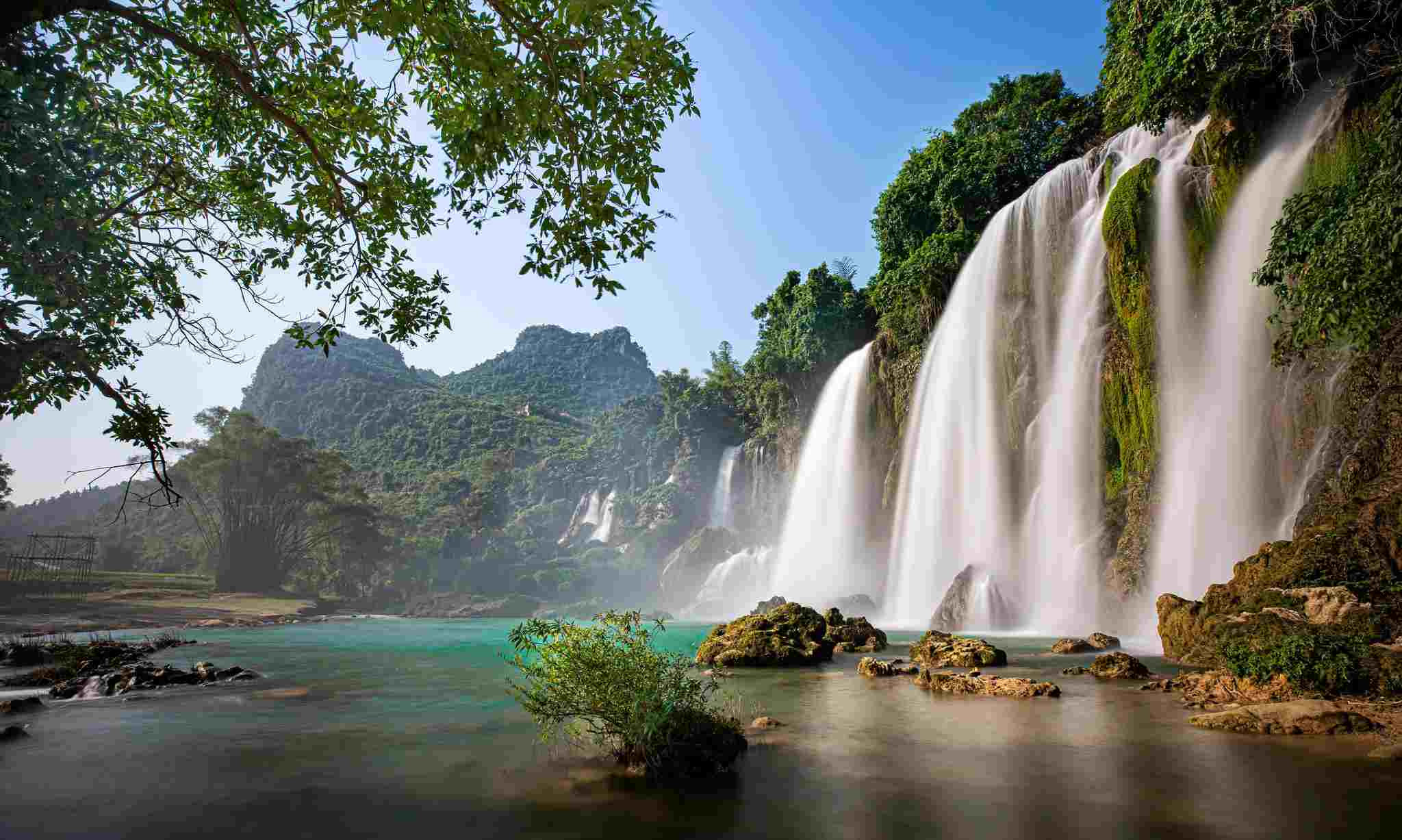
Ban Gioc Waterfall Vietnam is one of the country’s most impressive natural landmarks, located in Cao Bang near the Vietnam–China border. Surrounded by limestone mountains, green fields, and peaceful rural scenery, the waterfall creates a dramatic yet refreshing landscape. Water flows across several wide limestone levels before reaching the Quay Son River below, making the area especially attractive for photography and nature exploration. For travelers looking beyond Vietnam’s major cities, Ban Gioc offers a memorable combination of powerful scenery, borderland culture, and quiet mountain atmosphere.
1. Why Visit Ban Gioc Waterfall Vietnam
Ban Gioc Waterfall Vietnam is an ideal destination for travelers who want to experience dramatic natural scenery away from crowded tourist centers. Located in the mountainous province of Cao Bang, the waterfall combines wide cascades, limestone peaks, green farmland, and the calm Quay Son River in one striking border landscape.
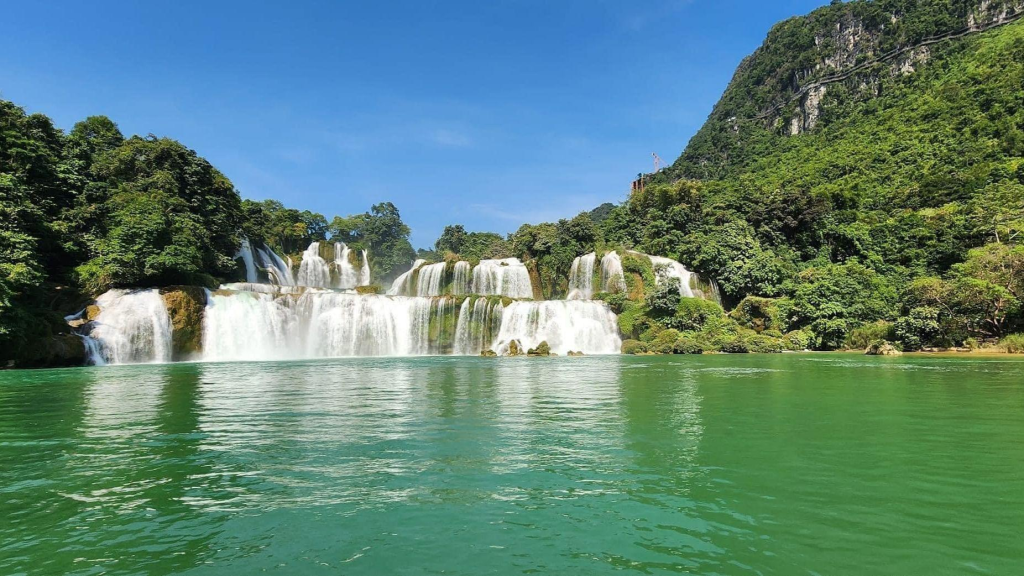
Ban Gioc Waterfall Surrounded by Limestone Mountains and Green Fields. Picture: Internet.
One of Vietnam’s Most Impressive Waterfalls
Ban Gioc stands out because of its broad, multi-level structure. Instead of falling in a single narrow stream, the water spreads across several limestone steps, creating a powerful and layered view.
Visitors can enjoy:
- Wide cascades surrounded by green mountains
- Mist rising above the river
- Scenic viewpoints from different angles
- Peaceful rural landscapes around the waterfall
The scale of the falls makes the area especially attractive for photography and nature lovers.
A Unique Borderland Setting
One of the most distinctive features of Ban Gioc Waterfall Vietnam is its location near the Vietnam–China border. The waterfall lies in a remote valley where the river, farmland, and limestone mountains create a peaceful frontier atmosphere.
This setting gives the visit more depth because travelers are not only seeing a natural attraction. They are also exploring a culturally rich border region shaped by ethnic communities, agriculture, and mountain life.
Beautiful Scenery Beyond the Waterfall
The surrounding landscape is just as memorable as the waterfall itself. The road to Ban Gioc passes through valleys, villages, rice fields, and limestone formations, so the journey becomes an important part of the experience. Along the way, travelers may see:
- Terraced and riverside fields
- Traditional houses in small villages
- Winding mountain roads
- Quiet valleys surrounded by karst peaks
These views make the trip feel more complete than a simple stop at one landmark.
A Peaceful Alternative to Popular Destinations
Compared with more famous tourist areas in northern Vietnam, Ban Gioc feels quieter and less commercial. Travelers can spend time enjoying the sound of the water, walking near the river, and observing the rural scenery without the same level of crowding found at major attractions.
This slower atmosphere makes Ban Gioc Waterfall Vietnam particularly suitable for photographers, couples, nature lovers, and travelers interested in remote destinations. Ban Gioc can also be combined with nearby attractions such as Nguom Ngao Cave, Phat Tich Truc Lam Ban Gioc Pagoda, local villages, and scenic mountain routes. Together, these places create a varied itinerary that includes nature, culture, and regional landscapes.
2. What to Expect at Ban Gioc Waterfall Vietnam
A visit to Ban Gioc Waterfall Vietnam combines dramatic scenery, light outdoor exploration, and a peaceful rural atmosphere. The area is relatively open, allowing travelers to admire the waterfall from several viewpoints while also enjoying the river, surrounding fields, and limestone mountains.
A Wide Multi-Level Waterfall
Ban Gioc is known for its broad shape and several cascading levels. Water flows over limestone formations before joining the Quay Son River, creating a layered landscape rather than a single vertical drop.
Depending on the season, visitors may experience stronger water flow, rising mist, and louder cascades. During drier periods, the waterfall may appear gentler, but the surrounding mountains and rural scenery remain impressive.
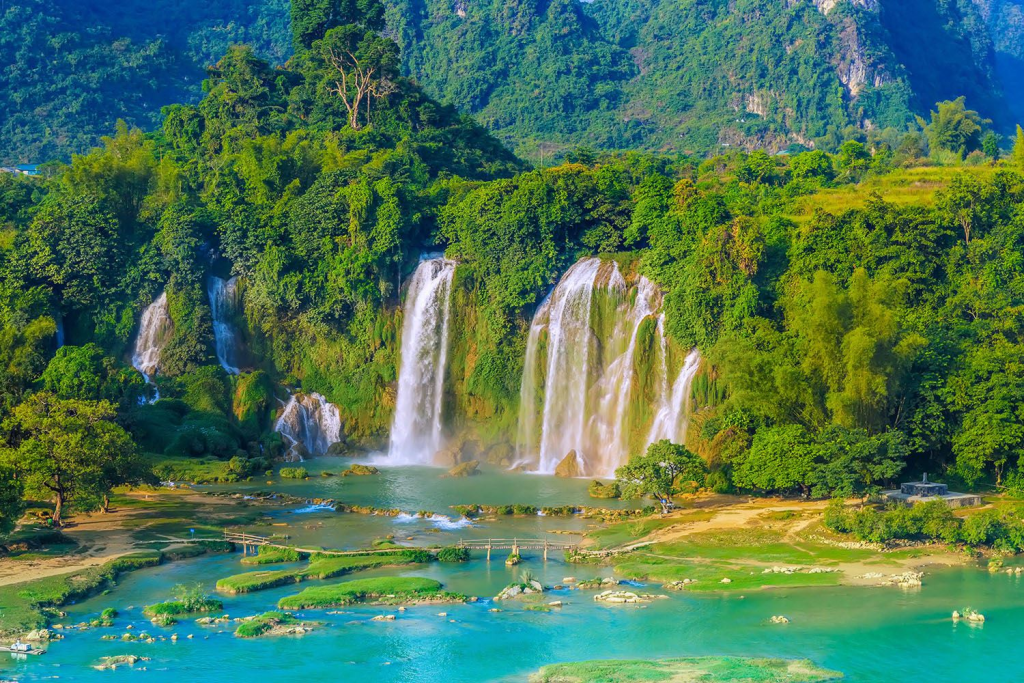
Panoramic View of Ban Gioc Waterfall and Quay Son River. Picture: Internet.
Several Scenic Viewing Areas
Travelers can observe the waterfall from open areas near the river and from paths around the site. Each viewpoint offers a slightly different perspective, from wide landscape photographs to closer views of the cascades. Visitors can expect:
- Broad views of the entire waterfall
- Close-up perspectives near the river
- Limestone mountains surrounding the valley
- Open fields and rural scenery in the background
- Plenty of opportunities for landscape photography
Taking time to move between viewpoints helps travelers appreciate the full scale of Ban Gioc Waterfall Vietnam. It also allows them to enjoy both the dramatic cascades and the quieter details of the surrounding countryside.
Optional Bamboo Raft Experience
Bamboo rafts may operate near the base of the waterfall, depending on water levels and local conditions. The short ride allows visitors to move closer to the cascades and experience the sound, spray, and scale of the waterfall from the river.
Travelers should keep phones, cameras, and personal belongings protected from water during the ride. A waterproof phone case or small dry bag can be useful, especially when the waterfall flow is strong.
A Peaceful Borderland Atmosphere
Although the waterfall is the main attraction, the wider setting is an equally important part of the experience. The surrounding valley includes farmland, villages, and limestone peaks, creating a calm atmosphere that feels far removed from large cities.
The area around Ban Gioc Waterfall Vietnam is best explored slowly. Visitors can spend time walking near the river, observing local farming landscapes, and enjoying the contrast between the powerful cascades and the peaceful countryside.
Light Walking on Natural Terrain
Exploring the site does not usually require difficult trekking, but travelers should expect some walking on paths, grassy areas, and occasionally wet surfaces. Comfortable shoes with good grip are recommended because areas close to the waterfall may become slippery. The visit may involve:
- Walking between viewpoints
- Moving across uneven or damp ground
- Standing for extended periods while taking photographs
- Boarding a bamboo raft, if included
- Walking under direct sun or light rain
Simple preparation makes the experience more comfortable and allows visitors to focus on the scenery. It also reduces the risk of discomfort when moving between the riverbank, viewing areas, and nearby paths.
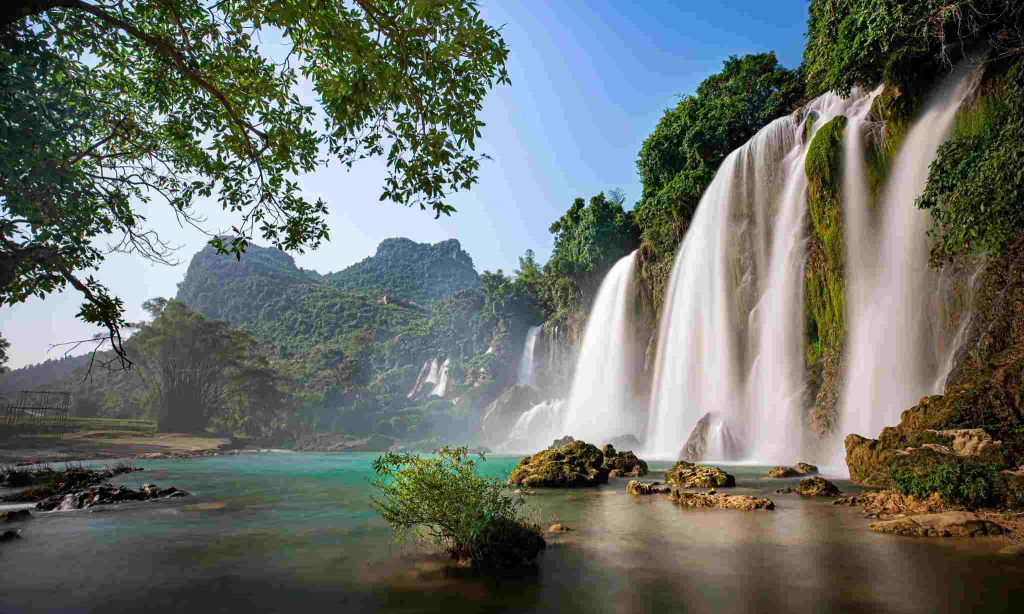
Walking Paths and Scenic Viewpoints at Ban Gioc Waterfall. Picture: Internet.
Changing Weather and Water Conditions
Mountain weather can change quickly, particularly during the rainy season. Sunshine, mist, and short rain showers may all occur during the same visit, while water levels can influence both the appearance of the waterfall and the availability of river activities.
Travelers should bring a light raincoat, sunscreen, drinking water, and basic protection for electronic devices. Remaining flexible is important because local conditions may affect how close visitors can approach certain areas.
A Relaxed but Visually Impressive Experience
A visit to Ban Gioc Waterfall Vietnam is not about completing a long list of activities. Its main appeal comes from the natural setting, the sound of the water, and the broad views across the border valley.
Travelers who allow enough time for photography, quiet observation, and short walks are likely to have a more rewarding experience. The combination of powerful cascades, limestone scenery, and rural calm makes Ban Gioc one of the most memorable natural stops in northern Vietnam.
3. Best Places to Visit Near Ban Gioc Waterfall Vietnam
A trip to Ban Gioc Waterfall Vietnam can be combined with several nearby attractions that add more depth to the journey. The surrounding area offers caves, pagodas, ethnic villages, scenic roads, and rural landscapes, making it possible to build a varied Cao Bang itinerary rather than visiting the waterfall as a single stop.
Nguom Ngao Cave
Nguom Ngao Cave is one of the most popular attractions near Ban Gioc and is often included in the same day trip. The cave features large underground chambers, limestone formations, stalactites, and narrow passages shaped over thousands of years.
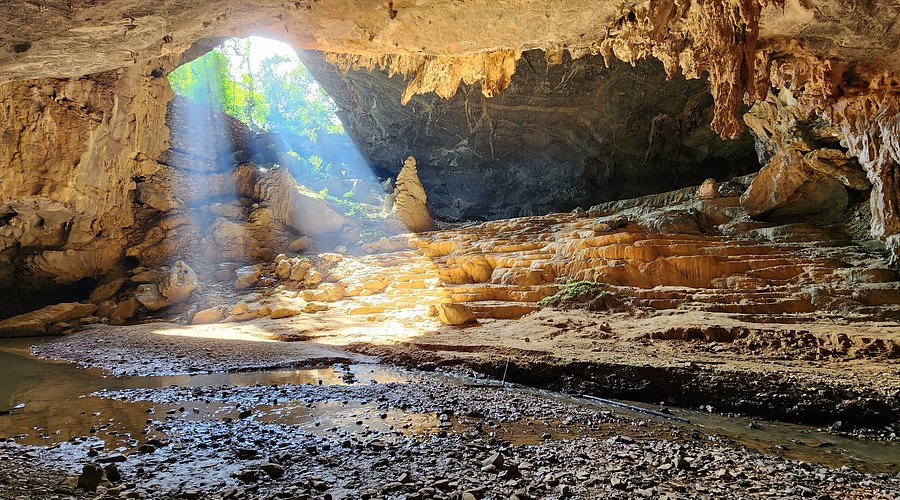
Limestone Formations Inside Nguom Ngao Cave. Picture: Internet.
Visitors should expect moderate walking on stone paths and some damp surfaces. Comfortable shoes are recommended, especially during rainy periods when the cave entrance and surrounding paths may become slippery.
Phat Tich Truc Lam Ban Gioc Pagoda
Located on a hillside overlooking the border landscape, Phat Tich Truc Lam Ban Gioc Pagoda offers a quieter and more reflective experience. From the pagoda area, travelers can enjoy views of the surrounding mountains, fields, and distant waterfall.
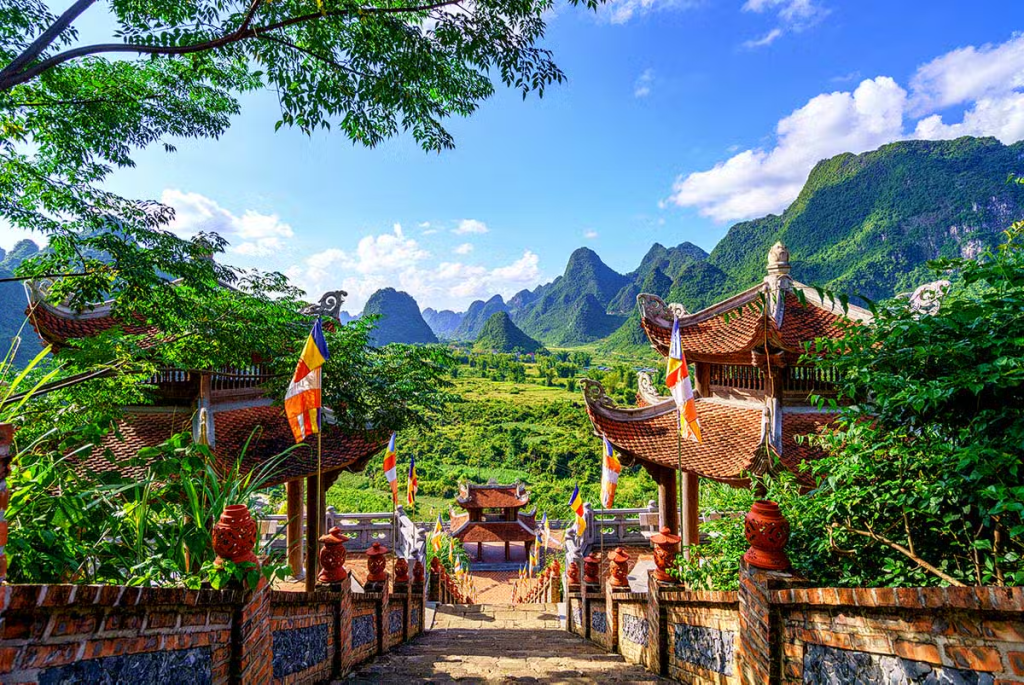
Phat Tich Truc Lam Ban Gioc Pagoda Overlooking the Border Landscape. Picture: Internet.
The site is suitable for visitors interested in both culture and scenery. Respectful clothing and quiet behavior are important because the pagoda remains an active spiritual space.
Quay Son River
The Quay Son River forms an important part of the Ban Gioc landscape. Its calm water contrasts with the powerful cascades, while the surrounding fields and limestone peaks create beautiful views for photography.
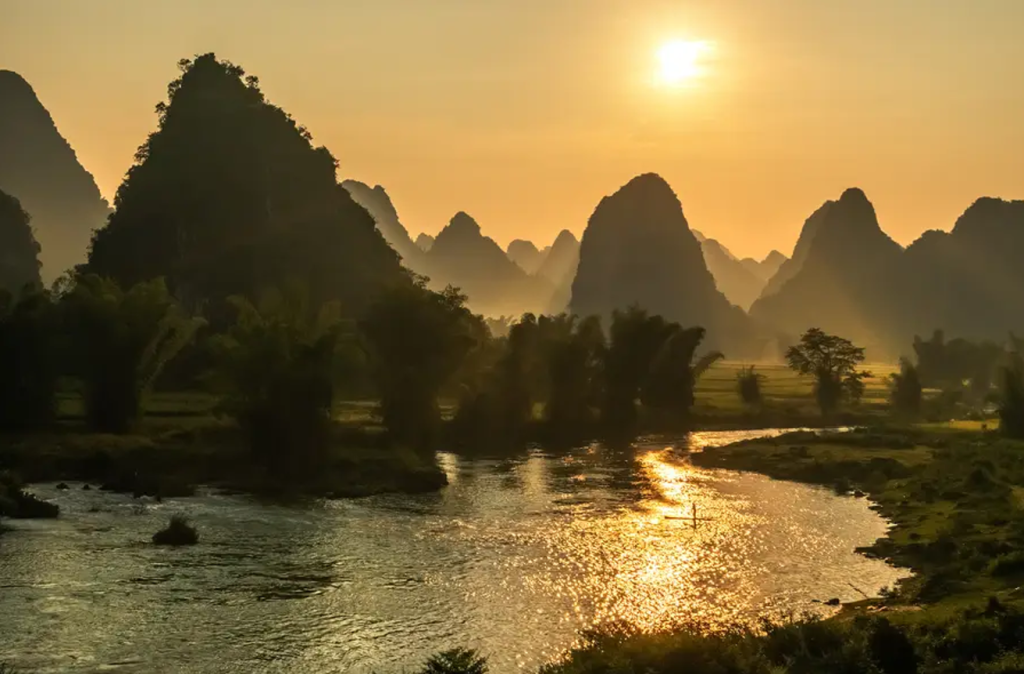
Peaceful Scenery Along the Quay Son River. Picture: Internet.
Travelers can enjoy short riverside walks or observe the landscape from nearby viewpoints. Depending on local conditions, some tours may also include a bamboo raft ride near the waterfall section of the river.
Local Ethnic Villages
The area around Ban Gioc Waterfall Vietnam is home to Tay and Nung communities, whose daily lives are closely connected to farming, local markets, and mountain traditions. Visiting nearby villages gives travelers a better understanding of the region beyond its natural attractions.
Visitors may see:
- Traditional stilt houses
- Rice fields and small family farms
- Handmade textiles and local crafts
- Village roads surrounded by limestone scenery
- Home-style meals prepared with regional ingredients
Travelers should ask permission before photographing residents and avoid entering private homes without invitation. Respectful interaction helps make village visits more meaningful for both guests and local communities.
Phong Nam Valley
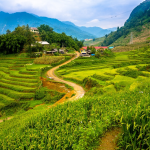
Phong Nam Valley is known for its peaceful rural scenery, especially during the rice-growing and harvest seasons. The landscape includes rivers, rice fields, traditional houses, and limestone mountains, creating one of the most photogenic areas in Cao Bang.
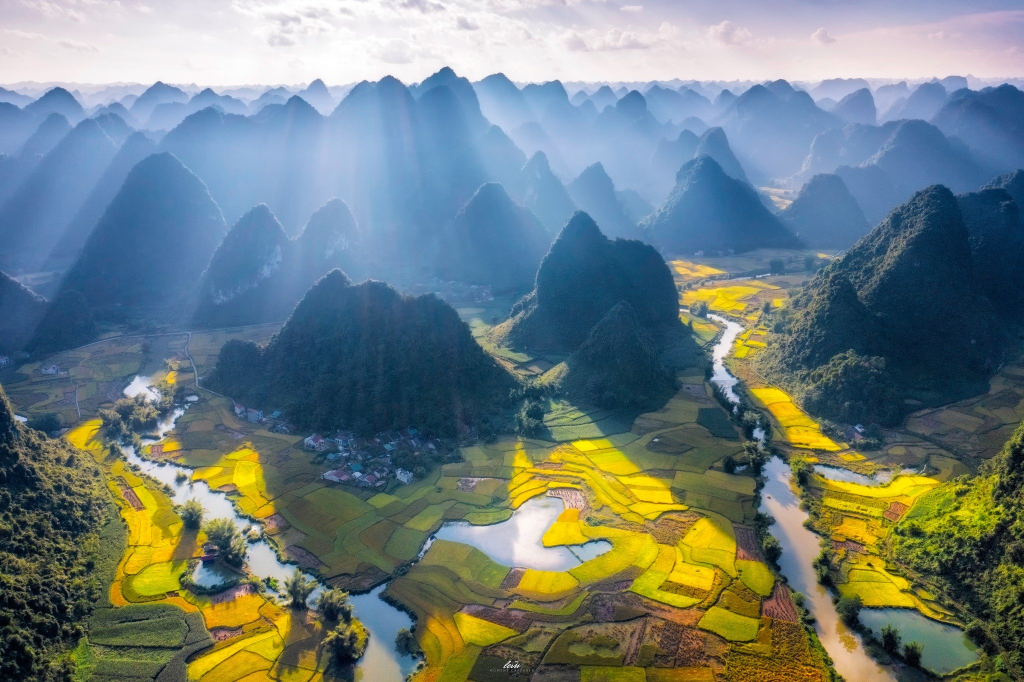
Phong Nam Valley Rice Fields and Limestone Mountains. Picture: Internet.
The valley is best suited to travelers who enjoy scenic drives, photography, and quiet countryside views. It may require additional travel time, so visitors should check whether it fits naturally into their Ban Gioc itinerary.
Ma Phuc Pass
Ma Phuc Pass is one of the scenic mountain routes commonly visited on journeys through Cao Bang. The winding road passes between limestone peaks and offers wide views of valleys, villages, and agricultural land.
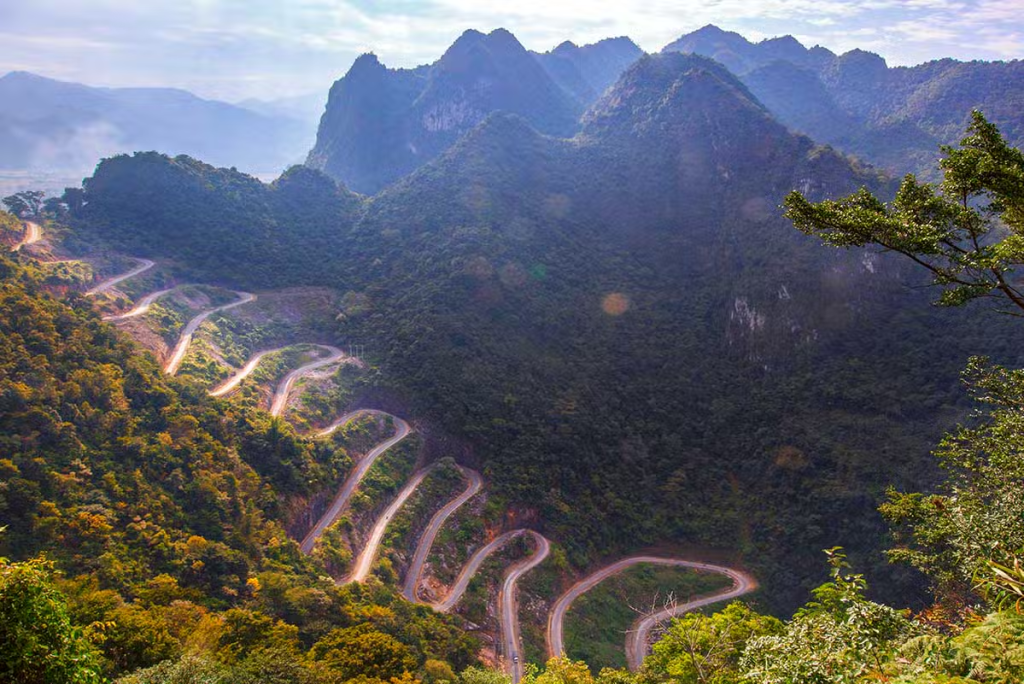
Scenic Mountain Views Along Ma Phuc Pass. Picture: Internet.
Stopping at a safe viewpoint allows travelers to appreciate the scale of the northern mountain landscape. Road and weather conditions can change, so visitors should follow their driver or guide’s instructions when taking photographs.
Cao Bang City
Cao Bang City is often used as an overnight base before or after visiting Ban Gioc. Although smaller and quieter than Hanoi, the city provides accommodation, restaurants, markets, and transport connections for exploring the province.
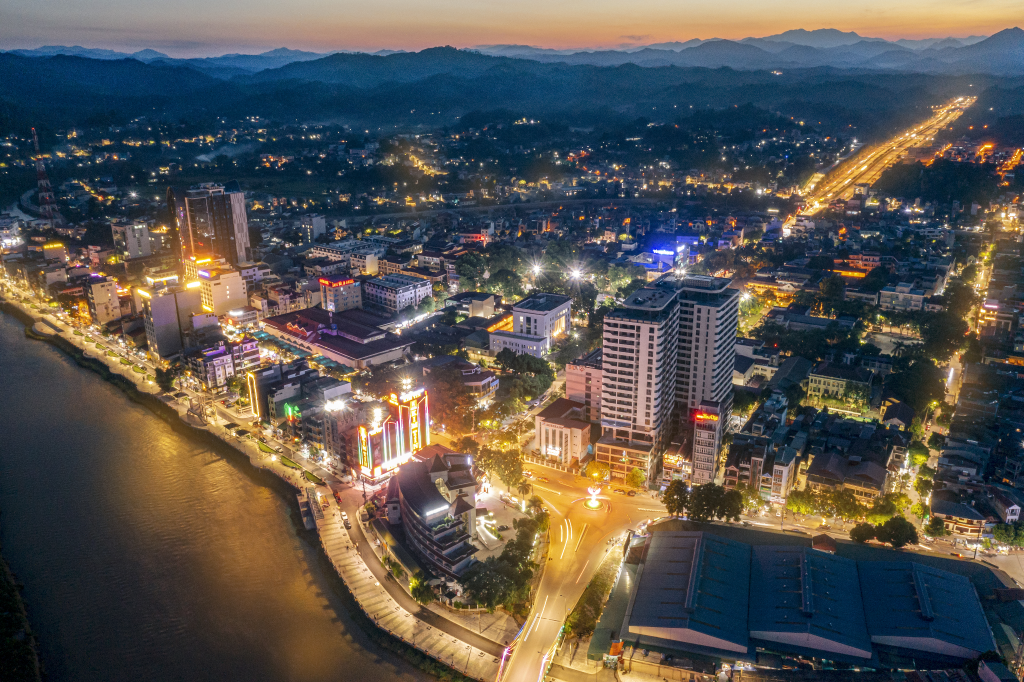
Cao Bang City Local Streets and Regional Culture. Picture: Internet.
Travelers can try local food, walk through the central market, or prepare for the next part of their journey. Staying overnight also creates a more relaxed schedule than attempting to travel from Hanoi and return on the same day.
Building a Balanced Ban Gioc Itinerary
Travelers with limited time can combine Ban Gioc Waterfall, Nguom Ngao Cave, and the nearby pagoda in one day. Those with two or three days can include village visits, Phong Nam Valley, mountain passes, and time in Cao Bang City for a slower and more complete experience.
Overall, the attractions near Ban Gioc Waterfall Vietnam offer a balanced combination of nature, culture, and rural scenery. By choosing stops that match their time and interests, travelers can turn a waterfall visit into a memorable journey through one of northern Vietnam’s most distinctive border regions.
Read for more information:
At Abite.asia, we specialize in curated Vietnam tours for international travelers, ensuring an authentic and hassle-free experience. Let us take care of your journey so you can fully embrace the beauty of Vietnam. Contact us today at +84363770835 to start planning your adventure!


Leave a Reply