Hanoi Green Rice, or Cốm is one of the most iconic autumn flavors in Hanoi, often appearing when the weather becomes cooler and the city begins to feel softer and more nostalgic. Made from young sticky rice grains, cốm has a gentle sweetness, a fresh rice aroma, and a soft chewy texture that makes it different from many other Vietnamese snacks.
For travelers, discovering cốm is a simple but meaningful way to experience Hanoi through local food culture. This seasonal specialty is closely associated with Vòng Village, a long-standing area known for the traditional craft of making young green rice, and it is still loved by many Hanoians today.
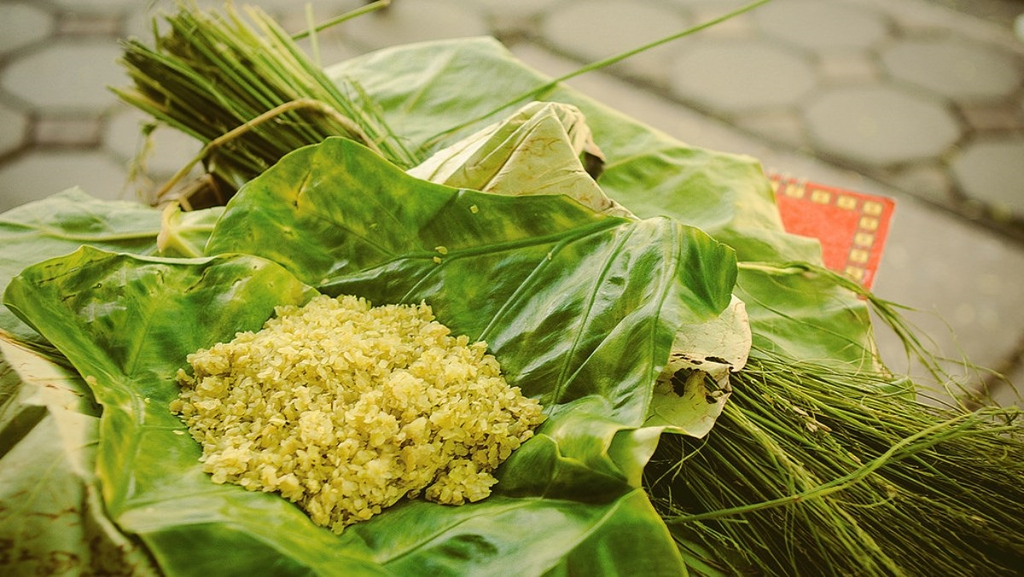
Hanoi green rice – a traditional taste of autumn. Picture: Internet.
This guide introduces what cốm is, where travelers can try good cốm in Hanoi, and how to store it properly after buying. Whether visitors want to taste fresh cốm wrapped in lotus leaves, buy bánh cốm as a gift, or understand why this food is so closely linked with Hanoi autumn, this article will help them enjoy one of the most memorable Hanoi Autumn Specialties in the right way.
1. Cốm – The Most Iconic Taste of Hanoi Autumn
Among all Hanoi Autumn Specialties, cốm is perhaps the most symbolic flavor of the season. This delicate young green rice is closely linked with Hanoi’s autumn atmosphere, when the weather becomes cooler and the city feels softer, slower, and more nostalgic.
1.1. What Is Cốm?
Cốm is made from young sticky rice grains that are harvested before they fully ripen. The grains are carefully roasted, pounded, and sifted until they become soft, flat, fragrant, and naturally green.
The taste of cốm is gentle rather than strong. It has a light sweetness, a soft chewy texture, and a fresh rice aroma that makes it different from many other Vietnamese snacks.
1.2. Where Does Cốm Come From?
In Hanoi, cốm is most strongly associated with Vòng Village, an old village famous for making this autumn specialty for generations. The craft of making cốm has become part of Hanoi’s seasonal identity, especially because it reflects patience, skill, and a close connection to the rice harvest.
Traditionally, cốm was wrapped in lotus leaves to keep its fragrance and freshness. This detail is important because the scent of young rice mixed with lotus leaves creates one of the most recognizable aromas of Hanoi in autumn.
1.3. How People Enjoy Cốm
Cốm is best enjoyed in several simple ways. The most traditional method is to eat it plain, taking small bites to appreciate its natural sweetness, soft texture, and fresh young-rice aroma. It is often served with ripe bananas, whose creamy sweetness pairs beautifully with the gentle flavor of cốm.
Many people also enjoy cốm with ripe persimmons or sweet lotus seeds. These combinations add a pleasant contrast in texture and flavor without overpowering the fragrance of the rice. Cốm can also be mixed with shredded coconut or lightly sweetened mung bean paste for a more filling snack.
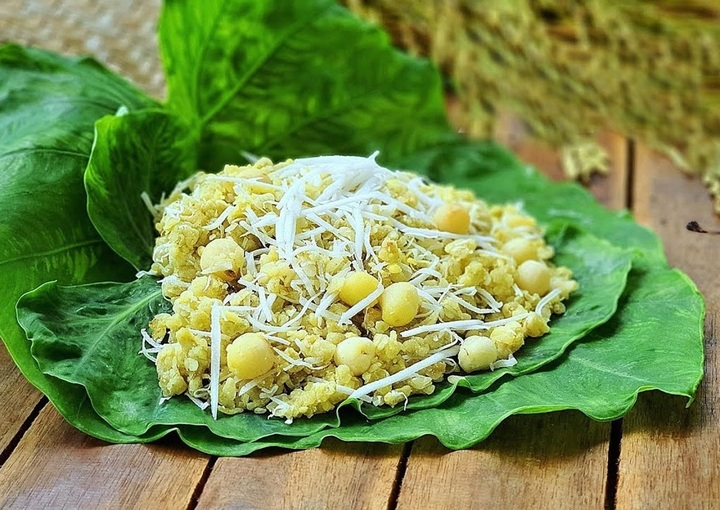
Xôi cốm with lotus seeds – a traditional Hanoi autumn food. Picture: Internet.
Another popular way to enjoy cốm is in traditional dishes and desserts. Bánh cốm is made with a soft cốm outer layer and a sweet mung bean filling, while chả cốm combines cốm with seasoned pork and is often served with fried tofu, rice noodles, or fresh herbs. Cốm is also used in chè cốm, a gentle sweet soup that highlights its seasonal aroma.
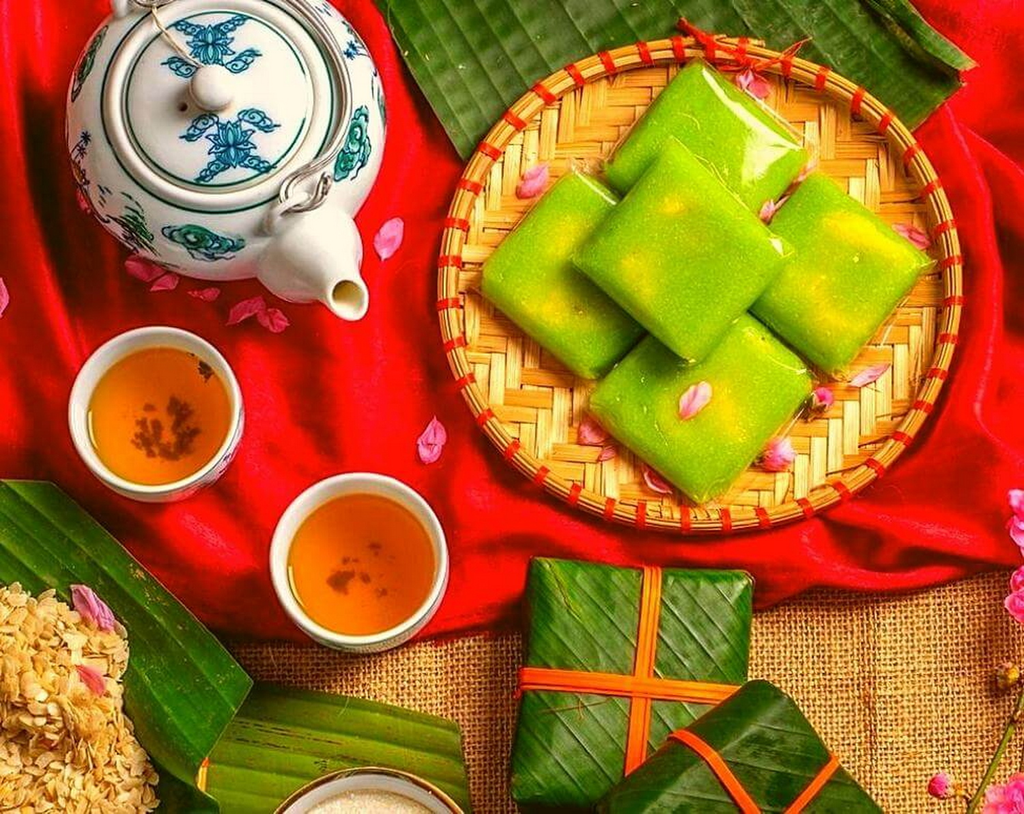
Bánh cốm – traditional Hanoi green rice cake. Picture: Internet.
For the best experience, travelers should try fresh cốm wrapped in lotus leaves first, then sample bánh cốm or chả cốm to discover how versatile this ingredient can be. Because cốm has a delicate flavor, it is best paired with mildly sweet or lightly seasoned foods rather than strong sauces and spices.
2. Where to Try Hanoi Cốm: Best Places, Addresses and Price Guide
Before choosing where to buy Hanoi Cốm, travelers should have a rough idea of the price. Fresh cốm is often sold by weight, while bánh cốm is sold by piece or box, so the total cost depends on whether visitors want to taste it immediately or buy it as a gift.
As a reference, fresh cốm in Hanoi is commonly listed at around 260,000–300,000 VND per kilogram, depending on the seller, quality, and season. Some sources list fresh cốm at about 280,000 VND/kg, while bánh cốm from long-standing shops can be around 6,000–8,000 VND per piece. Prices may change during peak autumn days, so travelers should confirm directly with the shop before buying. (Cốm Vòng Hà Nội)
2.1. Vòng Village – The Classic Origin of Hanoi Cốm
Vòng Village is the most famous name connected with Hanoi Cốm. This area is traditionally associated with green sticky rice, and it is a meaningful place for travelers who want to understand cốm as part of Hanoi’s autumn culture rather than just a snack.
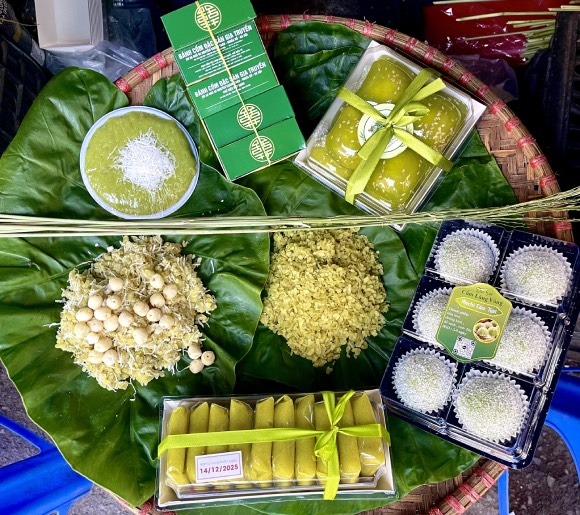
Traditional cốm from Vong Village in Hanoi. Picture: Internet.
Good places and areas to look for cốm around Vòng Village include:
- Vòng Village area – Dịch Vọng Hậu Ward, Cầu Giấy District, Hanoi
- Cốm Làng Vòng Bà Khà – No. 8, Alley 5/19, Lane 35 Tran Thai Tong, Cau Giay, Hanoi
- Cốm Làng Vòng Bà Hoản – No. 36, Lane 63 Xuan Thuy, Cau Giay, Hanoi
These addresses are useful for travelers who want to buy fresh cốm or learn more about the area traditionally linked with the specialty. When visiting, travelers should check whether the cốm is freshly made, naturally fragrant, and wrapped carefully, as fresh cốm is best enjoyed soon after buying.
2.2. Mễ Trì Village – A Long-Standing Cốm Craft Area
Mễ Trì is another important cốm-making area in Hanoi and is especially worth considering for travelers who want to explore a traditional food craft outside the Old Quarter. The craft of making cốm in Mễ Trì was recognized as a national intangible cultural heritage in 2019, making the area culturally significant as well as delicious.
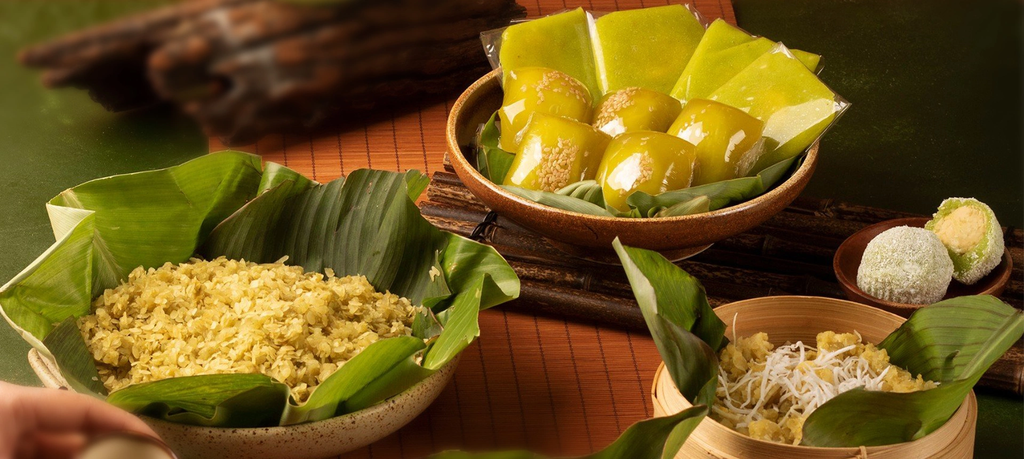
Traditional cốm making in Me Tri Village, Hanoi. Picture: Internet.
Recommended places and areas include:
- Mễ Trì Village area – Mễ Trì, Nam Từ Liêm District, Hanoi
- Cốm Thu Huệ – No. 16 Me Tri Thuong, Me Tri, Nam Tu Liem, Hanoi
- Cốm Mễ Trì Nét – No. 7, Lane 116 Mieu Dam Street, Tu Liem, Hanoi
- Làng Cốm Mễ Trì – No. 20, Lane 116, Alley 70 Mieu Dam, Tu Liem, Hanoi
- Cốm Mộc Ngô Thức – No. 46, Lane 10 Thang Long Avenue, Me Tri, Tu Liem, Hanoi
Mễ Trì is a good choice for travelers who want more than one type of cốm product. Depending on the shop, visitors may find fresh cốm, or other cốm-based gifts that are easier to carry than fresh young rice.
2.3. Hàng Than Street
Hàng Than Street is one of the most convenient places for travelers who want to buy a gift. Unlike fresh cốm, bánh cốm is easier to pack, and more suitable for visitors who want to bring a Hanoi autumn specialty back to friends or family.
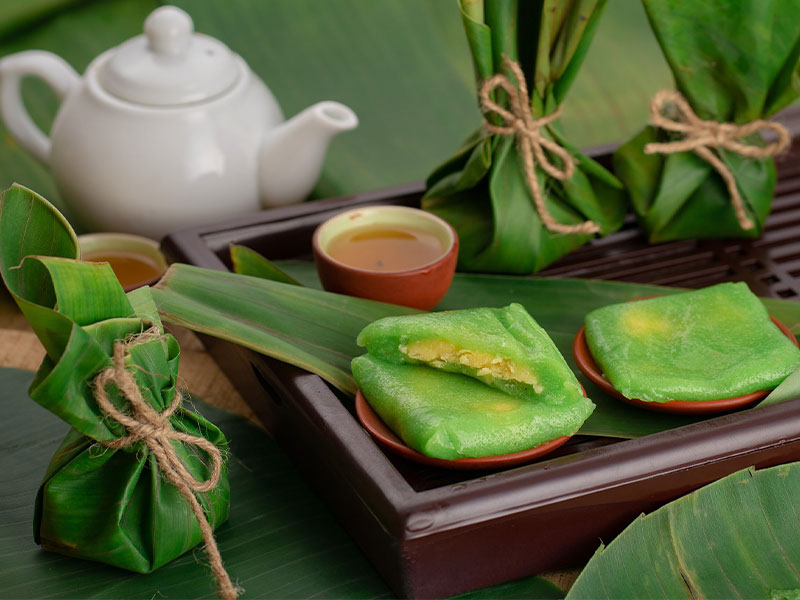
Traditional bánh cốm shops on Hang Than Street, Hanoi. Picture: Internet.
Some well-known addresses on Hàng Than include:
- Bánh Cốm Nguyên Ninh – No. 11 Hang Than, Nguyen Trung Truc Ward, Ba Dinh, Hanoi
- Bánh Cốm Ngọc Ninh – No. 53 Hang Than, Ba Dinh, Hanoi
- Bánh Cốm Nguyên Sinh – No. 20 Hang Than, Hanoi
- Bánh Cốm Bảo Minh – No. 12A Hang Than, Hanoi
For first-time visitors, Bánh Cốm Nguyên Ninh at No. 11 Hang Than is one of the most famous names, with its history often connected to the development of bánh cốm on Hang Than Street. Because there are many similar shop names in the area, travelers should check the exact address carefully before buying.
2.4. Local Markets and Seasonal Vendors
Travelers may also find Hanoi Cốm in local markets, neighborhood food shops, and from seasonal street vendors during autumn. These places can be convenient for casual tasting, especially for visitors staying near the Old Quarter, Hoan Kiem Lake, or residential neighborhoods.
Useful areas to consider include:
- Dong Xuan Market area – Dong Xuan Ward, Hoan Kiem, Hanoi
- Old Quarter food streets – Hoan Kiem District, Hanoi
- Neighborhood morning markets – especially around local residential areas during autumn
When buying from markets or street vendors, travelers should look for a natural young-rice fragrance, soft texture, and gentle green color. Very bright green cốm may not always be a good sign, so it is better to choose sellers who can explain whether the cốm is fresh and how soon it should be eaten.
Best Choice for Different Travelers
For travelers who want the most cultural experience, Vòng Village and Mễ Trì are the best choices because they are closely connected to the traditional craft of making cốm. These places are suitable for visitors who want to understand where Hanoi Cốm comes from and how it became part of the city’s autumn identity.
For travelers who want a convenient gift, Hàng Than Street is easier and more practical. A good plan is to try fresh cốm first in Vòng Village or Mễ Trì, then buy bánh cốm from Hàng Than if visitors want something easier to carry during the rest of their trip.
3. How to Store Hanoi Cốm and Keep It Fresh
Fresh Hanoi Cốm is best enjoyed as soon as possible. It is a delicate seasonal food made from young sticky rice. Unlike dried snacks or packaged sweets, fresh cốm has a soft texture. It also has a light fragrance and natural moisture. These qualities can change quickly if cốm is not stored properly.
Eat Fresh Cốm Soon After Buying
The best way to enjoy fresh cốm is to eat it on the same day. This is especially true when travelers buy it from Vòng Village, Mễ Trì, local markets, or street vendors. Fresh cốm has its best aroma and texture shortly after it is made. At this time, the grains are still soft, chewy, and lightly fragrant.
For foreign travelers, this means fresh cốm should be treated more like a seasonal delicacy than a long-lasting souvenir. It is perfect for tasting during the trip, but it may not be the best item to carry for many days unless it is properly packed or processed into other products.
Keep Cốm Wrapped in Lotus Leaves
Traditional fresh cốm is often wrapped in lotus leaves, and this wrapping is part of what makes the experience special. The leaves help protect the young rice while adding a gentle natural fragrance that blends with the smell of cốm.
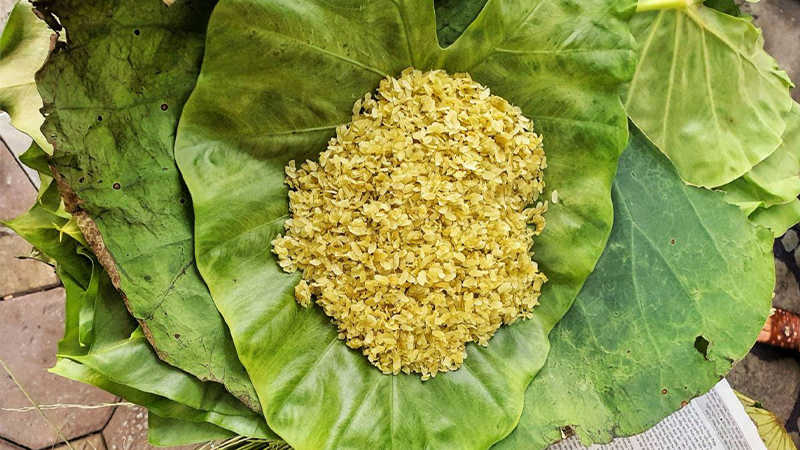
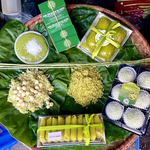
Fresh Hanoi cốm traditionally wrapped in lotus leaves. Picture: Internet.
Travelers should keep the lotus leaf wrapping closed until they are ready to eat. If the cốm is opened too often or exposed to air for a long time, it may become dry, lose fragrance, or change texture faster.
Avoid Heat, Sunlight and Moisture
Fresh cốm should be kept in a cool, clean, and dry place. Direct sunlight, high heat, and humid conditions can affect both the taste and texture, especially during warmer days in Hanoi.
Travelers should not leave cốm inside a hot car. They should also avoid windows or bags for many hours. During a sightseeing day, buy cốm near the end. Travelers can also return it to the hotel soon after buying.
Use the Refrigerator Carefully
If travelers cannot eat fresh cốm immediately, they can ask the seller for advice on short-term storage. In many cases, keeping cốm in the refrigerator for a short time may help slow down spoilage, but it can also make the grains drier or firmer.
To reduce this problem, travelers should keep cốm wrapped well and avoid placing it directly in a very cold or dry area of the fridge. Before eating, they can let it rest at room temperature for a short time so the texture becomes softer again.
Choose Bánh Cốm or Packaged Products for Gifts
Fresh cốm is not always convenient for long travel, especially for visitors who still have several days left in Vietnam. For gifts, bánh cốm, dried cốm, or other packaged cốm products are often easier to carry and store.
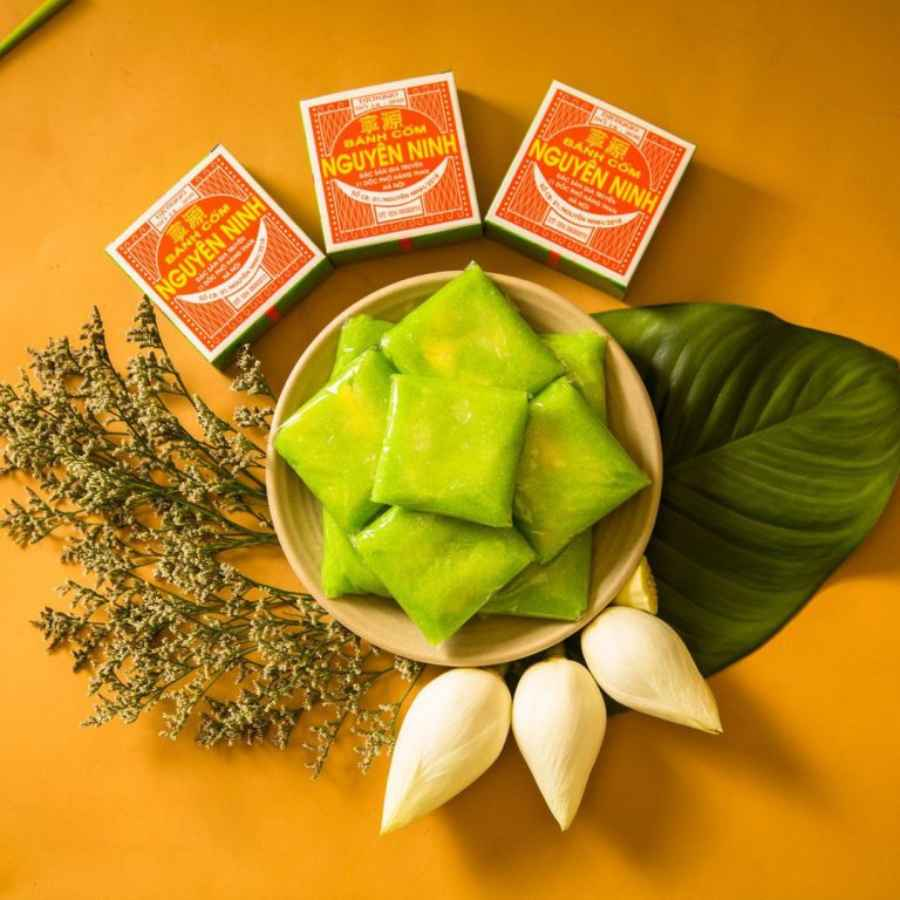
Bánh cốm – a traditional Hanoi gift for travelers. Picture: Internet.
Bánh cốm from Hàng Than Street is a practical choice because it is packed more neatly and usually lasts longer than fresh cốm. Travelers should still check the production date, expiry date, packaging condition, and storage instructions before buying.
Ask Sellers Before Taking Cốm on a Flight
Travelers who want to bring Hanoi Cốm home should ask the seller whether the product is suitable for travel. Fresh cốm may not be ideal for long flights or warm transfers, while packaged bánh cốm or dried cốm products are usually more convenient.
It is also important to check the food import rules of the destination country. Some countries have restrictions on bringing in fresh food, plant-based products, or unpackaged items, so travelers should choose sealed and clearly labeled products if they want to carry cốm internationally.
Simple Storage Tips for Travelers
Storing cốm does not need to be complicated, but travelers should remember that freshness is the most important factor. The better the storage, the more enjoyable the taste, aroma, and texture will be.
Useful tips include:
- Eat fresh cốm on the same day when possible
- Keep cốm wrapped in lotus leaves until serving
- Avoid direct sunlight, heat, and humid places
- Buy fresh cốm near the end of a sightseeing day
- Choose bánh cốm or packaged cốm for gifts
- Check expiry dates and packaging before buying
- Ask sellers for storage advice before traveling with it
These simple steps help visitors enjoy Hanoi Cốm in the best condition. Whether tasting it fresh in Hanoi or buying cốm-based products as gifts, proper storage makes the experience more delicious, practical, and memorable.
At Abite.asia, we specialize in curated Vietnam tours for international travelers, ensuring an authentic and hassle-free experience. Let us take care of your journey so you can fully embrace the beauty of Vietnam. Contact us today at +84363770835 to start planning your adventure!





Leave a Reply