
Long Bien Bridge is not just an iron structure spanning the Red River; it is a living monument to Hanoi’s history. Since its completion in the early 20th century, the bridge has carried trains, vehicles, and countless pedestrians while witnessing wars, reconstruction, and cultural change. To walk across Long Bien Bridge today is to retrace the footsteps of generations who depended on it as a lifeline. This article explores the story of the bridge—its origins, architecture, wartime resilience, cultural symbolism, and significance for travelers. By understanding its past and present, visitors can appreciate why Long Bien Bridge remains one of Hanoi’s most treasured icons.
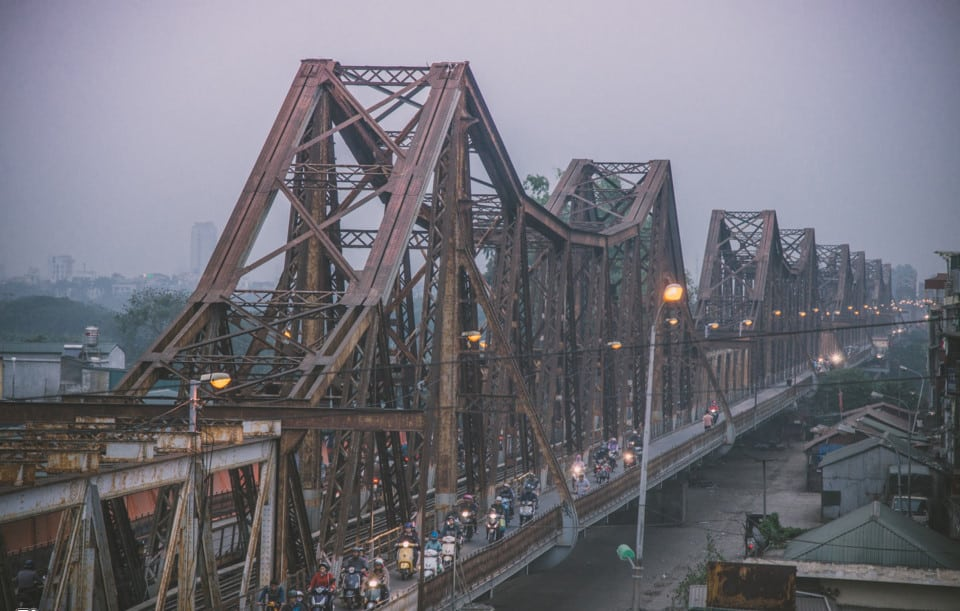
Image for illustrative purposes only. Source: Collected online.
1. Historical Origins of Long Bien Bridge
Long Bien Bridge was a groundbreaking project in the early 20th century, designed to connect Hanoi with northern provinces and support trade across the Red River. Built during the French colonial era, the structure quickly became a vital artery for the city. This section explores how the bridge was constructed, why it was essential for transportation, and what it symbolized at the time.
Construction During French Colonial Era
At the turn of the century, the French sought to modernize Hanoi with infrastructure that demonstrated both power and innovation. Completed in 1902, Long Bien Bridge stretched nearly 1.7 kilometers, making it one of the longest in Asia at that time. Designed with influence from Gustave Eiffel’s engineering principles, the bridge combined imported steel with the labor of thousands of Vietnamese workers.

Image for illustrative purposes only. Source: Collected online.
Key facts about the construction:
- Took five years to complete.
- Originally named Paul Doumer Bridge after the French governor-general.
- Built with steel shipped from France and assembled locally.
This ambitious project was more than transport infrastructure — it was a symbol of colonial ambition and industrial progress.
Strategic Role in Trade and Transportation
Once opened, the crossing immediately became central to Hanoi’s economy. It carried trains, horse-drawn carts, bicycles, and pedestrians, making it the lifeline for goods moving between the capital and northern Vietnam. Farmers used the structure daily to bring rice, fruit, and vegetables into the city’s markets.
Economic contributions of the bridge:
- Linked Hanoi with Haiphong Port for international trade.
- Transported coal, rice, and raw materials across the region.
- Allowed military supplies and personnel to move efficiently.
By serving commerce and industry, the bridge strengthened Hanoi’s position as a hub of colonial administration.
Symbol of Engineering Ambition
At the time of completion, locals viewed the crossing as a marvel of technology. Its iron lattice stretched boldly across the Red River, reflecting both elegance and strength. Although built for colonial purposes, Long Bien Bridge became a shared symbol of modernity and progress.
Why it stood out:
- First major steel bridge in Indochina.
- Blended European design with local resilience.
- Withstood natural challenges like floods in its early years.
From the beginning, the structure carried not only trains and carts but also the aspirations of a city on the edge of transformation.
2. Long Bien Bridge in Times of War
The crossing over the Red River was not only vital for transport but also became a battlefield and a symbol during Vietnam’s turbulent wars. From the French-Indochina conflict to the Vietnam War, the structure endured relentless attacks and constant repairs. This section explores how Long Bien Bridge became a lifeline for Hanoi and a testament to the resilience of its people.
The Bridge in French-Indochina Conflicts
During the First Indochina War (1946–1954), the iron span carried military supplies, food, and coal. Its strategic location made it a contested site between French forces and Vietnamese resistance. While the colonial army depended on the bridge for logistics, local fighters viewed it as a symbol of foreign control.
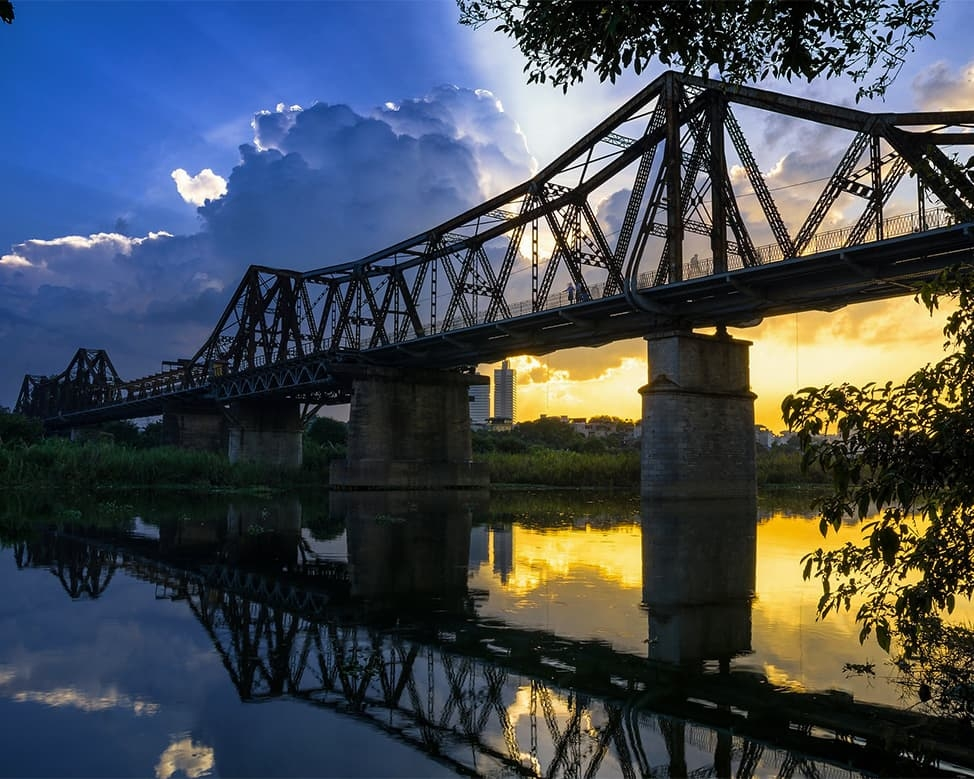
Image for illustrative purposes only. Source: Collected online.
Roles of the bridge in this era:
- Moved French troops and weapons across the Red River.
- Transported rice and coal into the capital.
- Became a focal point of resistance narratives.
Even in these early years, the historic crossing represented both dominance and defiance.
Bombing Raids During the Vietnam War
In the 1960s and 1970s, Long Bien Bridge became one of the most heavily targeted structures in North Vietnam. American bombers repeatedly struck the iron framework to cut off supplies reaching Hanoi. Each time, Vietnamese workers and soldiers rushed to repair the damage, often overnight, to keep trains and vehicles moving.
Impact of wartime bombings on the bridge:
- Multiple spans destroyed and rebuilt several times.
- Railway lines quickly restored to maintain transport.
- Local workers risked their lives to ensure continuity.
These constant repairs transformed the bridge into a living emblem of resilience.
A Symbol of Hanoi’s Strength
By surviving decades of destruction, the span earned legendary status. Veterans and citizens alike remember it as a lifeline during hard times. For many, the rusted beams became a reminder of courage, sacrifice, and unity.
Why the structure symbolizes Hanoi’s strength:
- It withstood repeated aerial assaults.
- Supply lines remained open despite attacks.
- It embodied the determination of ordinary citizens.
Through war and hardship, Long Bien Bridge remained standing — battered, scarred, but unbroken, just like the city it served.
3. Architecture and Design of Long Bien Bridge
The bridge is admired not only for its history but also for its unique design. Built with French engineering expertise and local labor, the structure combines technical innovation with enduring symbolism. Its iron framework, multifunctional pathways, and weathered charm continue to make it one of Hanoi’s most recognizable landmarks.
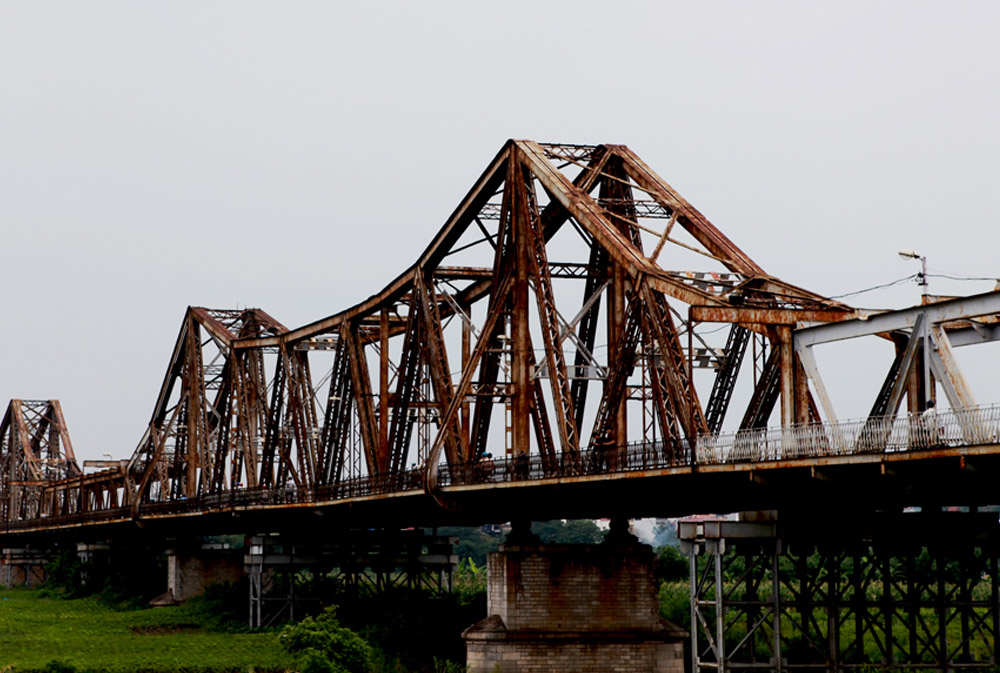
Image for illustrative purposes only. Source: Collected online.
Technical Features and Measurements
When it was completed in 1902, Long Bien Bridge was considered one of the most advanced engineering projects in Southeast Asia. Stretching nearly 1.7 kilometers across the Red River, it was, at the time, the longest bridge in Asia.
Key design features of the crossing:
- 19 steel spans supported by stone piers.
- A central railway track flanked by lanes for bicycles and motorbikes.
- Pedestrian paths offering views of the city and river.
- Constructed with imported French steel and assembled locally.
Its sheer scale and functionality cemented the bridge as both an engineering feat and a cultural landmark.
A Multi-Use Structure for City Life
Unlike many bridges of its era, the span was designed to carry trains, carts, and foot traffic simultaneously. Farmers still walk across with baskets of produce, while commuters navigate the narrow side lanes on motorbikes. Tourists often prefer the pedestrian walkway, where the slow pace allows time to appreciate the atmosphere.
Daily uses of the structure:
- Cargo trains crossing along the central track.
- Motorbikes and bicycles in side lanes.
- Pedestrians enjoying leisurely walks.
- Farmers transporting goods into Hanoi markets.
This flexibility has ensured the crossing remains relevant even as the city modernizes.
The Aging Beauty of the Bridge
Over a century of use has left the iron beams covered in rust and patched with repairs, but these imperfections add character. Photographers are drawn to its weathered look, especially at sunrise or sunset. Artists frequently portray the structure as both a survivor of history and a symbol of nostalgia.
Why the design continues to inspire admiration:
- Rustic details tell stories of endurance.
- Views over the Red River create dramatic scenery.
- The silhouette of the latticework is iconic in Hanoi.
- Its aged condition highlights resilience rather than decay.
Through its architecture, Long Bien Bridge reflects both the strength of its construction and the spirit of the city it serves.
4. Cultural Symbolism and Daily Life Around Long Bien Bridge
For Hanoians, the bridge is more than an iron structure across the Red River. It has become a cultural landmark, a hub of daily activity, and a source of inspiration for generations of artists. This section highlights how the crossing remains woven into Hanoi’s social and cultural fabric.

Image for illustrative purposes only. Source: Collected online.
Daily Commuters and Farmers
Every day, thousands of motorbikes, bicycles, and pedestrians rely on the crossing to reach the city center. Farmers from nearby provinces carry baskets of fruit and vegetables to wholesale markets, keeping traditions alive. For residents, walking or riding across the span is part of daily life and an enduring connection to history.
How the bridge supports daily routines:
- Provides a vital route for commuters heading into Hanoi.
- Farmers deliver produce to Long Bien Market at dawn.
- Pedestrians enjoy scenic walks overlooking the Red River.
- Remains a lifeline despite newer bridges in the city.
Through these activities, Long Bien Bridge continues to sustain livelihoods.
Inspiration for Artists and Writers
The structure also lives on in Vietnamese art and literature. Poets describe it as a witness to love, loss, and survival. Photographers frame its rusty beams against the sky, while painters capture its nostalgic beauty. For many creators, the bridge symbolizes endurance and romance.
Cultural symbolism of the historic crossing:
- Featured in poetry as a backdrop for separation and reunion.
- Painted as a reminder of resilience after war.
- Captured in countless sunrise and sunset photographs.
- Used as a metaphor for continuity in modern Hanoi.
This creative legacy keeps the bridge alive in the nation’s imagination.
Market Life and Street Vendors
At both ends of the span, vibrant market scenes unfold. Farmers sell fruit, vendors prepare snacks, and coffee stalls invite passersby to stop and enjoy the view. These small businesses transform the area into more than a transit point; it becomes a gathering space where community thrives.
Market activities near the bridge include:
- Early morning vegetable and fruit trading.
- Snack stalls selling boiled corn and sweet potatoes.
- Street cafés offering riverside coffee with a view.
- Social gatherings that keep traditions alive.
By blending commerce with culture, Long Bien Bridge maintains its role as a living part of Hanoi’s daily rhythm.
5. Visiting Long Bien Bridge Today
Today, the historic span remains both a functioning crossing and a cultural destination. Walking across it gives travelers sweeping views of the Red River, glimpses of daily life, and a direct connection to Hanoi’s past. This section offers guidance on the best times to go, tips for safety, nearby attractions, and the ongoing debate over preservation.

Image for illustrative purposes only. Source: Collected online.
Best Times to Visit
The atmosphere on the bridge changes dramatically depending on the time of day. Sunrise reveals farmers bringing produce into the city, while sunset paints the iron beams with golden light. At night, the structure glows softly, offering a quieter, reflective experience.
When to go for the best experience:
- Early morning: See local vendors heading toward markets.
- Sunset: Capture colorful skies over the Red River.
- Evening: Enjoy a calm stroll along the pedestrian walkway.
These moments highlight why Long Bien Bridge remains one of Hanoi’s most atmospheric landmarks.
Safety and Travel Tips
Because the span is over a century old, visitors should be careful when crossing. The narrow lanes and uneven pathways make it more practical for walking slowly and observing rather than rushing across.
Tips for exploring the iron crossing safely:
- Stick to the pedestrian path to avoid motorbikes.
- Wear comfortable shoes for the uneven surface.
- Keep belongings secure in crowded areas.
- Watch carefully when trains pass on the central track.
Simple precautions ensure the experience is enjoyable and stress-free.
Nearby Attractions and Preservation Efforts
Exploring the area around the bridge can enrich the visit. Long Bien Market, located right at its foot, is alive with early-morning trade. The Old Quarter is a short walk away, while small cafés along the river offer scenic views. At the same time, locals and preservationists debate how to maintain the structure while ensuring safety.
Highlights near the bridge:
- Bustling wholesale market activity.
- Old Quarter shopping and street food.
- Riverside coffee stalls with unique perspectives.
- Ongoing heritage campaigns to save the structure.
Whether admired as history, art, or infrastructure, Long Bien Bridge continues to connect people — not just across the river, but across generations.
Read for more information:
- Ngoc Son Temple Spiritual Guide: Understanding Hanoi’s Sacred Island Shrine
- Top 8 Things to Do Around Hoan Kiem Lake: From Sunrise Strolls to Night Lights
At Abite.asia, we specialize in curated Vietnam tours for international travelers, ensuring an authentic and hassle-free experience. Let us take care of your journey so you can fully embrace the beauty of Vietnam. Contact us today at +84363770835 to start planning your adventure!




Leave a Reply