Introduction
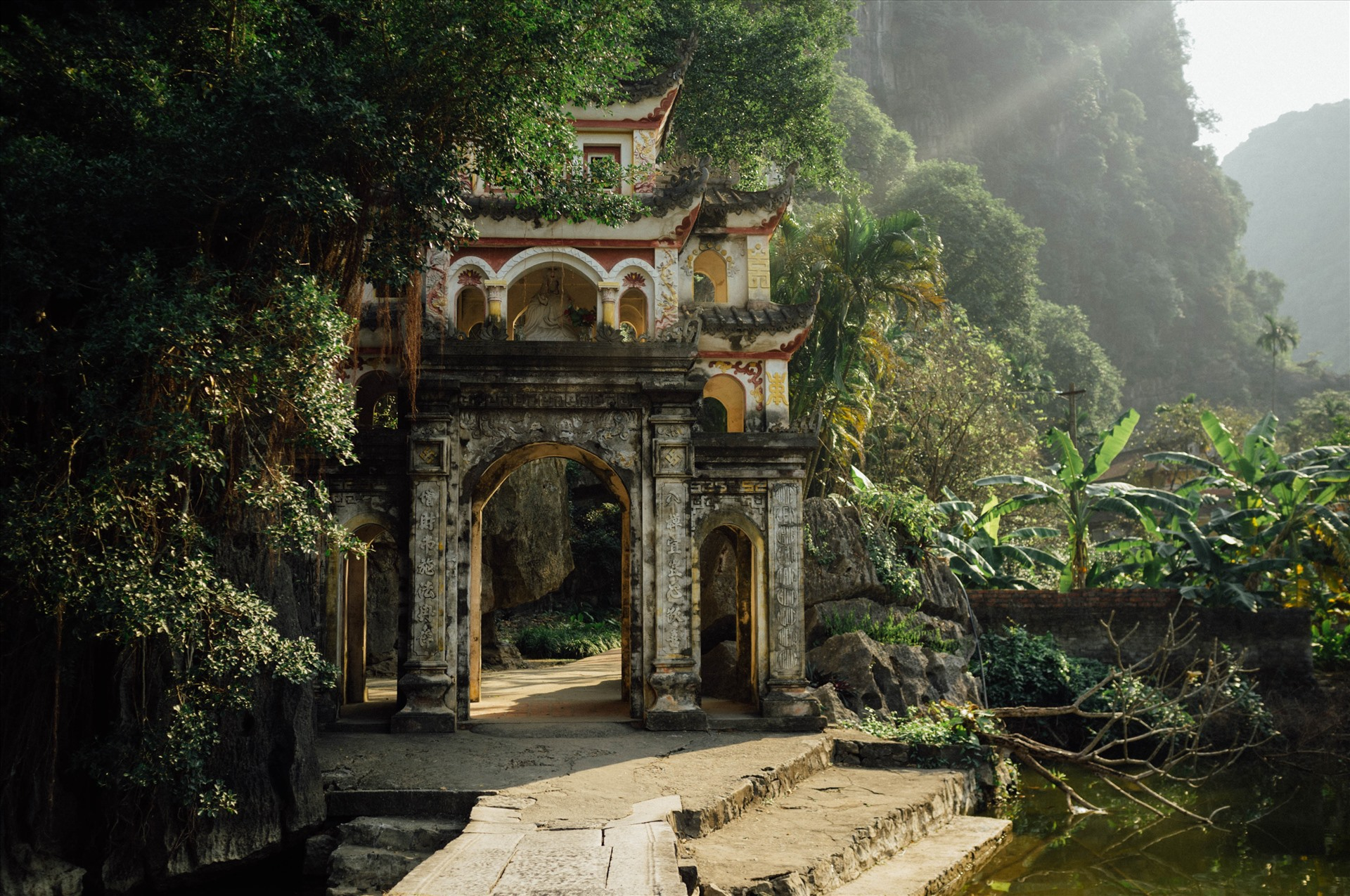
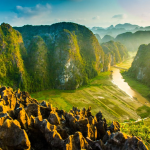
Hidden among limestone cliffs and quiet waterways, Bich Dong Pagoda offers a different way to experience Ninh Binh. Rather than rising prominently above the landscape, the pagoda blends into it. Stone, mountain, water, and architecture exist side by side, creating a setting that feels balanced and contemplative. Built into a mountainside, Bich Dong Pagoda does not reveal itself all at once. Visitors approach gradually, crossing a small bridge, passing through gardens, and moving upward step by step. Each level introduces a new perspective, both visually and emotionally. As a result, the visit feels like a journey rather than a single stop.

1. The Natural Setting That Shapes Bich Dong Pagoda
Bich Dong Pagoda exists because of its environment. The mountain, the cave, and the surrounding water form the foundation of its character. This section focuses on how natural elements shape the pagoda’s layout, mood, and meaning.
A Pagoda Built Into the Mountain
Bich Dong Pagoda is constructed directly into a limestone mountain. Instead of standing freely, its structures lean against rock faces and extend into caves. This design creates a sense of protection and enclosure.
Because the mountain surrounds the pagoda, sound behaves differently. Noise softens quickly. Voices echo briefly, then disappear. This natural acoustics enhance the feeling of calm.
Key features of the setting include:
- Limestone cliffs rising behind the structures
- Natural caves integrated into worship spaces
- Stone steps connecting different levels
- Shade created by rock and vegetation
These elements ground the pagoda within its landscape.
Water, Greenery, and Approach
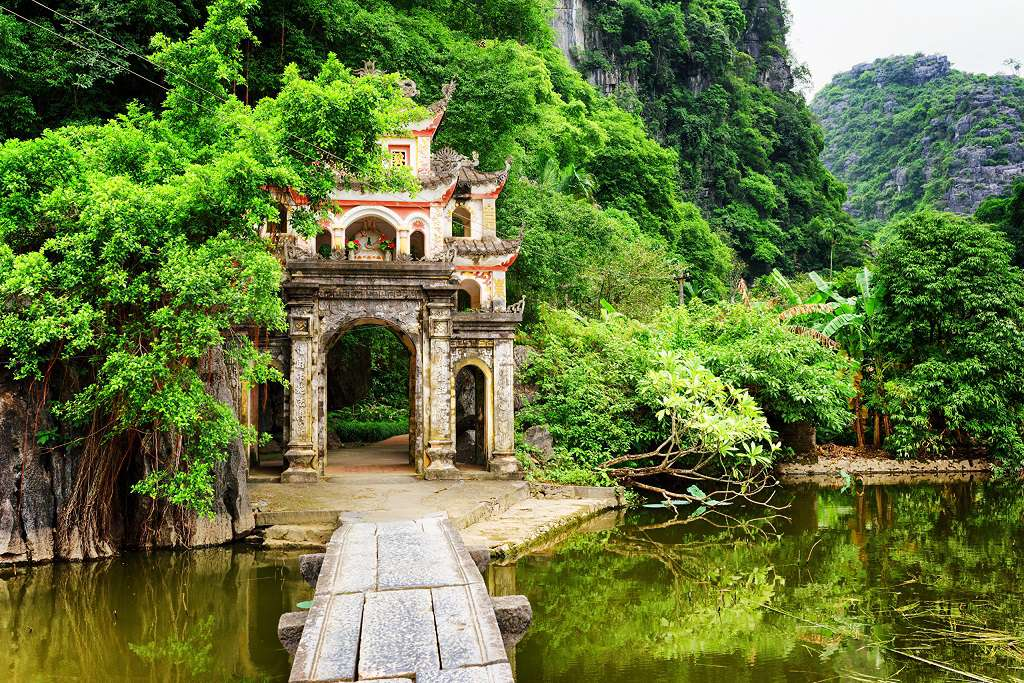
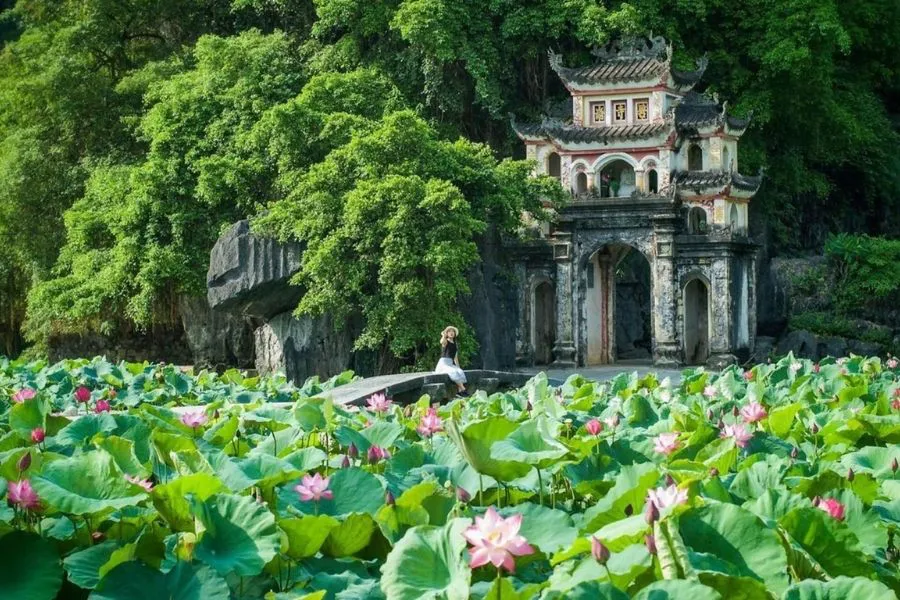
Before reaching the pagoda, visitors cross a small stone bridge over water. Lotus ponds and trees frame the path. This approach slows movement and prepares the mind for a quieter space.
Water reflects both sky and stone. Vegetation softens the sharp lines of rock. Together, they create a gentle transition from open land to sacred space.
Because of this gradual approach, the pagoda never feels abrupt. Arrival feels earned and intentional.
How Nature Influences Spiritual Atmosphere
Nature shapes not only structure, but atmosphere. Cool air flows from caves. Light filters unevenly through rock openings. Shadows shift throughout the day.
These conditions encourage stillness. Movement becomes careful. Observation replaces haste.
Rather than separating worship from environment, Bich Dong Pagoda allows nature to participate in spiritual experience. The mountain does not act as background. It acts as shelter, guide, and presence.
Ultimately, the natural setting gives Bich Dong Pagoda its identity. Without the mountain, the pagoda would lose its quiet power. Together, they form a space where belief, landscape, and time remain deeply connected.
2. Architectural Layout and the Three-Level Pagoda Structure
Bich Dong Pagoda is organized vertically, following the natural rise of the mountain. Instead of spreading outward, the pagoda unfolds upward through three distinct levels. This structure shapes how visitors move, observe, and reflect. This section explores how the architectural layout guides experience and reinforces spiritual meaning.
Lower Pagoda: The First Point of Arrival
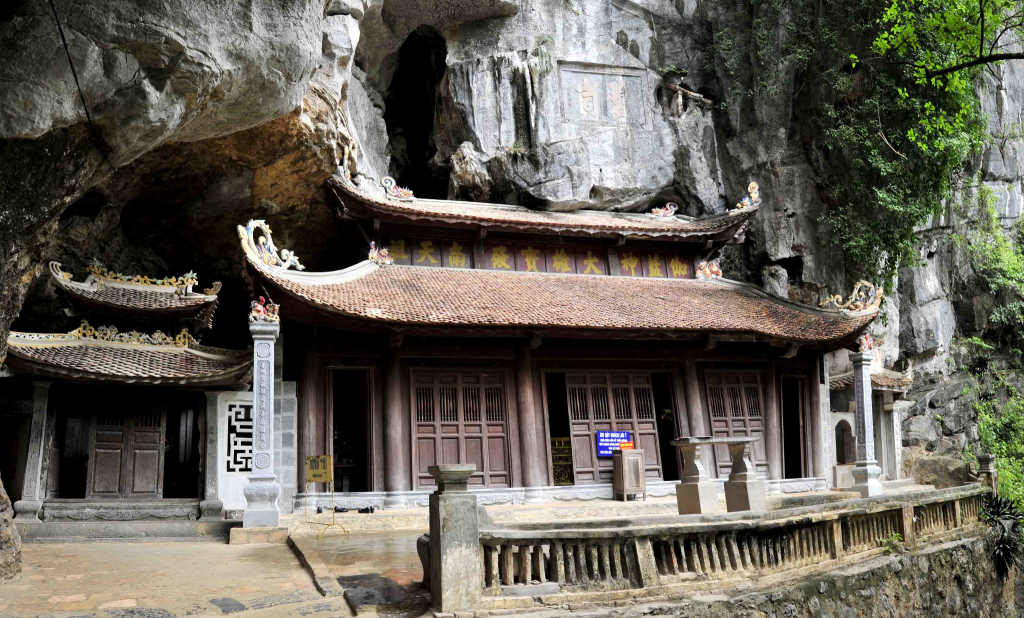
The Lower Pagoda sits closest to the water and garden area. It serves as the first formal space of worship and transition. After crossing the stone bridge and passing through greenery, visitors enter a calm courtyard framed by simple structures.
This level feels open and welcoming. Light enters easily. Air moves freely. As a result, the atmosphere remains gentle rather than solemn.
Common features of the Lower Pagoda include:
- Traditional tiled roofs with curved edges
- Wooden doors and columns worn by time
- Altars positioned in open, accessible spaces
- Views that still connect to the surrounding landscape
Because of this openness, the Lower Pagoda eases visitors into the spiritual environment.

Middle Pagoda: Transition and Reflection
Above the first level, stone steps lead upward toward the Middle Pagoda. The climb feels more enclosed. Rock walls rise closer. Vegetation thins. Sound begins to fade.
This middle level often sits partly within a cave. Natural stone surrounds the space, blending architecture with geology. Light becomes softer and more directional.
The Middle Pagoda encourages pause. Visitors slow down. Movements become quieter. Attention turns inward.
This level often represents transition. It stands between openness and enclosure, between the outer world and deeper contemplation.
Upper Pagoda: Height and Stillness
The Upper Pagoda rests highest on the mountain. Reaching it requires effort and care. Steps narrow. The path curves. Each movement feels deliberate.
At this level, the space feels intimate and still. Light enters through small openings. Air feels cooler. Views extend outward but remain partially framed by stone.
Key qualities of the Upper Pagoda include:
- Close integration with cave walls
- Limited space encouraging silence
- Elevated views across the valley
- A sense of separation from daily life
This final level completes the vertical journey.
Why Vertical Design Shapes Experience
The three-level structure of Bich Dong Pagoda does more than organize space. It creates progression. Each level shifts mood and awareness.
Visitors move from openness to enclosure. From movement to stillness. From observation to reflection.
Through this vertical layout, architecture supports spiritual rhythm. Rather than explaining meaning, the pagoda allows visitors to feel it through movement, height, and space.
3. Spiritual Significance and Religious Life at Bich Dong Pagoda
Bich Dong Pagoda functions not only as an architectural landmark, but also as a living spiritual space. Worship, belief, and quiet devotion continue to shape how the pagoda is used and understood. This section explores the religious meaning of the site and how spiritual life unfolds within its mountain setting.
Buddhist Belief Rooted in Simplicity
The spiritual atmosphere at Bich Dong Pagoda reflects core Buddhist values such as humility, balance, and impermanence. Unlike grand temple complexes designed to impress, this pagoda encourages modesty. Structures remain small. Decoration stays restrained. Space feels intentional rather than abundant.
Because of this simplicity, attention shifts inward. Visitors focus less on form and more on presence. Incense burns slowly. Bells sound softly. Rituals feel personal rather than ceremonial.
Key spiritual qualities expressed at the pagoda include:
- Emphasis on quiet contemplation
- Minimal separation between worship and nature
- Respect for stillness and patience
- Acceptance of change through natural aging
These qualities align closely with Buddhist practice.
Daily Worship and Local Devotion
Bich Dong Pagoda remains active in daily religious life. Local residents visit regularly, not only on festival days. Some come to pray. Others come to sit quietly. The pagoda accommodates both.
Offerings remain simple. Flowers, fruit, and incense appear without excess. Actions feel practiced rather than performed. This consistency reflects long-standing tradition rather than adaptation for visitors.
Monks occasionally move through the space. Their presence remains subtle. Teaching happens through example rather than instruction.
Caves as Sacred Space
The integration of caves adds depth to spiritual experience. In Buddhist tradition, caves often symbolize retreat and introspection. At Bich Dong Pagoda, cave spaces feel protective and inward-facing.
Light enters unevenly. Shadows move slowly. These conditions encourage stillness and focus. Many visitors instinctively lower their voices or pause longer in these spaces.
The cave environment reinforces separation from daily concerns. It creates a boundary between outer noise and inner awareness.
Why Spiritual Meaning Endures
Spiritual significance at Bich Dong Pagoda endures because it remains connected to practice. Belief continues through routine, not display. Nature supports this continuity by providing calm and enclosure.
Rather than explaining doctrine, the pagoda invites experience. Visitors may not share the same beliefs, yet many feel the same quiet effect.
In this way, Bich Dong Pagoda serves as both religious site and contemplative refuge. Its spiritual life persists through simplicity, consistency, and respectful coexistence with the natural world.
4. Visiting Bich Dong Pagoda Today: Experience, Etiquette, and Atmosphere
Visiting Bich Dong Pagoda today offers a calm and reflective experience rather than a crowded or performative one. Although the site welcomes travelers, it remains rooted in religious practice and local rhythm. This section explains what visitors can expect and how to approach the pagoda with awareness and respect.
The Visitor Experience on Site
A visit to Bich Dong Pagoda unfolds slowly. There is no fixed route that rushes movement. Instead, visitors progress naturally from the lower level to the upper structures. Each step upward introduces a quieter and more enclosed space.
Because of this gradual ascent, the visit feels immersive. Sounds soften. Movements slow. Attention becomes focused on surroundings rather than destination.
Typical aspects of the experience include:
- Walking across the stone bridge and garden approach
- Moving between pagoda levels via narrow stone steps
- Pausing inside cave spaces with filtered light
- Observing worship without interruption
The environment encourages patience rather than urgency.
Etiquette and Respectful Behavior
Bich Dong Pagoda remains an active religious site. Respectful behavior supports both spiritual life and visitor experience. While rules are not heavily enforced, expectations remain clear through atmosphere and local example.
Visitors are encouraged to dress modestly. Voices should remain low. Photography is allowed, yet discretion matters, especially near altars or worshippers.
Important considerations include:
- Avoiding loud conversation or phone use
- Asking before photographing people
- Refraining from touching sacred objects
- Moving carefully on stone steps
These actions help preserve the site’s calm.
Balancing Tourism and Spiritual Space
Tourism has increased visibility, yet Bich Dong Pagoda retains balance. Visitor numbers remain moderate. Commercial presence stays minimal. This restraint allows the pagoda to function as both destination and sanctuary.
Local caretakers prioritize maintenance over development. Natural aging remains visible. This choice reinforces authenticity rather than polish.

Why the Experience Feels Intimate
What makes Bich Dong Pagoda memorable is not scale, but intimacy. The space does not overwhelm. It invites closeness, observation, and reflection.
Visitors often leave with a sense of quiet satisfaction rather than excitement. The experience lingers through mood rather than image.
By approaching the visit with respect and openness, travelers connect more deeply with the pagoda’s spirit. Bich Dong Pagoda offers not spectacle, but stillness. In that stillness, its lasting value becomes clear.
Read for more information:
- https://abite.asia/hang-mua-viewpoint-ninh-binhs-iconic-panorama-from-the-dragon-mountain/
- https://abite.asia/thach-bich-pagoda-and-cave-a-quiet-spiritual-refuge-in-ninh-binh/
At Abite.asia, we specialize in curated Vietnam tours for international travelers, ensuring an authentic and hassle-free experience. Let us take care of your journey so you can fully embrace the beauty of Vietnam. Contact us today at +84363770835 to start planning your adventure!



Leave a Reply