Tucked away from the main tourist routes of Ninh Binh, Thung Nang offers a boat journey defined by silence, space, and subtle beauty. Unlike busier river routes, this valley remains quiet and understated. There are no large crowds, no loud engines, and no urgency to move quickly. Instead, the experience unfolds slowly, shaped by water, limestone cliffs, and the rhythm of rowing. From the moment the boat leaves the small pier, the outside world begins to fade. The water moves gently. Oars touch the surface with steady motion. Surrounding cliffs rise without interruption. As a result, attention shifts naturally toward sound, light, and movement.

1. The Natural Landscape That Defines Thung Nang
The character of Thung Nang is shaped entirely by its natural environment. The valley feels enclosed yet open, protected yet expansive. This section focuses on how landscape elements work together to create a calm and immersive experience.
A Valley Surrounded by Limestone Cliffs
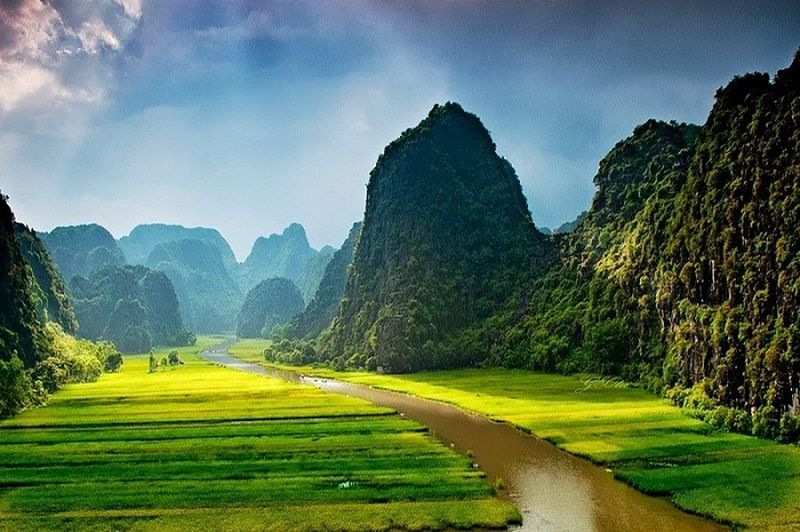
Thung Nang sits within a ring of limestone mountains that rise steeply from the water. These cliffs create a sense of separation from surrounding areas. Once inside the valley, external noise disappears quickly.
Because the cliffs are close, sound behaves differently. Oars echo briefly. Voices soften. Wind moves gently through narrow openings. This acoustic quality enhances the feeling of retreat.
Key features of the surrounding landscape include:
- Tall limestone walls framing the river
- Narrow passages opening into wider basins
- Minimal visible development along the banks
- Natural vegetation growing directly from rock
These elements create visual continuity and calm.
Water as the Central Path

Water defines movement through Thung Nang. The river remains narrow and shallow in places, allowing boats to glide smoothly without engine noise. The surface reflects cliffs, sky, and trees, doubling the sense of space.
Because movement depends on rowing, pace remains slow and consistent. This pace encourages observation. Details become noticeable. Changes in light feel meaningful.
The waterway does not rush toward a destination. It invites presence within the journey itself.
Light, Shadow, and Quiet Atmosphere
Light filters unevenly through the valley. At times, cliffs block direct sunlight. At other moments, open sections allow brightness to spread across the water. Shadows move slowly as the boat progresses.
This shifting light creates a gentle rhythm. There is no single highlight. Instead, beauty appears in transitions.
Ultimately, the landscape of Thung Nang does not seek attention. It creates conditions for calm. Through enclosure, water, and silence, the valley offers an experience that feels deeply grounded and restorative.
2. The Boat Journey Through Thung Nang: Movement, Silence, and Rhythm
The boat ride through Thung Nang shapes the entire experience. Unlike faster river routes, this journey unfolds at a steady and unhurried pace. Movement feels intentional, guided by the rhythm of rowing rather than engines or schedules. This section explores how the boat journey creates calm and encourages deeper awareness of the surroundings.
Rowing as a Gentle Form of Travel
Boats in Thung Nang move solely by hand. Rowers use simple wooden oars, dipping them into the water with consistent motion. Because there is no mechanical sound, silence dominates the journey. The only noise comes from water, wind, and distant birds.
This method of travel affects perception. Without speed, the landscape feels closer. Details along the riverbanks become visible. Reflections on the water shift slowly with each stroke.

Several elements define this rowing experience:
- Even and predictable pace
- Absence of engine vibration
- Close proximity to water level
- Smooth transitions between narrow and open sections
Together, these features create a sense of ease.
How Slow Movement Changes Attention
As the boat moves forward, attention naturally widens. There is no need to anticipate turns quickly. Instead, the mind settles into observation. Cliffs appear taller. Vegetation feels more detailed. Light changes become noticeable.
Because movement remains smooth, passengers often relax physically. Shoulders lower. Breathing slows. Conversation becomes optional rather than necessary.
This slowing of attention allows the environment to guide focus. Rather than searching for highlights, visitors absorb the valley as a whole.
Silence as Part of the Experience
Silence plays an important role in the boat journey. It does not feel imposed. It emerges naturally from the setting. As boats glide through the valley, sound fades behind limestone walls.
This quiet encourages reflection. Many visitors stop talking entirely. Others speak softly. Either way, the absence of noise heightens awareness.
Silence also creates connection. Passengers share the same stillness. The experience feels collective without requiring interaction.
Why the Journey Feels Restorative
The boat ride through Thung Nang restores balance through simplicity. There is no pressure to perform or document. The journey does not rush toward an endpoint.
Instead, the ride allows the body and mind to align with natural rhythm. Movement follows water. Time feels extended rather than compressed.
By the end of the journey, visitors often feel lighter and calmer. The ride becomes more than transportation. It becomes a moment of rest within the landscape.
In this way, the boat journey defines Thung Nang’s character. Through silence, slow movement, and steady rhythm, it transforms a simple ride into a meaningful experience.
3. Daily Life and Cultural Traces Along Thung Nang
Although Thung Nang feels quiet and untouched, signs of daily life appear subtly along the waterway. Rather than standing out, these traces blend naturally into the landscape. This section explores how local activity and cultural presence exist quietly within the valley, adding depth to the boat journey.
Villages Hidden Behind the Landscape
As the boat moves deeper into Thung Nang, small villages appear intermittently along the riverbanks. Houses sit back from the water, often partially hidden by trees or rock formations. Their placement reflects practicality rather than visibility.
These settlements do not interrupt the scenery. Instead, they feel embedded within it. Smoke from cooking fires rises slowly. Laundry dries near doorways. Occasional movement hints at life continuing beyond the river’s edge.
Common observations include:
- Modest homes built close to natural shelter
- Small docks used for daily transport
- Quiet interaction between neighbors
- Minimal signage or commercial presence
These details reveal a lifestyle shaped by water and terrain.
Agriculture and Water Dependence
Water plays a central role in sustaining life around Thung Nang. Fields appear near flatter sections of land. Crops grow close to the river, benefiting from consistent moisture. Farming remains small-scale and family-oriented.
From the boat, visitors may see locals tending crops or guiding animals along narrow paths. These activities unfold without performance or awareness of observation. Life continues according to routine.
This reliance on water reinforces respect for natural flow. Irrigation follows river patterns. Seasonal change guides activity. Balance remains essential.
Cultural Presence Without Display
Cultural identity in Thung Nang appears through habit rather than symbol. There are no large temples or markers along the route. Instead, culture lives in behavior, rhythm, and use of space.
Boats pass by shrines placed quietly near rocks. Simple offerings rest undisturbed. These gestures reflect belief integrated into daily life rather than separated from it.
Because cultural presence remains subtle, visitors often notice it only after slowing down. Observation replaces explanation.
Why These Traces Matter
The cultural traces along Thung Nang deepen the experience. They remind visitors that the valley is not isolated. It supports life quietly and continuously.
By witnessing daily activity from the water, visitors gain insight into coexistence between people and environment. This understanding adds meaning to the calm.
Ultimately, Thung Nang reveals culture through continuity. Life does not pause for visitors. It flows alongside them, gently and without display.
4. Best Time to Visit Thung Nang and Practical Travel Tips
Experiencing Thung Nang fully depends on timing, preparation, and approach. While the valley remains peaceful throughout the year, certain conditions enhance the sense of calm and clarity. This section offers guidance on when to visit and how to prepare for a smooth, meaningful journey.
Choosing the Right Time of Day
Time of day strongly affects atmosphere in Thung Nang. Early morning offers the quietest conditions. Light appears soft. Mist may hover briefly above the water. Boat traffic remains minimal. These elements create a gentle and immersive experience.
Late afternoon also works well. Sunlight filters through limestone cliffs at a lower angle. Reflections deepen on the river surface. However, the number of visitors may increase slightly.

Many travelers prefer:
- Early morning for silence and cooler air
- Late afternoon for warm light and visual contrast
- Midday only during cooler seasons
Choosing wisely improves comfort and focus.
Seasonal Considerations
Thung Nang changes subtly with the seasons. During the rainy months, vegetation becomes lush and vibrant. Water levels rise slightly, allowing smoother movement through narrow passages. However, humidity may increase.
In the dry season, paths feel firmer and skies clearer. Colors soften, yet visibility improves. Each season offers a different mood rather than a better or worse experience.
Understanding seasonal shifts helps manage expectations.
Preparing for the Boat Ride
Preparation supports comfort and safety. Light clothing allows movement. A hat protects from sun exposure. Water helps maintain energy.
Helpful preparation tips include:
- Wearing breathable, comfortable clothes
- Bringing drinking water
- Using sun protection
- Avoiding loud devices or speakers
These choices support the valley’s quiet character.
Approaching the Experience with Awareness
Beyond logistics, mindset shapes experience. Thung Nang rewards patience. Rushing reduces impact. Silence enhances connection.
Visitors who remain attentive often notice more. Subtle sounds. Gradual light change. Gentle movement along the water.
In the end, Thung Nang offers calm rather than excitement. By choosing the right time and approaching the visit thoughtfully, travelers experience the valley as it is meant to be experienced—quiet, balanced, and deeply restorative.
5. Why Thung Nang Remains One of Ninh Binh’s Most Meaningful Experiences
Thung Nang leaves a lasting impression not because of dramatic moments, but because of how gently it affects visitors. The experience does not rely on spectacle or highlights. Instead, meaning develops gradually through pace, silence, and consistency. This section explains why Thung Nang stays in memory long after the boat ride ends.
A Journey That Slows the Mind
From the first minutes on the water, the rhythm of Thung Nang begins to slow thought. There is no urgency. Movement remains steady. Sound stays minimal. Because of this, mental tension eases without effort.
Unlike attractions that demand attention, Thung Nang allows attention to rest. Visitors do not need to choose what to look at. The environment guides focus naturally. As a result, the mind settles into observation rather than reaction.
Many visitors notice this shift quietly. Thoughts become less crowded. Awareness feels clearer. The journey creates space for reflection without instruction.
Balance Between Nature and Human Presence
Thung Nang feels balanced because nature and daily life coexist without conflict. Boats move carefully. Villages remain modest. The river supports both travel and livelihood.
Nothing feels staged. Cultural presence appears through routine rather than display. This authenticity creates trust. Visitors sense that they are passing through a living space rather than a curated route.

Because of this balance, the experience feels honest. There is no pressure to perform or consume.
Memories Formed Through Simplicity
Simple experiences often create the strongest memories. Thung Nang offers few distractions. This simplicity allows moments to stand clearly.
Common memories include:
- The sound of oars touching water
- Reflections of cliffs on the river surface
- Quiet pauses between movement
- Gentle changes in light
These moments linger because nothing competes with them.
Why Thung Nang Feels Complete
Thung Nang does not promise transformation, yet it often delivers calm. It does not present itself as hidden treasure, yet it feels discovered. The valley offers exactly what it is.
By the end of the journey, visitors often feel rested rather than impressed. The experience feels whole without needing expansion.
Ultimately, Thung Nang remains meaningful because it respects pace, silence, and balance. It allows people to slow down within nature rather than stand apart from it. In doing so, it offers a quiet clarity that stays long after the river disappears from view.
Read for more information:
- https://abite.asia/bich-dong-pagoda-visit-ninh-binhs-ancient-mountain-temple/
- https://abite.asia/hang-mua-viewpoint-the-best-panoramic-view-in-ninh-binh/
- https://abite.asia/cat-cat-village-discover-traditional-highland-life-in-sapa/
At Abite.asia, we specialize in curated Vietnam tours for international travelers, ensuring an authentic and hassle-free experience. Let us take care of your journey so you can fully embrace the beauty of Vietnam. Contact us today at +84363770835 to start planning your adventure!



Leave a Reply