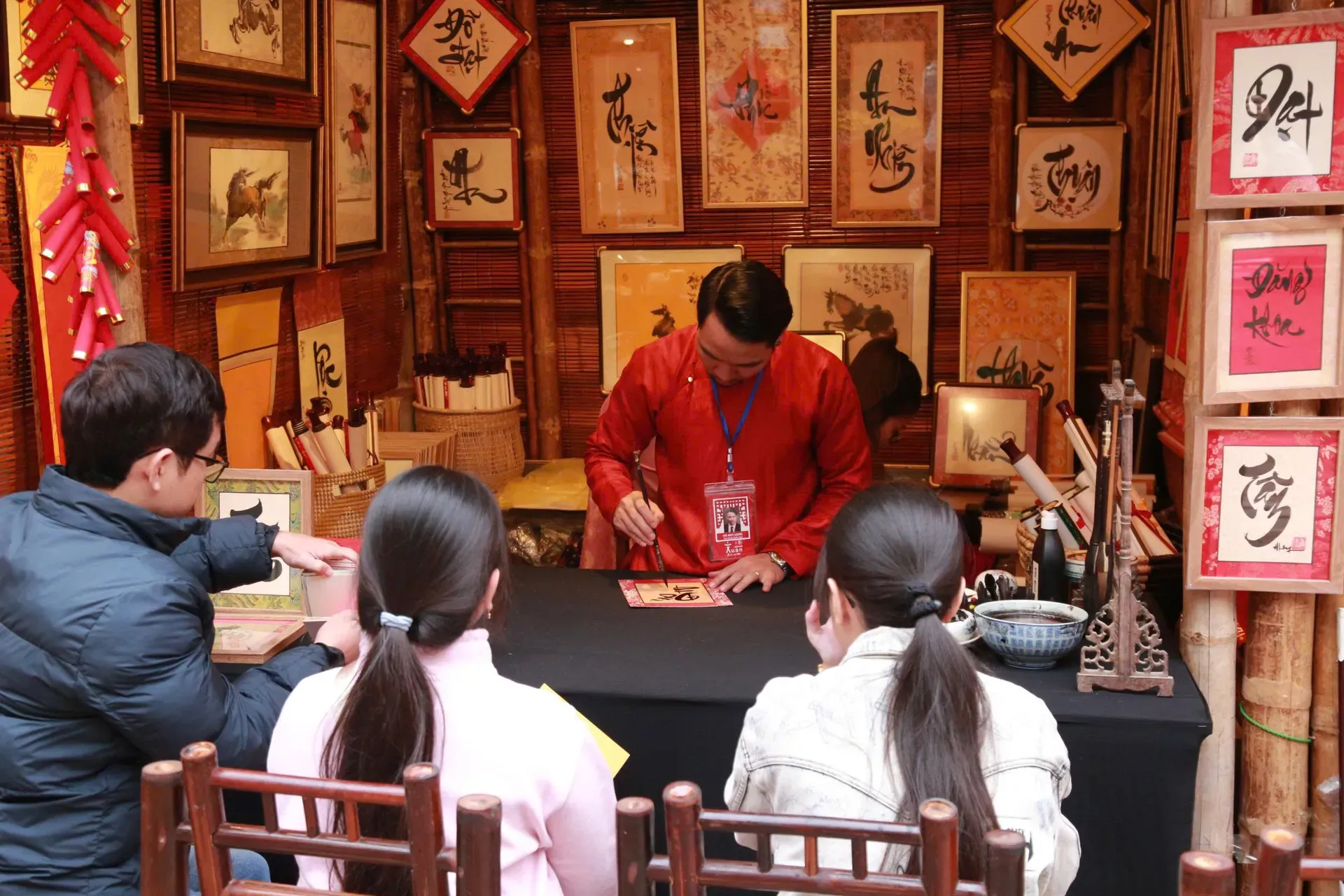
A walk through Hanoi during festive seasons often reveals a striking image: long sheets of red paper covered with elegant black ink characters. This tradition represents Vietnamese calligraphy art Hanoi, a cultural practice that blends language, philosophy, and artistic expression. While calligraphy originated in classical Chinese writing, Vietnamese scholars adapted the art over centuries, giving it new meaning within local culture.
Today, calligraphy continues to appear in temples, cultural festivals, and especially during the Lunar New Year. People seek calligraphers to write meaningful words symbolizing wishes for the coming year. Characters representing happiness, wisdom, prosperity, or peace are often displayed in homes and businesses. In this way, Vietnamese calligraphy art Hanoi becomes more than visual decoration. It carries hopes, moral values, and personal aspirations.
The practice also reflects respect for education and scholarship. Historically, calligraphers were scholars who had mastered classical literature. Their writing symbolized knowledge, discipline, and cultural heritage. Even in modern Hanoi, the tradition remains alive. Street calligraphers still sit quietly at wooden tables, brush in hand, transforming blank red paper into symbols of meaning.
Exploring this tradition allows visitors to discover a quieter artistic side of the city. Rather than focusing on monuments or markets, this journey reveals how language and art intertwine within Vietnamese culture.
1. The Cultural Meaning Behind Vietnamese Calligraphy
Understanding Vietnamese calligraphy art Hanoi begins with its symbolic role in society. Each brushstroke represents more than aesthetic beauty. Calligraphy expresses philosophy, wishes for good fortune, and respect for tradition. This section explains why calligraphy remains meaningful in Hanoi today.
Symbols of Good Fortune and Blessings
During the Lunar New Year, calligraphy becomes especially visible across Hanoi. Families display red paper characters on doors or inside their homes to welcome positive energy for the coming year.
Common calligraphy characters often represent values such as:
- Phúc – happiness and blessing
- Lộc – prosperity and success
- Thọ – longevity and health
- Tâm – kindness and sincerity
These words serve as reminders of moral values while also expressing hopes for the future. Visitors walking through traditional streets or temple courtyards may notice calligraphy stalls where artists write these characters by hand. Watching the brush move slowly across the paper becomes a quiet and meditative experience.
The Scholar Tradition Behind the Art
Historically, calligraphy in Vietnam belonged to educated scholars who had mastered classical literature. These scholars used calligraphy not only as artistic expression but also as proof of their intellectual training.
Important characteristics of this tradition include:
- Careful brush control developed through years of practice
- Knowledge of classical poetry and philosophy
- Respect for discipline and patience in artistic work
Because of these connections, Vietnamese calligraphy art Hanoi continues to symbolize wisdom and learning.
Calligraphy in Modern Hanoi
Although modern printing technology dominates daily life, calligraphy remains valued as a cultural art form. Young artists continue learning traditional brush techniques, while festivals provide spaces where calligraphy can be practiced publicly.
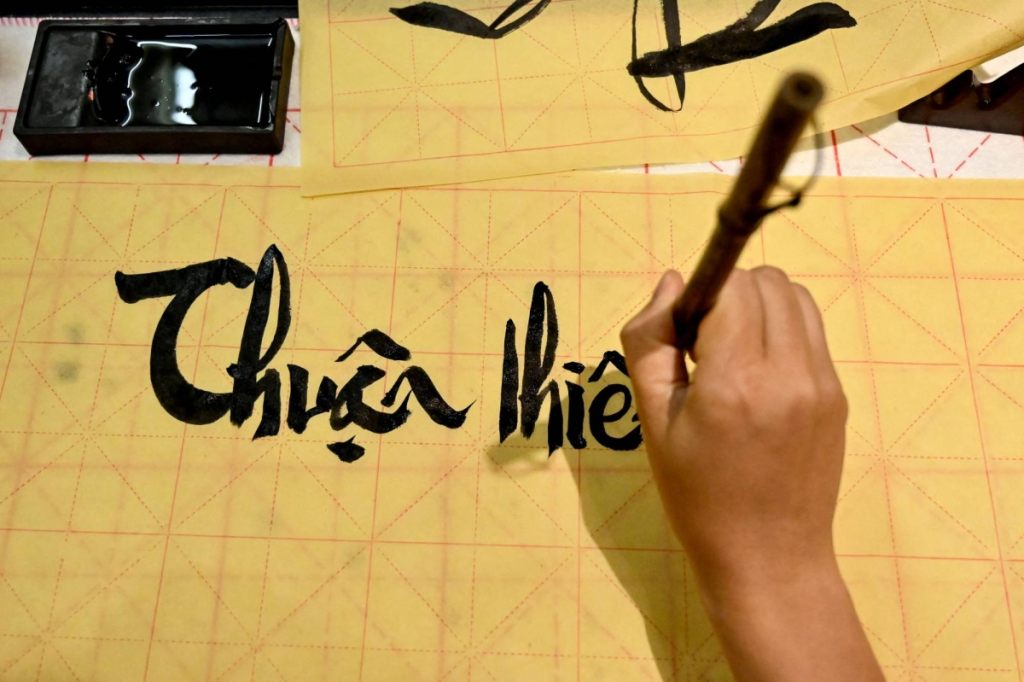
Vietnamese calligraphy art Hanoi red ink New Year characters on traditional paper
Today, visitors may encounter calligraphy in places such as:
- Temple courtyards during festivals
- Cultural streets like those near the Temple of Literature
- Traditional markets during Lunar New Year
Through these experiences, travelers see how Vietnamese calligraphy art Hanoi bridges past and present. The practice keeps historical values alive while adapting to contemporary cultural life.
2. Where to Experience Vietnamese Calligraphy Art in Hanoi
Visitors interested in Vietnamese calligraphy art Hanoi can find this tradition in several cultural spaces throughout the city. Although calligraphy once belonged mainly to scholars and temples, today it appears in public areas where artists continue to practice and share the craft. These locations allow travelers to observe the artistic process while also learning about the cultural values behind each brushstroke.
In Hanoi, calligraphy is not confined to museums. Instead, it often appears in open spaces where artists work directly in front of visitors. Watching a calligrapher write characters slowly on red paper reveals the patience and concentration required for this art form.
Temple of Literature Calligraphy Street
One of the most famous places to experience Vietnamese calligraphy art Hanoi is near the Temple of Literature. This historic area often hosts calligraphers, especially during the Lunar New Year season. The temple itself symbolizes education and scholarly tradition, making it a meaningful setting for this art.
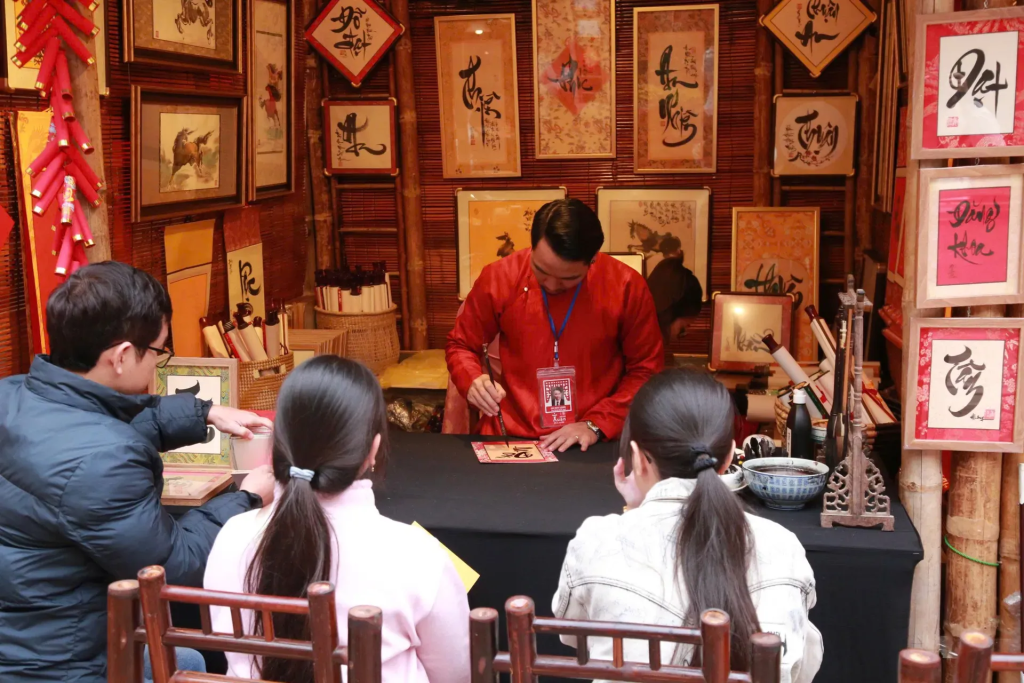
Vietnamese calligraphy art Hanoi artist writing red ink characters Temple of Literature
Along the small streets near the temple, visitors may see artists sitting behind wooden tables. Brushes, ink stones, and red paper are arranged carefully. Passersby often stop to request a calligraphy piece with a specific meaning.
Common experiences at these calligraphy stalls include:
- Watching artists prepare ink and brushes before writing
- Requesting characters that represent wishes for the new year
- Observing how each brushstroke forms balanced shapes
- Learning the meaning behind traditional characters
The atmosphere becomes especially vibrant during Tet, when locals visit to ask for blessings written by respected calligraphers.
Festival Spaces and Cultural Events
Calligraphy also appears during cultural festivals and traditional celebrations. These events often invite artists to demonstrate their skills in public spaces. Visitors can watch the process from beginning to end while learning about the symbolism of each word.
During festivals, calligraphy may be displayed through:
- Temporary calligraphy stalls at temple festivals
- Cultural exhibitions celebrating traditional arts
- Demonstrations by young calligraphers learning the craft
- Workshops where visitors can try writing basic characters
These events help preserve the art by introducing it to new generations.
Art Studios and Cultural Workshops
Beyond street stalls and festivals, several small studios in Hanoi teach calligraphy as a cultural practice. Some workshops allow visitors to try writing simple characters using traditional brushes and ink.
Typical experiences in these workshops include:
- Learning how to hold the brush correctly
- Practicing simple strokes used in calligraphy
- Understanding the meaning behind common characters
- Creating a personal calligraphy piece to take home
These workshops provide a deeper understanding of the discipline and patience required in Vietnamese calligraphy art Hanoi.
By visiting these locations, travelers can witness how the art continues to thrive in modern Hanoi. The tradition remains alive not only through historical memory but also through artists who continue to practice and share this meaningful craft.
3. The Art and Technique Behind Vietnamese Calligraphy
To truly appreciate Vietnamese calligraphy art Hanoi, it helps to understand the discipline and technique behind each piece. Calligraphy may appear effortless when watching an experienced artist. However, every brushstroke requires careful control, years of practice, and a deep understanding of balance. The art combines writing, painting, and philosophy into a single creative process.
Unlike modern handwriting, calligraphy focuses on rhythm and expression. Each stroke must flow naturally while maintaining harmony with the entire composition. Because of this balance, calligraphy often feels both artistic and meditative.
Traditional Tools Used by Calligraphers
The tools used in Vietnamese calligraphy art Hanoi remain simple but meaningful. Many artists still use traditional materials that have been part of East Asian calligraphy culture for centuries. Each tool contributes to the character and texture of the final work.
Typical tools used by calligraphers include:
- Brush (Bút lông): Made from animal hair, allowing flexible strokes and expressive lines
- Ink stick and ink stone: Used to grind solid ink into liquid form before writing
- Red paper or silk: Symbolizing luck, prosperity, and celebration
- Paper weights: Keeping the writing surface stable while the brush moves
Preparing these tools often becomes part of the artistic ritual. Grinding ink slowly, for example, helps the artist focus before beginning the writing process.
The Discipline of Brush Control
Brush control forms the heart of calligraphy technique. Every movement must remain steady and deliberate. Even a small change in pressure can alter the thickness or shape of a stroke.
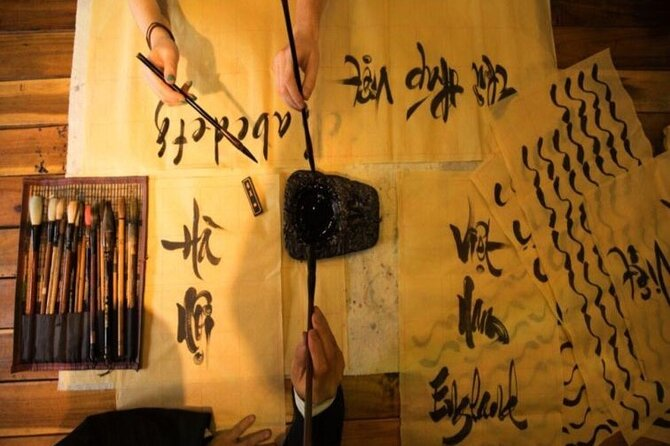
Vietnamese calligraphy tools brush ink stone red paper Hanoi calligraphy art
Calligraphers typically train through repetitive practice. They study basic strokes before attempting full characters. Over time, the hand learns to move smoothly while maintaining precise control.
Important aspects of brush technique include:
- Maintaining steady wrist movement
- Controlling the speed of each stroke
- Adjusting brush pressure to create variation
- Balancing thick and thin lines within a character
Because of these skills, calligraphy often resembles painting as much as writing.
Meaning Beyond the Writing
In Vietnamese calligraphy art Hanoi, the written character represents more than language. Each word carries philosophical or emotional meaning. Calligraphers often choose characters that express values such as wisdom, harmony, or perseverance.
Viewers may notice that calligraphy pieces emphasize simplicity. A single character written with elegance can convey a powerful message. For this reason, many families display calligraphy in homes as reminders of personal values.
Through its combination of technique, symbolism, and artistic expression, Vietnamese calligraphy continues to connect modern Hanoi with centuries of cultural tradition.
4. The Role of Vietnamese Calligraphy in Modern Hanoi
Although modern technology has changed the way people communicate, Vietnamese calligraphy art Hanoi continues to hold an important place in cultural life. Today, the tradition survives not only as a historical art form but also as a symbol of identity and heritage. Many people still appreciate calligraphy for its aesthetic beauty and deeper meaning.
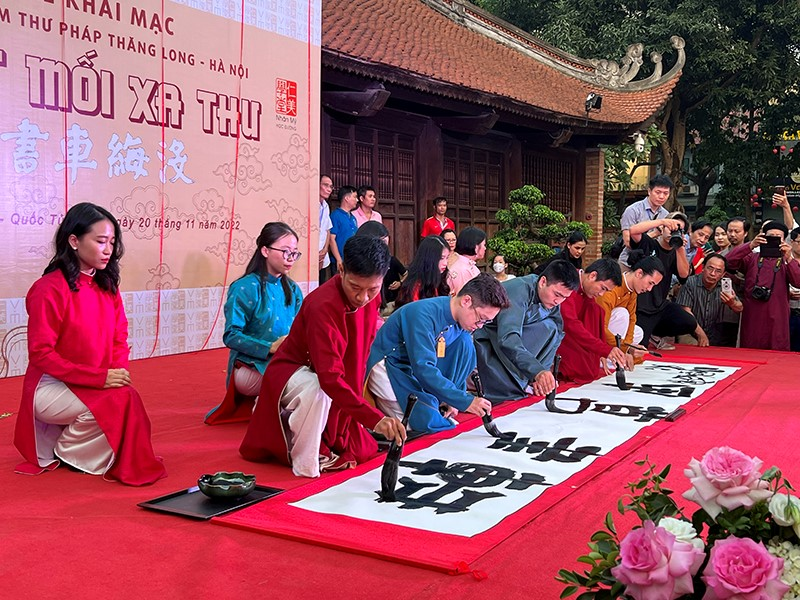
Vietnamese calligraphy art Hanoi cultural festival brush writing demonstration
Across the city, calligraphy appears in festivals, cultural exhibitions, and public events. These occasions allow artists to demonstrate their craft while introducing younger generations to the tradition. As a result, calligraphy remains connected to both the past and the present.
Calligraphy During Tet and Cultural Festivals
The Lunar New Year season represents the most vibrant moment for Vietnamese calligraphy art Hanoi. During Tet, calligraphers often set up small writing tables along cultural streets, temple courtyards, and public squares. Locals visit these stalls to request calligraphy pieces that express wishes for the new year.
Typical activities during Tet include:
- People requesting characters such as Phúc (blessing) or Lộc (prosperity)
- Artists writing calligraphy on red paper symbolizing luck
- Families displaying calligraphy at home for spiritual meaning
- Visitors watching the brushwork as a cultural performance
These scenes create a festive atmosphere while preserving traditional values.
Young Artists Reviving the Tradition
Another important development in Vietnamese calligraphy art Hanoi involves younger artists learning and adapting the craft. Many students and cultural enthusiasts now study calligraphy as both an artistic practice and a way to reconnect with history.
Modern calligraphers often experiment with new styles. While they respect traditional brush techniques, they sometimes combine calligraphy with contemporary art forms such as painting or graphic design.
Examples of modern calligraphy activities include:
- Workshops teaching beginners basic brush techniques
- Art exhibitions featuring creative calligraphy designs
- Cultural events celebrating traditional Vietnamese writing
- Online communities sharing calligraphy practice and inspiration
These efforts help ensure the tradition remains relevant in a changing society.
Calligraphy as Cultural Identity
For many people in Hanoi, calligraphy represents more than artistic decoration. It symbolizes respect for education, moral values, and cultural continuity. Displaying calligraphy in homes or offices reflects admiration for wisdom and personal growth.
Visitors exploring Vietnamese calligraphy art Hanoi may notice how the tradition connects different generations. Older scholars preserve the classical techniques, while younger artists bring new energy and creativity. Through this balance between tradition and innovation, Vietnamese calligraphy continues to play a meaningful role in the cultural life of modern Hanoi.
Read for more information:
- https://abite.asia/hanoi-old-quarter-morning-experience-the-city-as-it-wakes-up/
- https://abite.asia/hanoi-old-quarter-at-night-lights-streets-and-nightlife-atmosphere/
At Abite.asia, we specialize in curated Vietnam tours for international travelers, ensuring an authentic and hassle-free experience. Let us take care of your journey so you can fully embrace the beauty of Vietnam. Contact us today at +84363770835 to start planning your adventure!



Leave a Reply