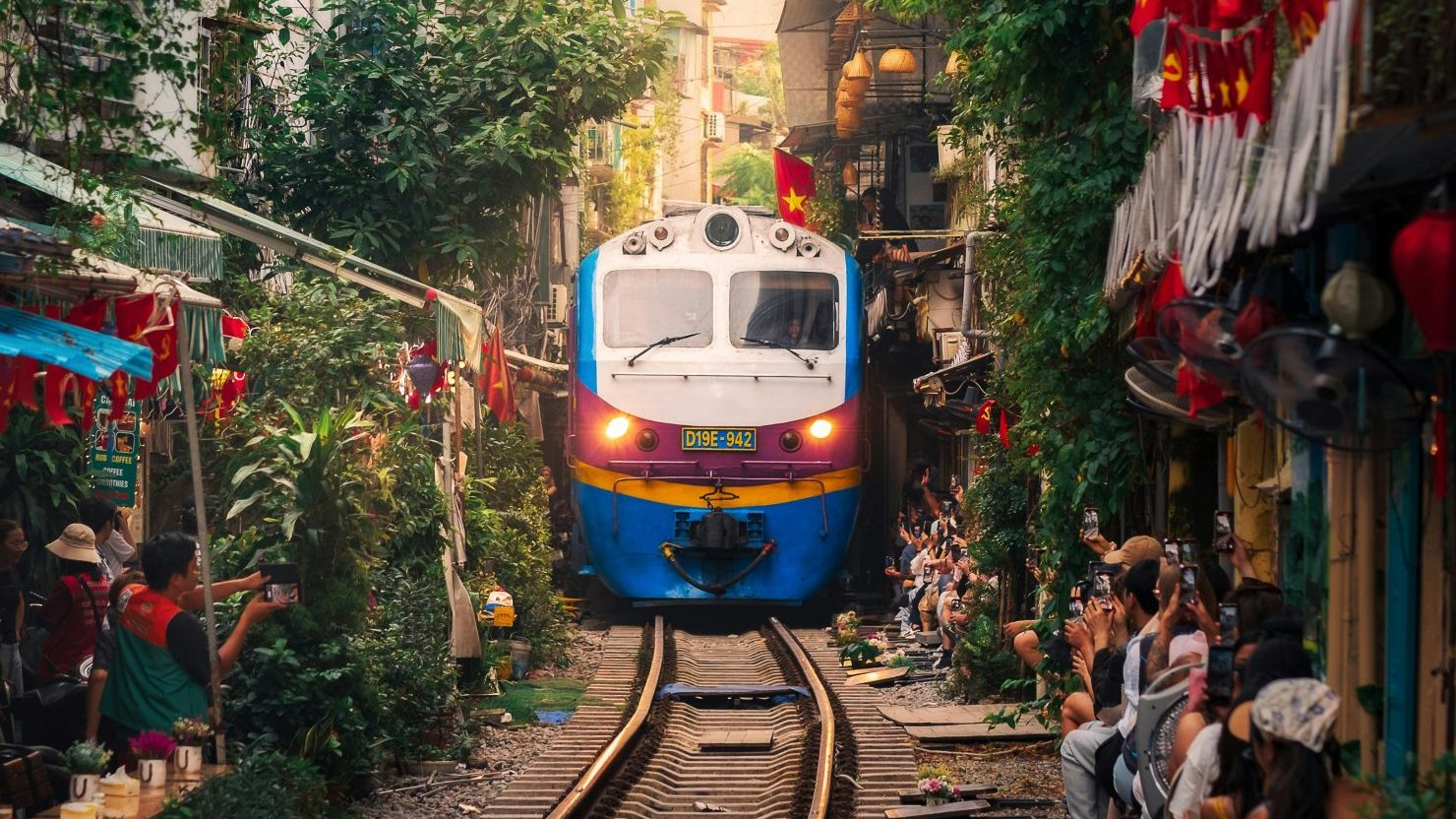
Train Street Hanoi is one of the capital’s most unusual attractions, where a railway track runs through a narrow residential neighborhood lined with small cafés, old houses, and local balconies. The scene is famous because trains pass very close to the buildings, creating a dramatic contrast between daily life and railway movement in the heart of the city.
For many visitors, Train Street Hanoi is more than a photo spot. It offers a glimpse into Hanoi’s compact urban life, where homes, cafés, and railway space exist side by side in a way that feels both fascinating and delicate.
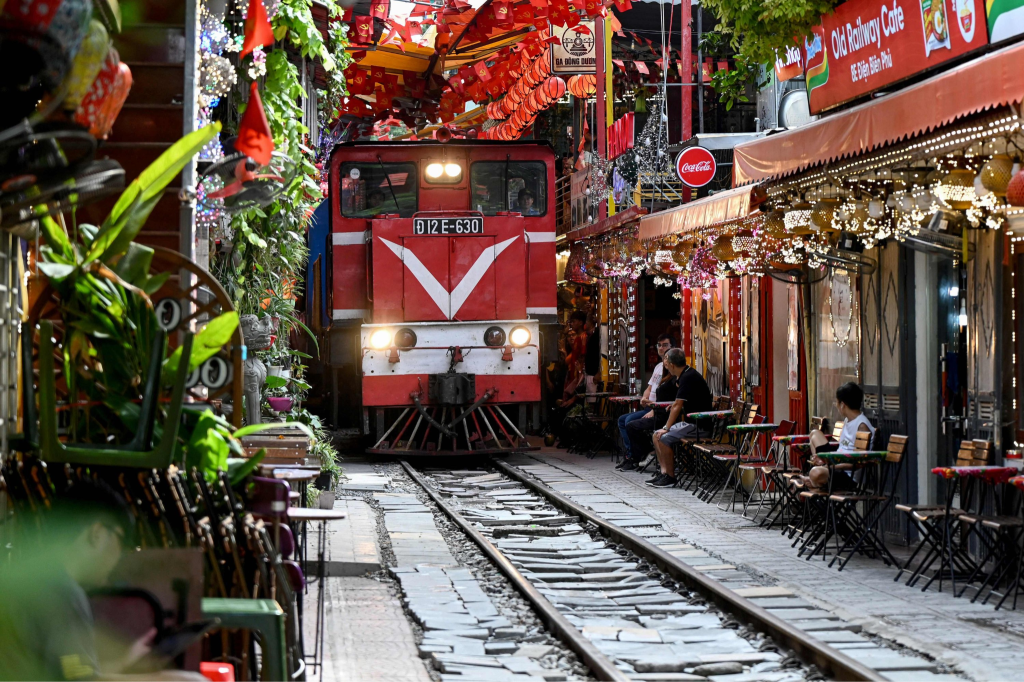
Train Street Hanoi with Cafés and Railway Tracks. Picture: Internet.
Because the area involves real train traffic and local residents, visitors should plan carefully and follow safety guidance when visiting. With respectful behavior, flexible expectations, and attention to local rules, Train Street can become a memorable stop during a walking route through Hanoi.
1. Why Visit Train Street Hanoi
Train Street Hanoi is one of the most unique places to experience the capital’s urban character. The narrow railway corridor, old residential houses, small cafés, and close interaction between local life and train traffic create a scene that feels very different from Hanoi’s temples, lakes, markets, and museums.
A Unique Urban Scene in the Heart of Hanoi
The main reason travelers are curious about Train Street is its unusual setting. The railway track runs through a compact neighborhood where houses, balconies, and cafés sit very close to the line, creating a strong visual impression.
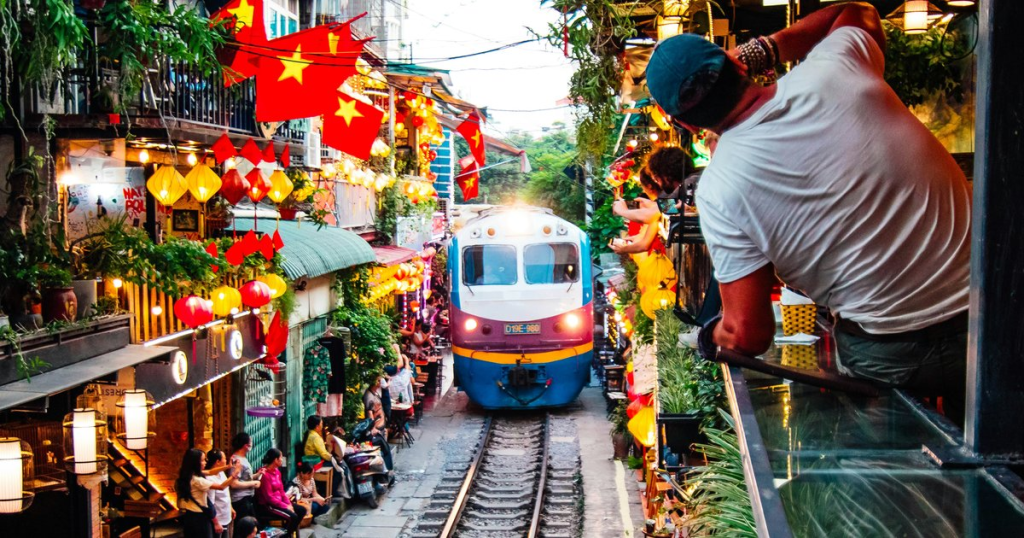
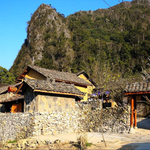
Traditional Houses Along Train Street Hanoi. Picture: Internet.
This setting shows how space is used creatively in Hanoi’s dense urban areas. Visitors can see how local homes, small businesses, and railway infrastructure exist side by side within a narrow street that feels both intimate and dramatic.
A Memorable Stop for Photography
Train Street Hanoi has become famous among travelers because of its striking visual style. The long railway track, colorful façades, small café signs, hanging plants, and narrow perspective make the area highly photogenic.
Visitors often come for:
- Railway views between old houses
- Local cafés beside the track
- Balcony scenes and narrow street angles
- Daily-life details around the neighborhood
- A different view of Hanoi beyond major landmarks
Photography should always be done carefully and respectfully. Travelers should avoid standing on the track when it is unsafe, blocking local movement, or taking close-up photos of residents without permission.
A Glimpse of Local Neighborhood Life
Although many visitors know the area for the train, Train Street is also a residential neighborhood. People live, work, cook, clean, and run small businesses around the railway corridor, so the experience offers a glimpse into everyday Hanoi life.
This makes the visit more meaningful than a simple photo stop. Travelers can observe small cafés, local homes, family routines, and the way residents manage daily life in a narrow urban space.
A Café Experience with a Different Atmosphere
Many visitors experience Train Street Hanoi by sitting in a small café near the railway. These cafés often serve Vietnamese coffee, egg coffee, juice, tea, or simple drinks, giving travelers a chance to slow down and enjoy the setting from a seated position.
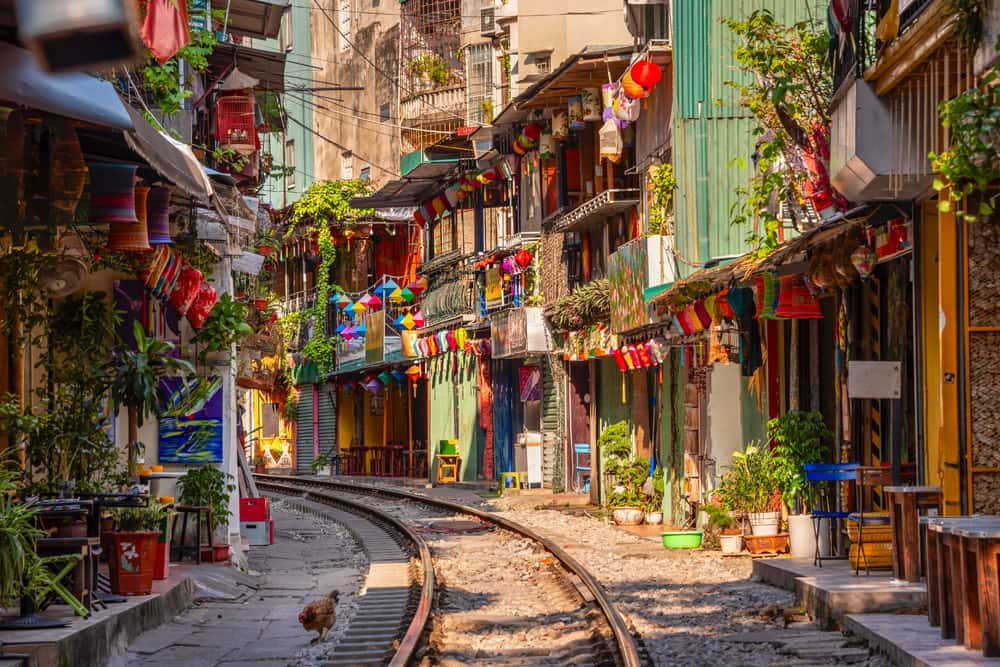
Enjoying Coffee at a Train Street Café in Hanoi. Picture: Internet.
The café atmosphere is part of the appeal because it combines Hanoi’s coffee culture with an unusual railway backdrop. Instead of rushing through the area, travelers can take time to observe the details of the neighborhood and enjoy the local rhythm more comfortably.
An Easy Addition to a Hanoi Walking Route
Train Street can be included in a broader Hanoi walking itinerary, especially for travelers exploring the Old Quarter, Hoan Kiem Lake, local cafés, or nearby food streets. It does not need to take a full day, but it can add variety to a city route focused on history, food, and local culture.
The visit works best when travelers approach it with flexibility and respect. Rules, access points, and train schedules may vary, so following local guidance is important for both safety and the comfort of residents.
A Place That Requires Responsible Visiting
Unlike many tourist attractions, Train Street Hanoi involves real railway activity and a local residential environment. Visitors should treat the area with care rather than viewing it only as a dramatic photo location.
Responsible travelers should:
- Follow safety instructions from local staff or authorities
- Stay away from the track when trains are approaching
- Avoid blocking entrances, homes, or café spaces
- Keep noise levels respectful in residential areas
- Ask before photographing local people
- Avoid risky poses or unsafe photo behavior
These small actions help protect both visitors and the local community. They also make the experience more respectful, realistic, and meaningful.
A Distinctive Side of Hanoi
Train Street stands out because it shows a side of Hanoi that is compact, lively, and visually unexpected. It reflects the city’s ability to blend old infrastructure, local businesses, residential life, and café culture within a very small space.
For travelers who enjoy photography, urban culture, and unusual local experiences, Train Street Hanoi can be a memorable stop. With careful planning and respectful behavior, it offers a distinctive look at Hanoi beyond its most familiar landmarks.
2. What to Expect When Visiting Train Street Hanoi
Visiting Train Street Hanoi is different from visiting a normal sightseeing attraction because the area is both a residential neighborhood and an active railway corridor. Travelers should expect a compact space, local cafés, changing access rules, and a strong need to follow safety guidance throughout the visit.
A Narrow Railway Neighborhood
The first thing visitors usually notice is how narrow the street feels. The railway track runs between old houses, small balconies, café tables, and local doorways, creating a close and unusual urban scene.
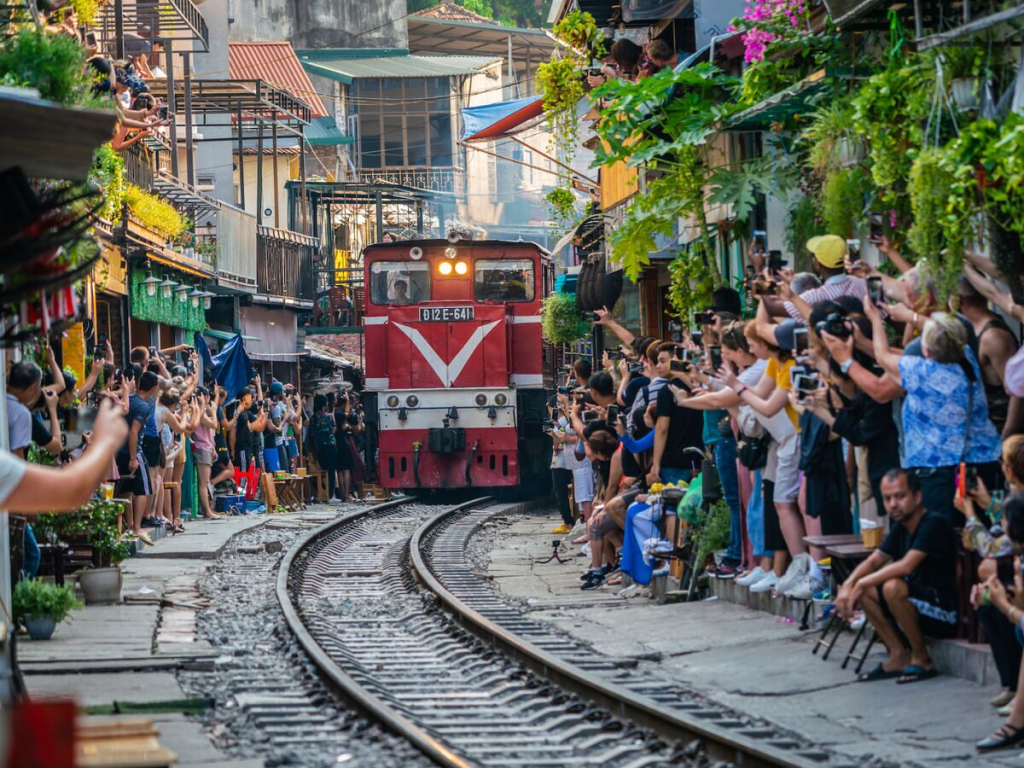
Walking Through the Narrow Railway Street in Hanoi. Picture: Internet.
This setting is what makes Train Street Hanoi so visually memorable, but it also means visitors should move carefully. The space is limited, so walking slowly, staying aware of surroundings, and avoiding crowded spots will make the experience more comfortable for both travelers and residents.
Local Cafés Along the Track
Many visitors experience Train Street by sitting in a café near the railway. These cafés usually serve Vietnamese coffee, egg coffee, tea, juice, and simple drinks, allowing travelers to enjoy the atmosphere without standing directly on the track.
A café stop also gives visitors time to observe daily life in the area. Instead of rushing for photos, travelers can sit quietly, watch the neighborhood, and enjoy the contrast between Hanoi’s coffee culture and the railway setting.
Possible Access Restrictions
Access to Train Street Hanoi may vary depending on local safety rules and railway conditions. Some entrances may be restricted, and visitors may need to follow instructions from local staff, café owners, or authorities before entering certain sections.
Travelers should not expect to walk freely everywhere. The best approach is to remain flexible, respect local rules, and avoid forcing entry into closed areas, especially when safety guidance is clearly given.
Train Schedules Can Change
Many travelers hope to see a train passing through the narrow street, but train times can change and may not always match online information. Even if a schedule is available, delays or adjustments can happen, so visitors should avoid planning the entire experience around one exact passing time.
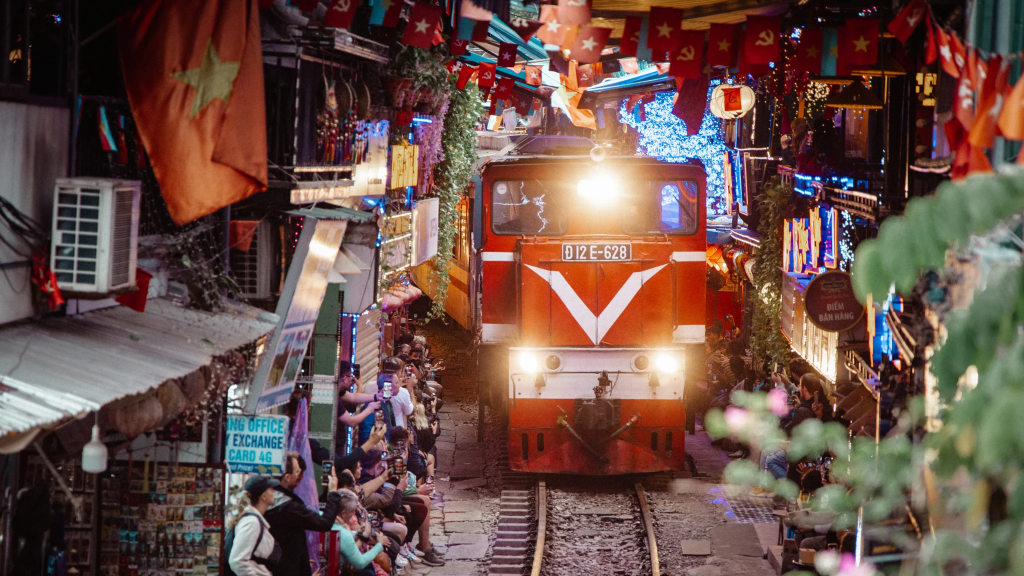
Train Passing Through Hanoi Train Street. Picture: Internet.
Those who want to see the train should ask local café staff for updated information and arrive with patience. However, even without a passing train, the neighborhood itself still offers an interesting look at Hanoi’s compact urban life.
A Strong Focus on Safety
Safety is the most important part of visiting Train Street Hanoi. The railway is active, and trains pass very close to the houses and cafés, so visitors must follow instructions immediately when asked to move away from the track.
Travelers should remember:
- Do not stand or sit on the railway track when it is unsafe
- Do not take risky photos near an approaching train
- Keep children close and supervised
- Follow instructions from local staff or authorities
- Avoid blocking café entrances or residential doorways
- Move calmly and quickly when asked to clear the area
These rules protect both visitors and local residents. They also help keep the area accessible for respectful travelers in the future.
A Busy but Interesting Photo Spot
Train Street is popular with photographers because of its narrow perspective, colorful buildings, café signs, and everyday details. The area can become crowded during peak hours, especially when people are waiting for a train to pass.
Visitors should take photos thoughtfully and avoid blocking the path for others. Asking before photographing local residents is also important because this is a real neighborhood, not only a tourist backdrop.
A Short but Memorable Visit
A visit to Train Street Hanoi usually does not take too long, but it can become a memorable part of a Hanoi walking route. Travelers may spend time drinking coffee, taking photos, observing local life, and waiting for a train if the timing is suitable.
The experience is best enjoyed with realistic expectations and respectful behavior. When visitors understand that Train Street is both a famous photo spot and a living neighborhood, the visit becomes more meaningful than simply watching a train pass by.
3. Final Tips for Visiting Train Street Hanoi
Visiting Train Street Hanoi can be a memorable part of a Hanoi walking route, but it requires more care than many other attractions. Because the area is both a residential neighborhood and an active railway line, travelers should plan with safety, flexibility, and respect in mind.
Check Access Before Visiting
Access to Train Street may change depending on local rules, safety concerns, or railway operations. Some entrances may be open at certain times, while others may be restricted, so travelers should not assume that every section is freely accessible.
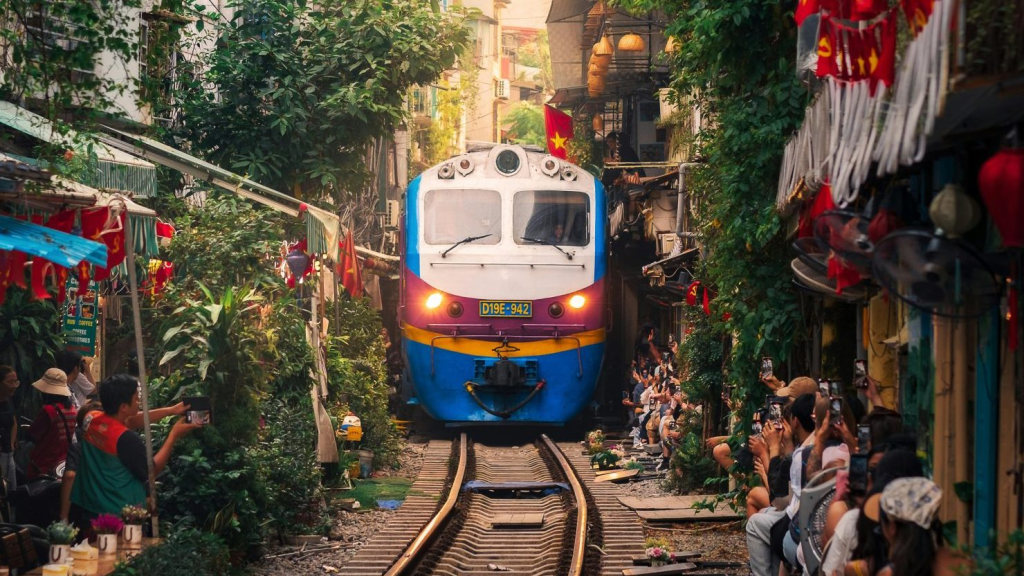
Entrance to Train Street Hanoi. Picture: Internet.
Before visiting, it is useful to check with a local guide, hotel staff, or café owner for updated information. This helps travelers avoid closed areas and choose a safer, more suitable way to experience Train Street Hanoi.
Do Not Depend Only on Train Schedules
Many visitors hope to see a train pass through the narrow street, but train schedules can change. Online times may not always be accurate, and delays or route adjustments may happen without much notice.
Travelers should treat the train passing as a possible highlight rather than the only purpose of the visit. Even without a train, the area still offers interesting views of cafés, old houses, railway tracks, and compact Hanoi neighborhood life.
Prioritize Safety at All Times
Safety should always come before photos or videos. The railway is active, and trains pass very close to the houses and cafés, so visitors must move away from the track immediately when instructed by local staff or authorities.
Travelers should follow basic safety rules during the visit:
- Avoid standing, sitting, or posing on the track when unsafe
- Keep children close and supervised
- Follow instructions from café staff, residents, or authorities
- Do not take risky photos near an approaching train
- Stay clear of doorways, café entrances, and local homes
- Move calmly if asked to leave the railway area
These actions help protect visitors and local residents. They also show respect for the fact that Train Street is not only a tourist photo spot, but also part of a real neighborhood.
Choose a Café Carefully
Sitting in a café is one of the most comfortable ways to experience Train Street Hanoi. A café stop gives travelers a safer place to observe the area, enjoy Vietnamese coffee, and take in the atmosphere without crowding the railway track.
Visitors should choose cafés that follow local safety guidance and avoid places that encourage risky behavior. A good café experience should feel relaxed, respectful, and connected to the neighborhood rather than rushed only for photos.
Visit with Respect for Local Life
Train Street is home to local residents, so visitors should behave as they would in any residential area. Speaking quietly, asking before taking close-up photos, and avoiding private spaces can make the visit more respectful.
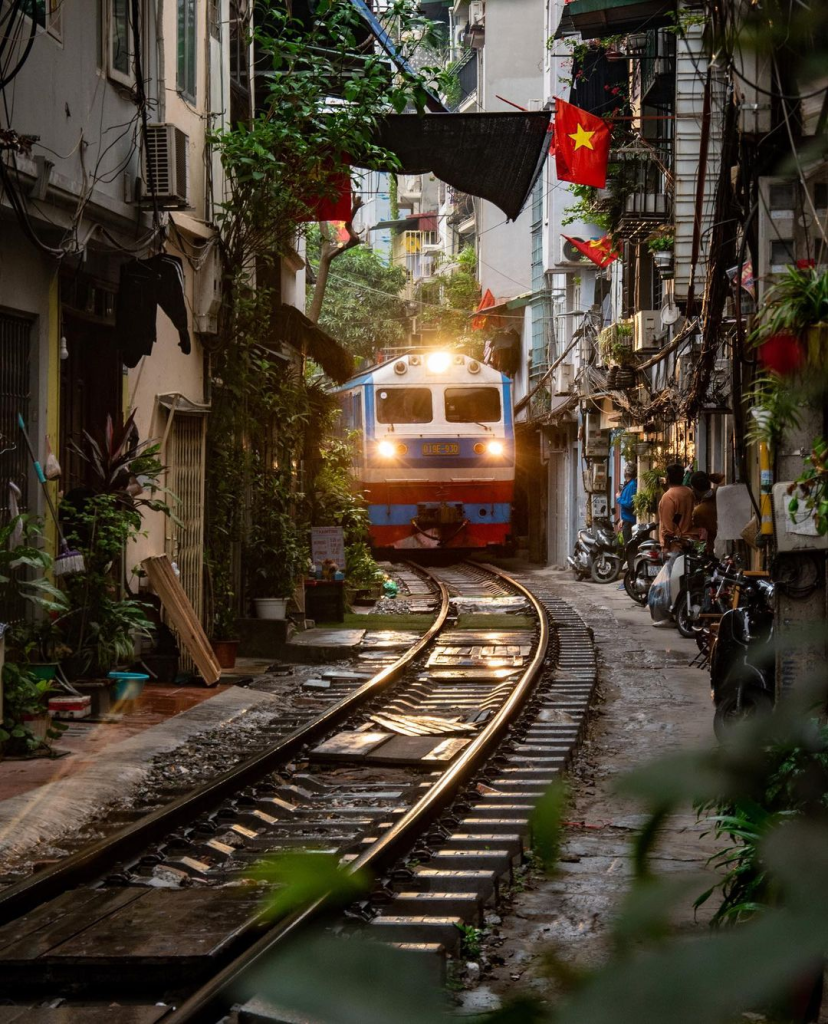
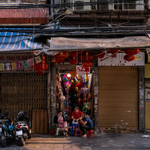
Local Neighborhood Life on Train Street Hanoi. Picture: Internet.
Travelers should also avoid blocking walkways, touching personal belongings, or treating homes as photo props. These small actions help maintain a better relationship between visitors, café owners, and people who live in the area.
Train Street Hanoi is a unique place to see the capital from a different perspective. Its narrow railway, small cafés, old houses, and local daily life create a scene that feels unusual, intimate, and memorable.
The best way to visit is with flexible expectations and a strong focus on safety. When travelers follow local guidance, respect residents, and avoid risky behavior, Train Street becomes more than a dramatic photo spot; it becomes a meaningful glimpse into Hanoi’s compact urban life.
Read for more information:
- https://abite.asia/egg-coffee-in-hanoi-the-story-behind-vietnams-famous-drink/
- https://abite.asia/walking-through-hanoi-old-quarter-a-complete-visitor-guide/
At Abite.asia, we specialize in curated Vietnam tours for international travelers, ensuring an authentic and hassle-free experience. Let us take care of your journey so you can fully embrace the beauty of Vietnam. Contact us today at +84363770835 to start planning your adventure!



Leave a Reply