Ho Chi Minh City, also known as Saigon, is Vietnam’s largest city, famous for its vibrant streets, historic landmarks, and delicious local food. From bustling markets to colonial-era architecture, the city offers exciting experiences for first-time travelers.
With a well-planned Ho Chi Minh City 3-day itinerary, you can explore famous attractions, discover Vietnamese culture, and enjoy authentic street food. This guide covers the best places to visit, exciting things to do, and practical travel tips. Whether you enjoy history, shopping, or local experiences, this itinerary will help you make the most of your three-day trip.
1. Day 1: Explore Ho Chi Minh City’s Historical Landmarks and City Center
Start your Ho Chi Minh City 3-day itinerary by discovering the city’s historical landmarks, colonial architecture, and lively downtown streets. The first day focuses on central attractions, making it convenient for first-time visitors.
From Independence Palace to Ben Thanh Market, each stop offers a different perspective on Saigon’s history and everyday life. In the evening, explore the illuminated streets and enjoy authentic Vietnamese food.
Morning: Visit Independence Palace and War Remnants Museum
Begin your morning at Independence Palace, also known as Reunification Palace. This historic landmark played an important role in Vietnam’s reunification on April 30, 1975.
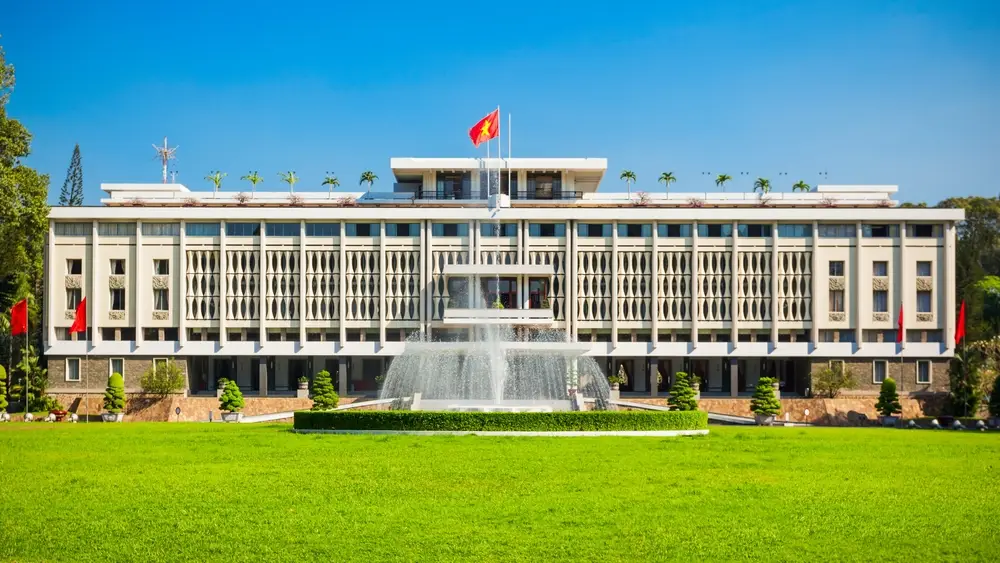
Independence Palace, a historic landmark in Ho Chi Minh City. Picture: Internet.
Inside, visitors can explore presidential meeting rooms, reception halls, and underground command bunkers. The building also features impressive 1960s architecture and peaceful gardens.
Independence Palace visitor information:
- Address: 135 Nam Ky Khoi Nghia Street, District 1.
- Opening hours: 7:00 AM–6:00 PM daily.
- Entrance fee: 80,000 VND for adults with the combined palace and exhibition ticket.
- Suggested duration: 1–1.5 hours.
Afterward, continue to the War Remnants Museum, located approximately 10–15 minutes away on foot. The museum presents exhibitions about the Vietnam War and its lasting consequences.
Visitors can discover historical photographs, military equipment, and personal stories from the conflict. However, some exhibitions contain graphic images that may be disturbing for sensitive visitors.
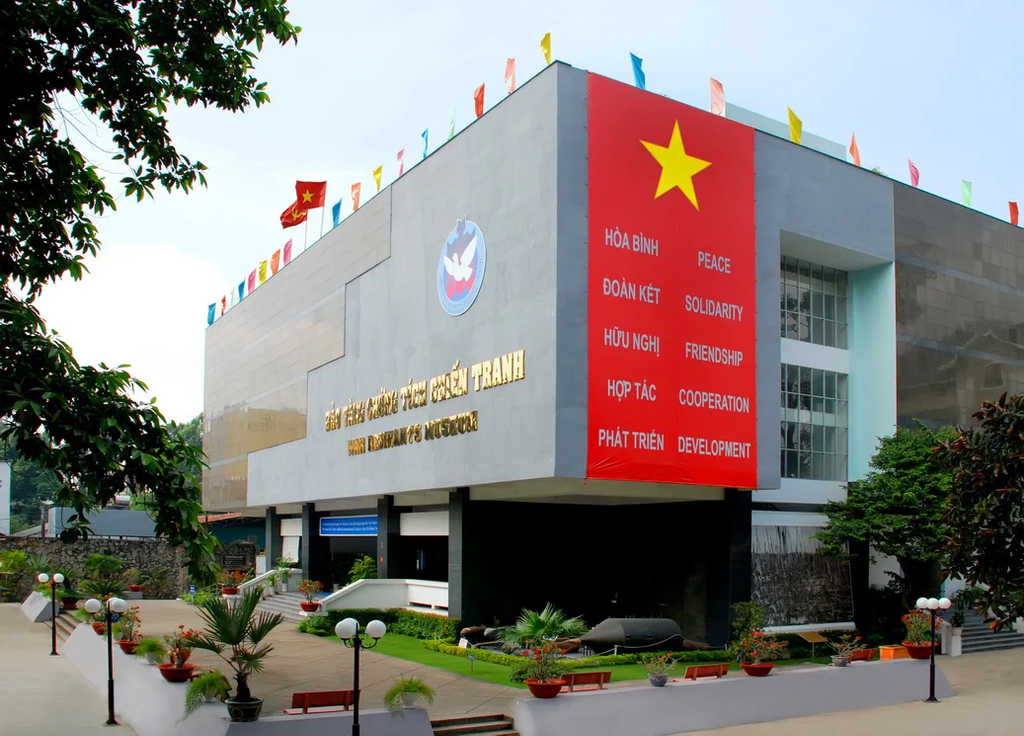
War Remnants Museum in Ho Chi Minh City, featuring Vietnam War exhibitions and historical artifacts. Picture: Internet.
The museum opens daily from 7:30 AM to 5:30 PM, with standard adult admission costing 60,000 VND. Allow around 1–2 hours to explore its main exhibitions.
Afternoon: Discover Colonial Architecture and Ben Thanh Market
After lunch, head toward the Saigon Central Post Office and Notre-Dame Cathedral. These famous landmarks reflect the city’s French colonial architectural heritage.
Both attractions are located near each other, making them easy to explore during the same visit.
Saigon Central Post Office stands out with its yellow exterior, arched windows, and impressive vaulted ceiling. Visitors can explore the historic building, purchase postcards, and admire its decorative details.
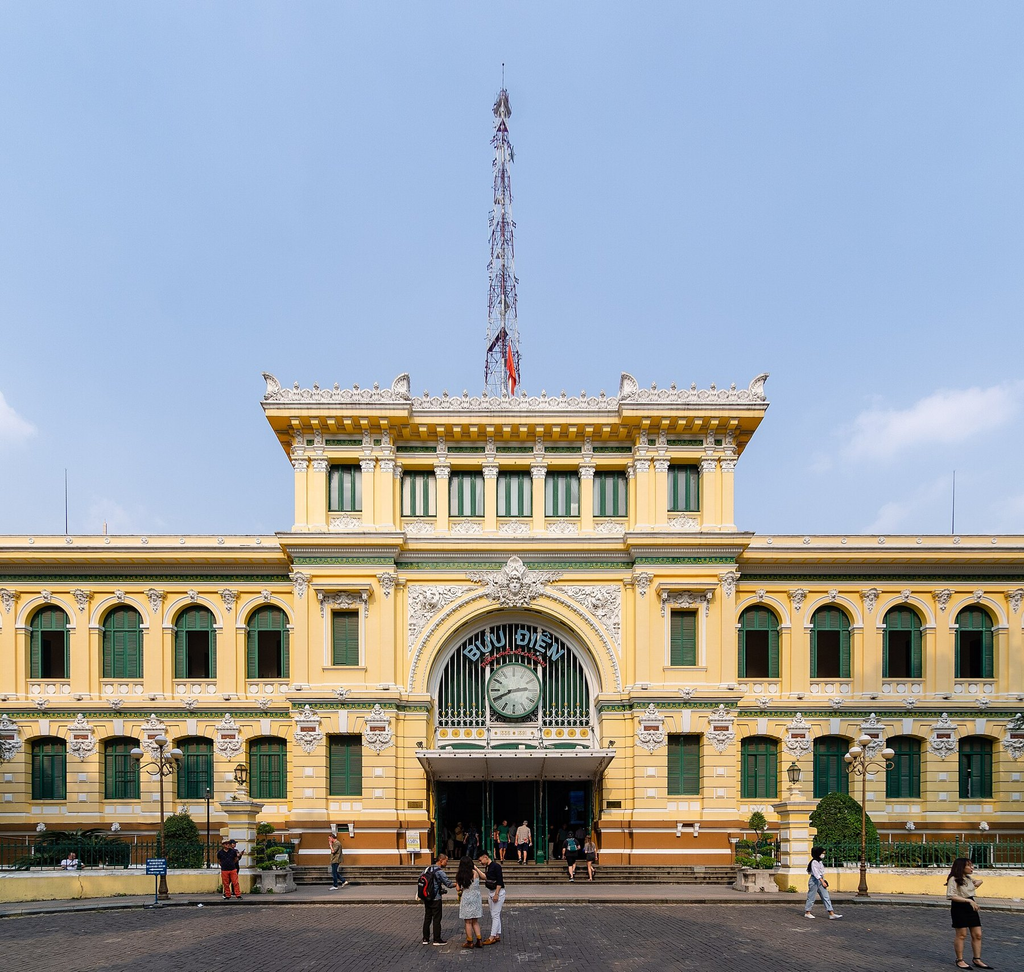
Saigon Central Post Office, famous for its yellow facade and French colonial architecture. Picture: Internet.
Across the square, Notre-Dame Cathedral Basilica of Saigon features distinctive red-brick architecture and twin bell towers. However, the cathedral remains under restoration in 2026, with tourist access to the interior restricted.
For a quieter experience, visit Nguyen Van Binh Book Street nearby. This pedestrian street features bookstores, small cafés, and spaces dedicated to reading and local culture.
Continue to Ben Thanh Market, one of Ho Chi Minh City’s most famous shopping destinations. Its busy stalls sell everything from traditional souvenirs to Vietnamese coffee and local snacks.
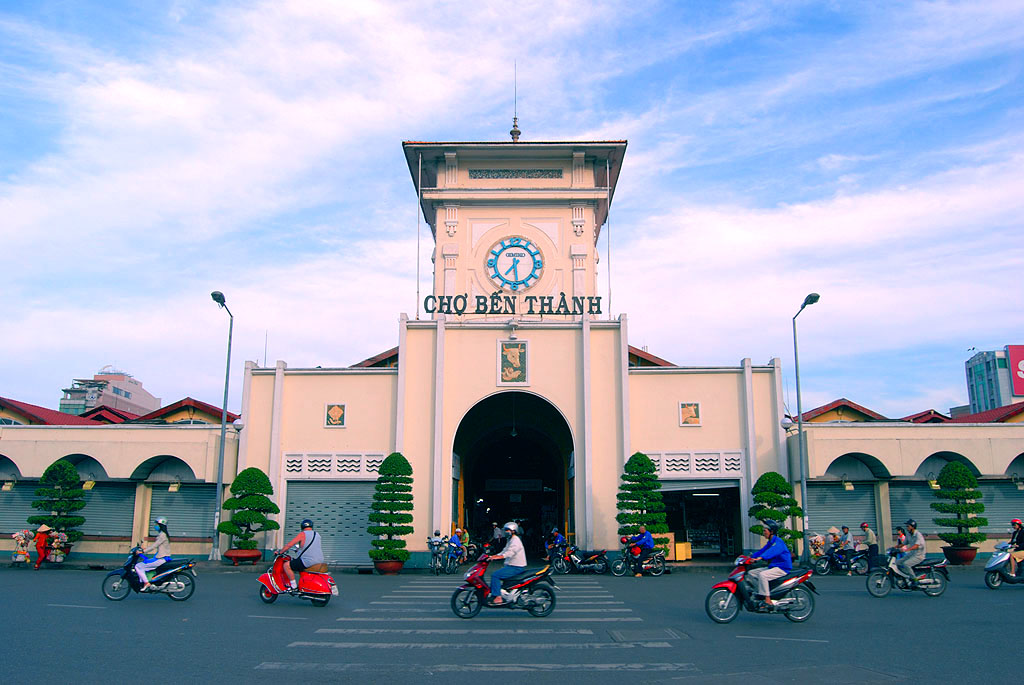
Ben Thanh Market, a popular shopping and street food destination in Ho Chi Minh City. Picture: Internet.
The market is also a convenient place to discover Saigon’s food culture. Visitors can sample dishes such as bánh xèo, bún thịt nướng, or fresh spring rolls.
For shopping, compare prices between stalls before making a purchase. Polite bargaining is common among souvenir vendors, although many food stalls have fixed prices.
Evening: Experience Nguyen Hue Walking Street and Saigon Nightlife
End your first day at Nguyen Hue Walking Street, a lively pedestrian boulevard in central Ho Chi Minh City. The area becomes especially attractive after sunset, when surrounding buildings illuminate the streets.
Visitors can enjoy street performances, admire the city skyline, and explore nearby cafés. The historic Ho Chi Minh City Hall also creates a beautiful backdrop for evening photography.
Another interesting stop is the famous Café Apartment at 42 Nguyen Hue. This former apartment building now houses numerous cafés, boutiques, and small creative businesses.
After exploring the walking street, enjoy dinner at a local restaurant. Popular Saigon specialties include cơm tấm, bánh mì, and hủ tiếu.
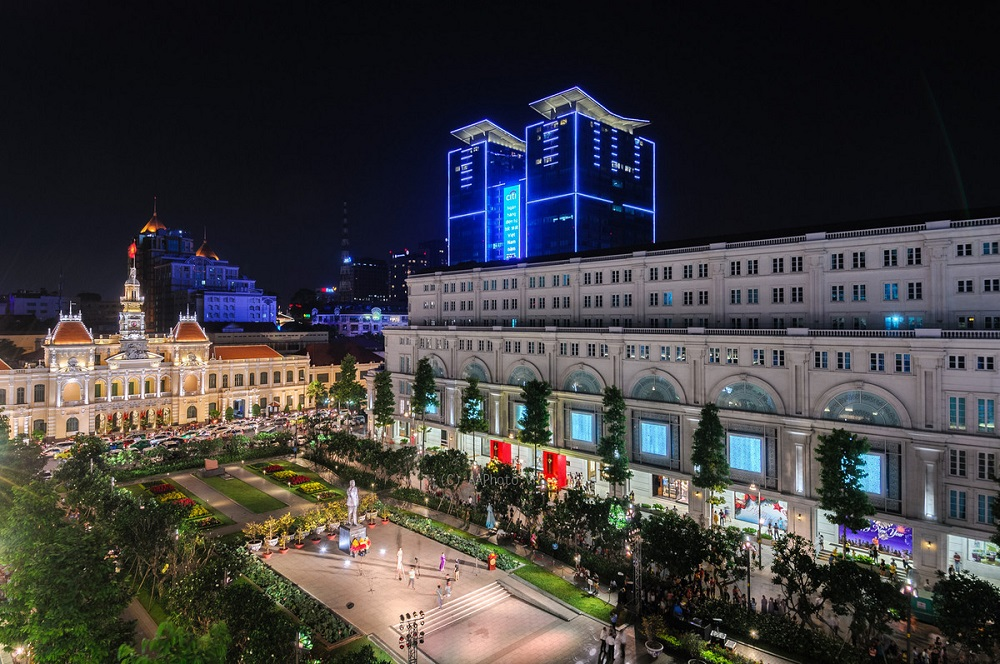
Nguyen Hue Walking Street illuminated at night in central Ho Chi Minh City. Picture: Internet.
For a different evening experience, consider walking toward Bach Dang Wharf along the Saigon River. The waterfront offers beautiful nighttime views and a relaxing atmosphere after a busy sightseeing day.
Suggested Day 1 Itinerary at a Glance
| Time | Activity |
| 8:00 AM–9:30 AM | Explore Independence Palace |
| 9:45 AM–11:30 AM | Visit War Remnants Museum |
| 11:30 AM–1:00 PM | Lunch and coffee break |
| 1:00 PM–2:30 PM | Visit Central Post Office, Notre-Dame Cathedral, and Book Street |
| 3:00 PM–4:30 PM | Explore Ben Thanh Market |
| 6:00 PM–8:30 PM | Dinner and Nguyen Hue Walking Street |
This schedule allows enough time to explore the main attractions without rushing. Most destinations are within central Ho Chi Minh City, although short taxi rides can make travel more comfortable.
For the best experience, wear comfortable shoes and bring drinking water. The city’s tropical climate can feel particularly hot during midday.
Overall, the first day provides an introduction to Ho Chi Minh City’s history, architecture, and modern lifestyle. It also prepares travelers for more cultural and local experiences during the following two days.
2. Day 2: Discover Cu Chi Tunnels, Chinatown, and Local Street Food
Continue your Ho Chi Minh City 3-day itinerary with a journey beyond the busy city center. The second day combines wartime history, Chinese-Vietnamese culture, and authentic Saigon street food.
Start with a morning trip to Cu Chi Tunnels before exploring the historic Chinatown district. In the evening, discover local flavors at one of the city’s liveliest street food markets.
Morning: Explore the Historic Cu Chi Tunnels
Begin your day early and travel to Cu Chi Tunnels, located northwest of central Ho Chi Minh City. This remarkable underground network played an important role during the Vietnam War.
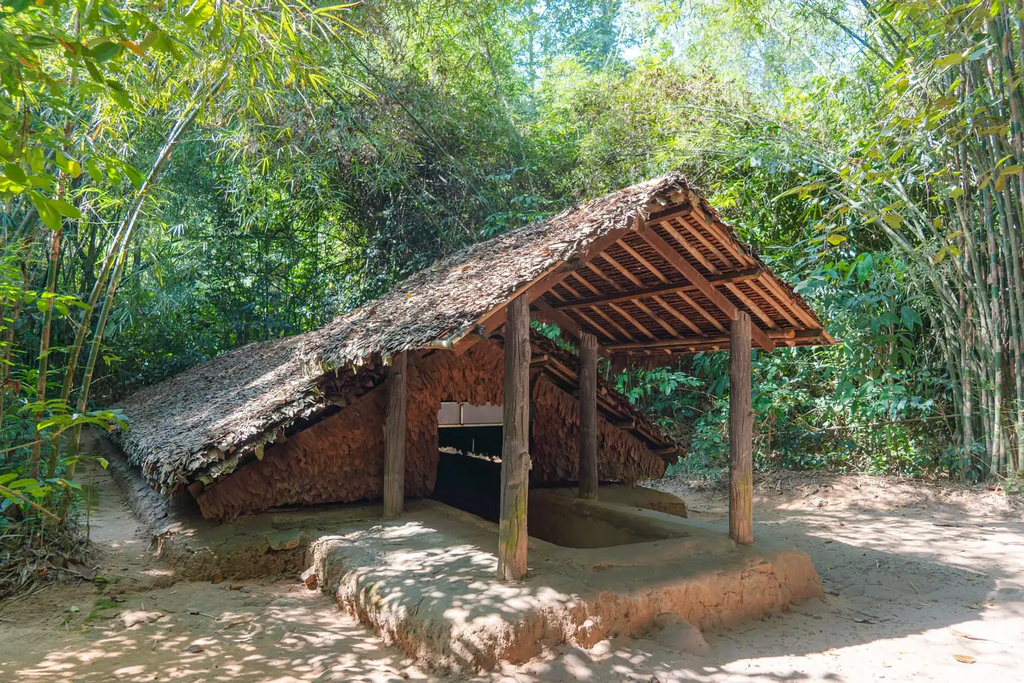
Cu Chi Tunnels, a historic underground tunnel network near Ho Chi Minh City. Picture: Internet.
The tunnels served as hiding places, communication routes, living quarters, and supply storage areas. Today, visitors can explore preserved sections and learn about the challenging conditions faced by people during the war.
A guided tour usually includes several fascinating experiences:
- Underground tunnels: Crawl through selected tunnel sections and experience their narrow passages.
- Hidden entrances: Discover how underground entrances were carefully concealed.
- Wartime exhibitions: Explore displays of historical equipment, underground shelters, and military communication systems.
- Traditional wartime food: Taste boiled cassava, a simple food associated with life during the war.
There are two main tunnel sites: Ben Dinh and Ben Duoc. Ben Dinh is closer to the city center and more convenient for a shorter visit.
Meanwhile, Ben Duoc offers a larger historical setting with memorial areas and generally fewer visitors. However, reaching Ben Duoc requires additional travel time.
Cu Chi Tunnels visitor information:
| Information | Details |
| Location | Cu Chi area, northwest of Ho Chi Minh City |
| Opening hours | Approximately 7:00 AM–5:00 PM |
| Travel time | Around 1.5–2.5 hours each way |
| Suggested visit | 2–3 hours |
| Recommended option | Ben Dinh for a shorter day trip |
For this itinerary, choose Ben Dinh and depart around 7:00 AM. A private car or organized tour can make transportation more convenient.
Visitors uncomfortable with confined spaces can skip the tunnel crawl. The above-ground exhibitions still provide valuable historical insights.
Afternoon: Discover Chinatown and Binh Tay Market
After returning to Ho Chi Minh City, enjoy lunch before exploring Cholon, the city’s historic Chinatown. This neighborhood offers a fascinating blend of Chinese-Vietnamese traditions, architecture, and local commerce.
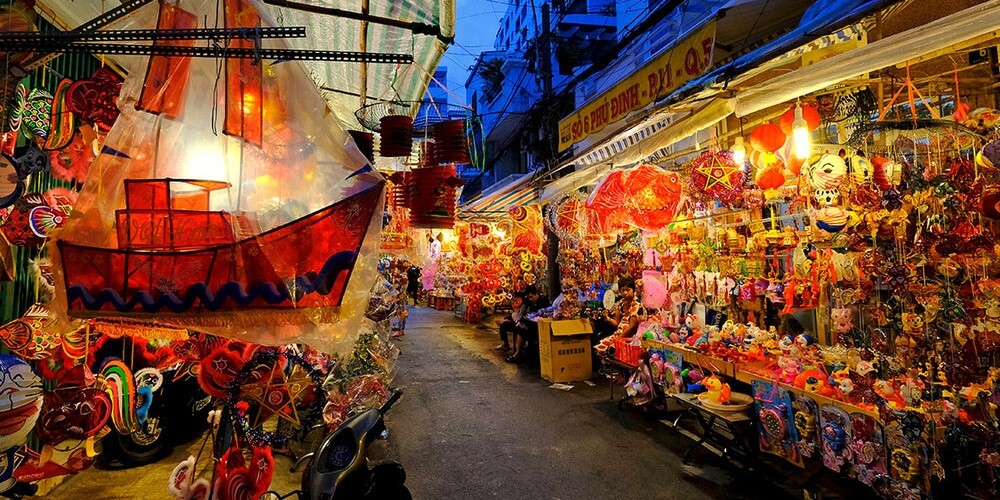
Cholon Chinatown, known for its traditional markets and Chinese-Vietnamese architecture. Picture: Internet.
Unlike the modern streets of central Saigon, Cholon features traditional temples, busy markets, and historic trading streets. Its cultural atmosphere makes it an interesting destination for first-time visitors.
Visit Thien Hau Pagoda
Start at Thien Hau Pagoda, located at 710 Nguyen Trai Street. This historic Chinese temple is dedicated to Mazu, a sea goddess traditionally worshipped by Chinese communities.
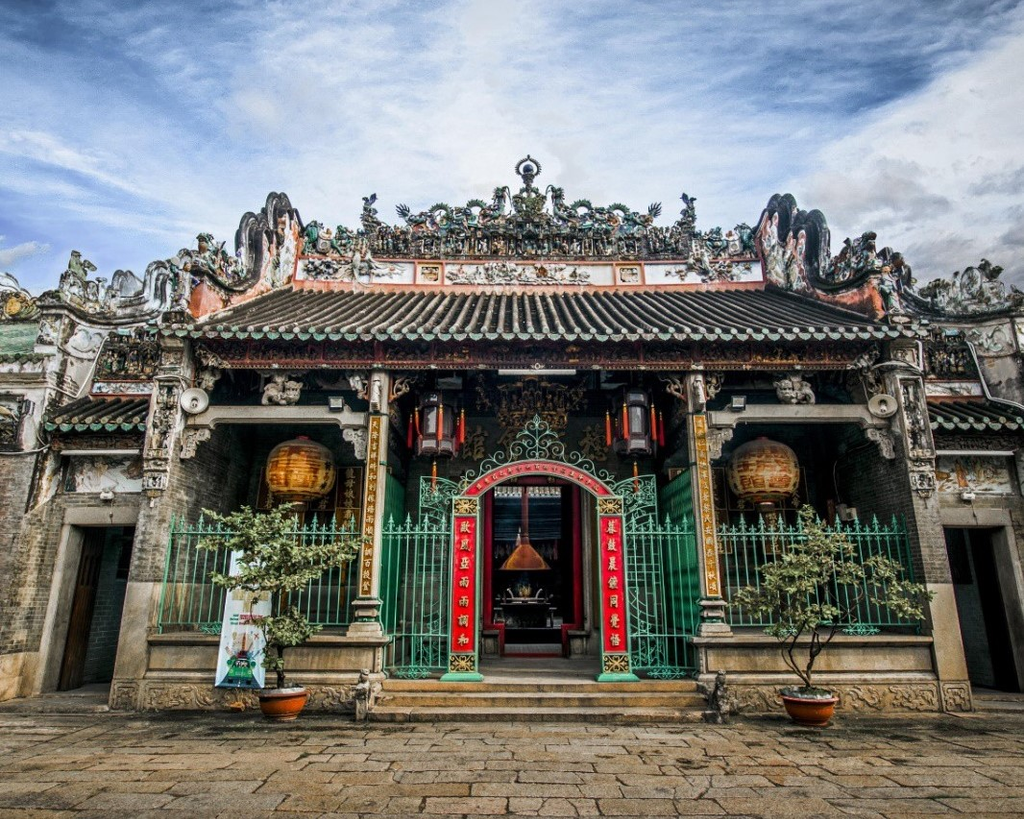
Thien Hau Pagoda in Ho Chi Minh City’s Chinatown, featuring traditional Chinese temple architecture. Picture: Internet.
Inside, visitors can admire intricate wooden carvings, colorful decorations, and hanging incense coils. The temple also provides an introduction to the spiritual traditions of Saigon’s Chinese-Vietnamese community.
Admission is generally free, although donations are welcome. Spend approximately 30–45 minutes exploring the temple and its peaceful courtyards.
Explore Binh Tay Market
Continue to Binh Tay Market, one of Ch olon’s most recognizable landmarks. Located at 57A Thap Muoi Street, the market is famous for its historic architecture and lively trading atmosphere.
The building features a distinctive clock tower, traditional roof details, and a spacious central courtyard. Inside, vendors sell clothing, household products, dried foods, and regional specialties.
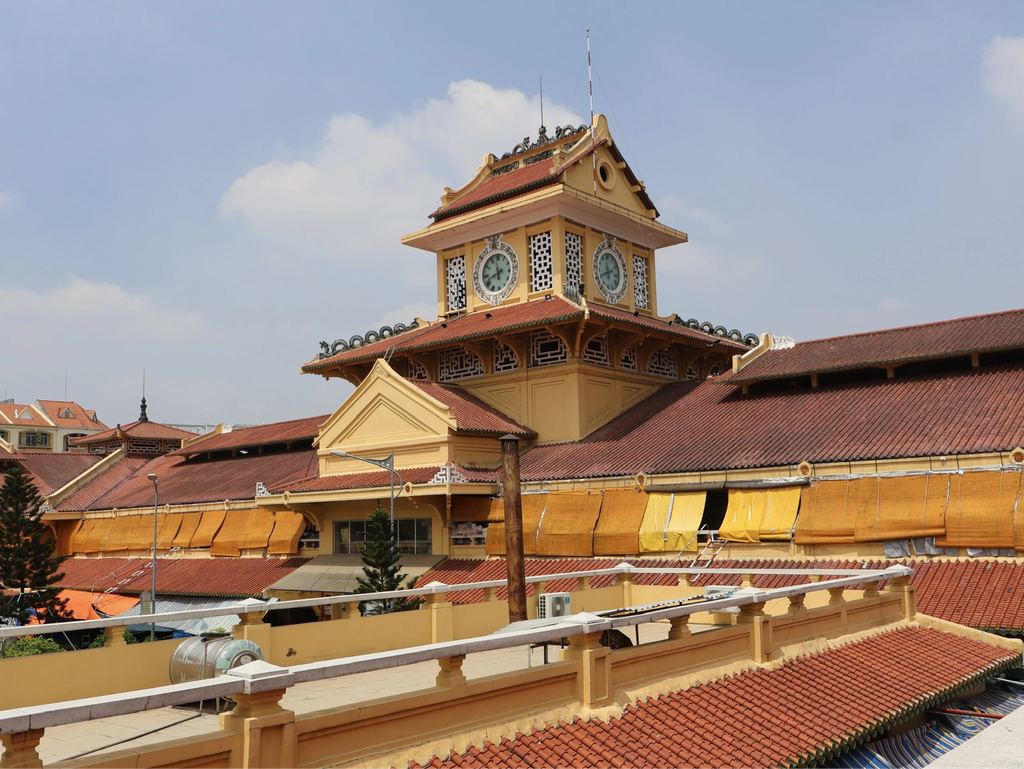
Binh Tay Market in Cholon, famous for its historic clock tower and bustling trading stalls. Picture: Internet.
Unlike Ben Thanh Market, Binh Tay primarily serves local shoppers and wholesale traders. Therefore, it offers a different perspective on everyday commercial life in Saigon.
Visitors can browse the stalls, take photographs, and discover traditional products. However, some vendors focus on wholesale orders rather than individual souvenir purchases.
Evening: Taste Authentic Street Food at Ho Thi Ky Market
After exploring Chinatown, head to Ho Thi Ky Food Street for an evening of local dining. Located in the former District 10 area, this destination is famous for its flower market and lively food stalls.
As evening approaches, the narrow streets fill with the aromas of grilled seafood, fried snacks, and Vietnamese desserts. The casual atmosphere makes it a popular destination for locals and adventurous travelers.
Must-try street foods at Ho Thi Ky include:
- Grilled seafood: Fresh squid, shrimp, and shellfish prepared with flavorful sauces.
- Thịt Xiên Nướng: Vietnamese grilled meat skewers served with savory seasonings.
- Bánh Tráng Trộn: Rice paper salad mixed with herbs, dried beef, peanuts, and tangy sauce.
- Phá Lấu: A rich, spiced offal stew often enjoyed with bread or noodles.
- Chè: Traditional Vietnamese sweet desserts featuring beans, coconut milk, and jelly.
Most food stalls begin operating in the late afternoon, with the street becoming livelier after 5:00 PM. Visitors can explore different stalls and sample several small dishes instead of ordering one large meal.
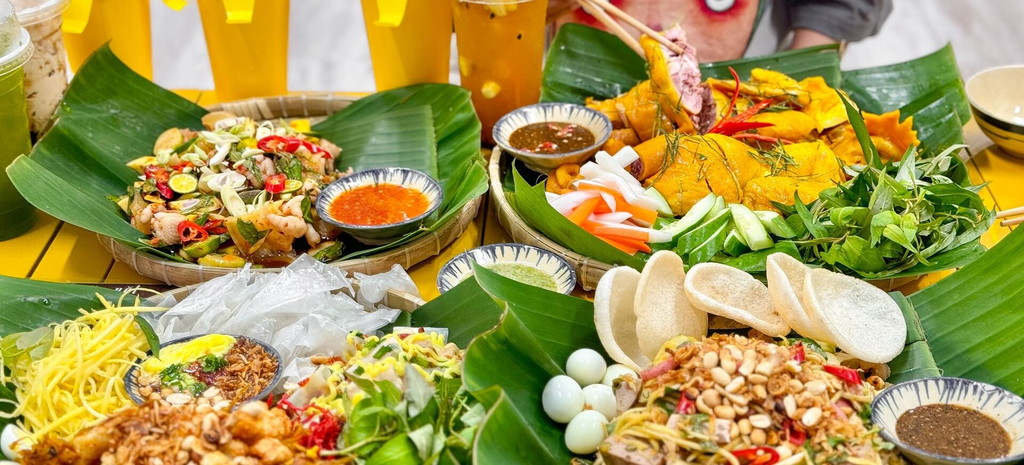
Ho Thi Ky Food Street, a lively destination for authentic Saigon street food. Picture: Internet.
The nearby flower market is also worth a short walk. Colorful flower displays create an interesting contrast with the bustling food street.
Suggested Day 2 Itinerary at a Glance
| Time | Activity |
| 7:00 AM–9:00 AM | Travel to Cu Chi Tunnels |
| 9:00 AM–11:00 AM | Explore Ben Dinh Tunnels |
| 11:00 AM–1:30 PM | Return to the city and enjoy lunch |
| 2:00 PM–2:45 PM | Visit Thien Hau Pagoda |
| 3:15 PM–4:30 PM | Explore Binh Tay Market |
| 5:30 PM–7:30 PM | Discover Ho Thi Ky Food Street |
This schedule is most practical with a private car or flexible transportation. Traffic conditions may affect arrival times, so allow some flexibility between stops.
Practical Tips for Your Second Day
Combining Cu Chi Tunnels with Chinatown creates a rewarding but relatively busy itinerary. Preparing transportation and planning breaks can make the day more comfortable.
- Book transportation early: Arrange a morning Cu Chi tour or private transfer before departure.
- Wear comfortable clothing: Light clothes and walking shoes are ideal for tunnels and markets.
- Carry drinking water: Outdoor sightseeing can become tiring in Ho Chi Minh City’s tropical heat.
- Bring small cash notes: Some traditional markets and street food stalls may not accept cards.
- Respect cultural sites: Dress modestly and avoid disturbing worshippers at Thien Hau Pagoda.
- Keep your schedule flexible: Skip one afternoon stop if traffic delays your return from Cu Chi.
Overall, Day 2 offers a deeper understanding of Ho Chi Minh City’s history, cultural diversity, and local lifestyle. It also introduces travelers to experiences beyond the city’s most famous tourist landmarks.
3. Day 3: Discover the Mekong Delta and Experience Local River Life
Complete your Ho Chi Minh City 3-day itinerary with a memorable journey to the Mekong Delta. This beautiful region is famous for its winding rivers, tropical orchards, traditional villages, and peaceful countryside.
A day trip to My Tho and Ben Tre offers an introduction to life along the Mekong River. Travelers can explore Buddhist temples, enjoy boat rides, and discover traditional local crafts.
Morning: Travel to My Tho and Visit Vinh Trang Pagoda
Start your day around 7:00 AM and travel south from Ho Chi Minh City to My Tho. The journey usually takes 1.5–2 hours, depending on traffic conditions.
Your first stop is Vinh Trang Pagoda, one of the Mekong Delta’s most famous Buddhist landmarks. Built during the 19th century, the pagoda combines Vietnamese, Chinese, and European architectural influences.
Vinh Trang Pagoda in My Tho, featuring impressive Buddha statues and traditional architecture. Picture: Internet.
Visitors can admire impressive Buddha statues, decorative temple buildings, and peaceful gardens. The spacious grounds also provide excellent opportunities for cultural photography.
Allow approximately 30–45 minutes to explore the pagoda before continuing toward the river.
Late Morning: Take a Boat Trip Along the Mekong River
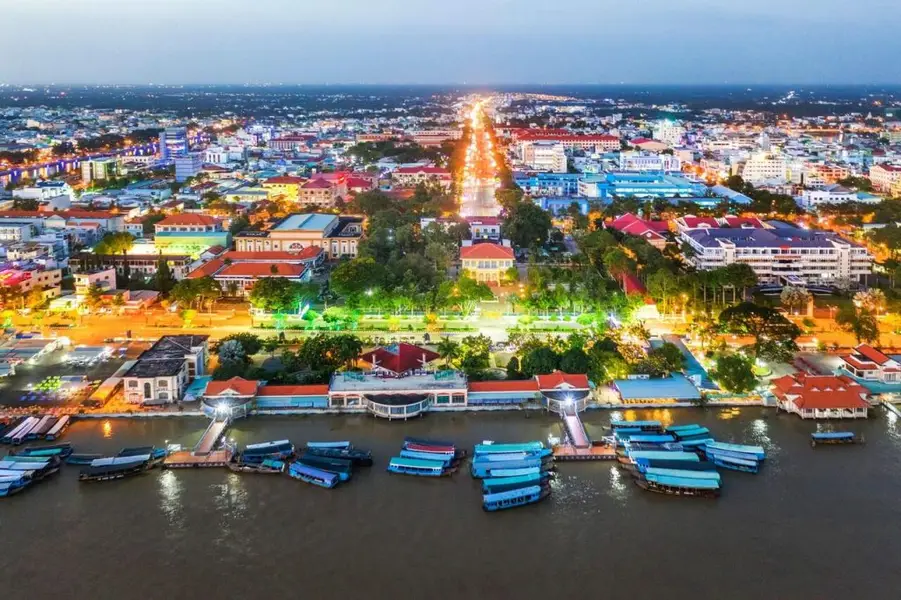
After visiting Vinh Trang Pagoda, head to My Tho’s tourist boat pier. Here, visitors can board a motorboat and begin exploring the Tien River.
Traditional motorboat trip along the Tien River in the Mekong Delta. Picture: Internet.
The journey passes riverside villages, fishing boats, and tropical landscapes. Along the way, travelers can admire the region’s distinctive waterways and observe everyday river activities.
One popular destination is Thoi Son Islet, also known as Unicorn Island. This green island features fruit orchards, small canals, and traditional rural experiences.
Depending on your tour, activities may include:
- Tropical fruit tasting: Sample seasonal fruits such as rambutan, longan, and dragon fruit.
- Honey tea tasting: Enjoy locally prepared honey tea and learn about traditional beekeeping.
- Traditional folk music: Listen to đờn ca tài tử, a distinctive musical tradition of Southern Vietnam.
- Village walks: Explore small paths surrounded by fruit gardens and coconut palms.
These experiences offer a glimpse into the agricultural traditions of the Mekong Delta. However, some stops cater mainly to tour groups and include opportunities to purchase local products.
Midday: Enjoy a Traditional Mekong Delta Lunch
After exploring the river islands, stop for lunch at a local restaurant or orchard garden. The Mekong Delta is known for its freshwater fish, tropical ingredients, and traditional southern Vietnamese dishes.
Many organized tours include a set lunch featuring regional specialties. One particularly famous dish is cá tai tượng chiên xù, or crispy fried elephant ear fish.
The fish is often served with rice paper, fresh herbs, vegetables, and dipping sauce. Diners can wrap small pieces together to create a flavorful Vietnamese roll.
Other popular dishes include:
- Canh Chua Cá: Sweet-and-sour fish soup prepared with tamarind, pineapple, and local vegetables.
- Cá Kho Tộ: Braised fish cooked in a clay pot with caramelized fish sauce.
- Gỏi Củ Hủ Dừa: Coconut heart salad mixed with shrimp, herbs, and a sweet-sour dressing.
After lunch, enjoy a short break before continuing your afternoon activities.
Afternoon: Explore Ben Tre’s Coconut Canals and Traditional Workshops
Continue your journey through the narrow waterways associated with Ben Tre’s coconut-growing communities. This area is famous for its coconut palms, traditional handicrafts, and peaceful rural landscapes.

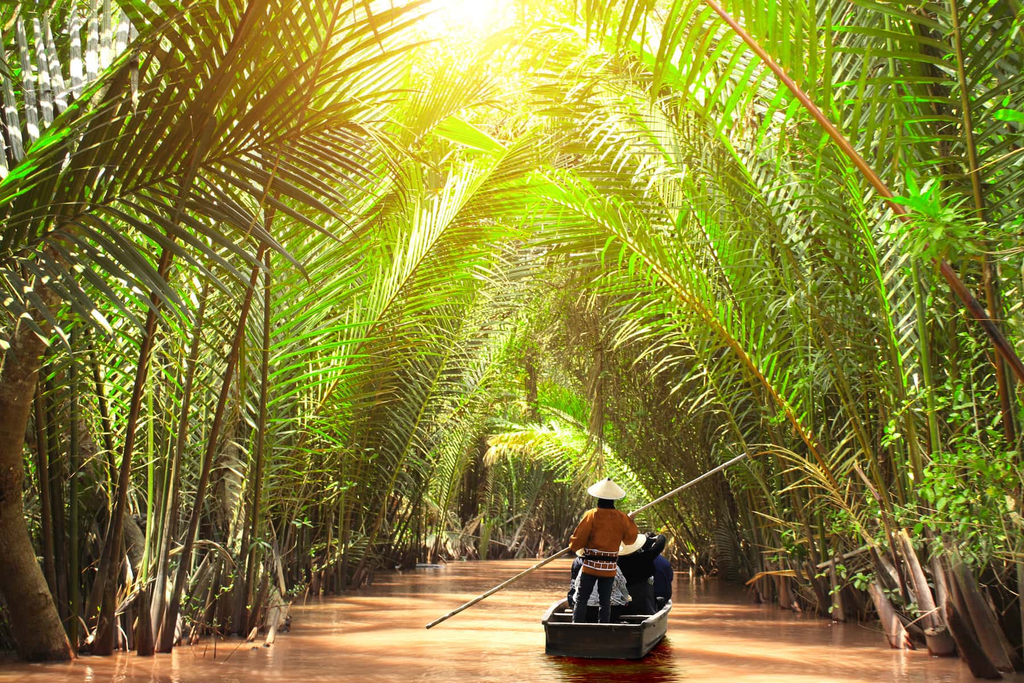
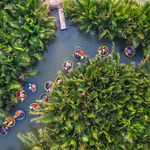
Hand-rowed sampan boat ride through coconut-lined canals in Ben Tre. Picture: Internet.
One of the most memorable experiences is a hand-rowed sampan ride. Local boat operators guide small wooden boats through narrow canals surrounded by dense nipa palms.
Unlike the larger motorboats used on the Tien River, these sampans move slowly through the waterways. The quiet journey offers an opportunity to appreciate the natural surroundings.
Another interesting activity is visiting a traditional coconut candy workshop. Visitors can observe how coconut milk and sugar are cooked, shaped, and wrapped into small sweets.
Some workshops also demonstrate other coconut-based products and handicrafts. Travelers can taste freshly prepared candy or purchase local specialties as souvenirs.
Late Afternoon: Return to Ho Chi Minh City
After your river activities, begin the return journey to Ho Chi Minh City. Most organized day tours arrive back between 5:00 PM and 6:30 PM, depending on traffic.
If you still have energy, enjoy a relaxing dinner near your hotel. Otherwise, spend the evening resting after three days of exploring Saigon and its surrounding attractions.
Suggested Day 3 Itinerary at a Glance
| Time | Activity |
| 7:00 AM–9:00 AM | Travel from Ho Chi Minh City to My Tho |
| 9:00 AM–9:45 AM | Visit Vinh Trang Pagoda |
| 10:00 AM–11:30 AM | Explore the Tien River and Thoi Son Islet |
| 11:30 AM–12:30 PM | Enjoy a sampan ride and local experiences |
| 12:30 PM–1:30 PM | Traditional Mekong Delta lunch |
| 1:30 PM–2:45 PM | Visit coconut candy workshops and rural gardens |
| 3:00 PM–6:00 PM | Return to Ho Chi Minh City |
The schedule is an example rather than a fixed tour program. Actual stop sequences and departure times depend on your selected operator.
How Much Does a Mekong Delta Day Trip Cost?
A guided group tour from Ho Chi Minh City typically costs around 400,000–1,000,000 VND per person. Prices depend on group size, transportation, included activities, and meal arrangements.
Standard packages commonly include round-trip transportation, a tour guide, boat rides, and lunch. However, premium experiences and private tours may cost considerably more.
Before booking, check whether your package includes entrance fees, sampan rides, drinks, and hotel transfers. Some operators charge separately for optional activities or additional services.
Essential Tips for Visiting the Mekong Delta
A Mekong Delta day trip involves several hours of driving and outdoor activities. Therefore, preparing for the weather and choosing a suitable tour can improve your experience.
- Book a reputable tour: Compare itineraries, group sizes, and customer reviews before making a reservation.
- Wear comfortable clothing: Choose lightweight clothes and suitable footwear for boats and village paths.
- Bring sun protection: Carry sunscreen, sunglasses, and a hat for outdoor river activities.
- Prepare small cash notes: Local workshops and vendors may not accept card payments.
- Check weather conditions: Heavy rainfall can affect boat services and outdoor sightseeing.
- Confirm included activities: Not every tour visits the same islands or coconut workshops.
For visitors interested in the famous Cai Rang Floating Market, consider an overnight trip to Can Tho instead. The market is too far away to combine comfortably with this My Tho–Ben Tre itinerary.
Overall, the Mekong Delta provides a refreshing contrast to Ho Chi Minh City’s busy streets. It is a memorable way to end your three-day journey through southern Vietnam.
Read for more information:
- https://abite.asia/cu-chi-tunnels-from-ho-chi-minh-city-a-practical-day-trip-guide/
- https://abite.asia/top-10-things-to-do-in-ho-chi-minh-city-for-first-time-visitors/
At Abite.asia, we specialize in curated Vietnam tours for international travelers, ensuring an authentic and hassle-free experience. Let us take care of your journey so you can fully embrace the beauty of Vietnam. Contact us today at +84363770835 to start planning your adventure!


Leave a Reply