
Experience a peaceful start to your day at Hoan Kiem Lake & Ngoc Son Temple, the spiritual and cultural heart of Hanoi. As the sun rises, the lake awakens with tai chi groups, joggers, and the scent of coffee drifting from nearby cafés. Cross the red Huc Bridge to reach Ngoc Son Temple, a sacred site honoring heroes and scholars, surrounded by calm water and leafy trees. Capture stunning morning reflections, explore local life around the Old Quarter, and enjoy the harmony of tradition and tranquility. A stroll around Hoan Kiem Lake & Ngoc Son Temple offers more than sightseeing — it’s a glimpse into the rhythm of Hanoi’s soul.

Image for illustrative purposes only. Source: Collected online.
1. The Heartbeat of a Hanoi Morning
Every day in Hanoi begins here — where calm water, soft sunlight, and community spirit meet. This section introduces the sensory beauty and cultural rhythm that make Hoan Kiem Lake & Ngoc Son Temple the perfect start to any Hanoi morning.
A City That Wakes Up Slowly
At dawn, Hanoi’s usual rush pauses, and a quiet energy fills the streets leading to Hoan Kiem Lake & Ngoc Son Temple. Elderly couples stroll side by side, their conversations blending with the rhythmic footsteps of joggers circling the shore. Vendors set up small stalls selling warm soy milk and sticky rice, while the scent of roasted coffee drifts from lakeside cafés.
Here, morning is not just a time of day — it’s a ritual. These moments of harmony reveal why this area remains the spiritual center of the capital. The lake doesn’t simply reflect the skyline — it reflects the soul of Hanoi.

Image for illustrative purposes only. Source: Collected online.
The Lake as a Living Stage
As the sun climbs higher, the lake transforms into a living stage of culture and connection. Around the water’s edge, groups of locals practice tai chi, their arms gliding gracefully in unison. Elderly women dance to gentle music, forming circles that radiate joy and laughter. Young photographers crouch by the railings to capture the perfect sunrise shot, while monks walk silently across the red Huc Bridge toward Ngoc Son Temple.
This daily choreography unfolds with natural rhythm — no announcement, no coordination, yet everything flows. Travelers who pause to watch often find themselves mesmerized, realizing that this calm performance embodies the essence of Vietnamese life.
Morning highlights around the lake include:
- Locals performing tai chi at the water’s edge.
- Street vendors offering traditional breakfasts like xôi or bánh cuốn.
- Artists sketching or playing soft Vietnamese folk tunes.
- The red Huc Bridge glowing under early sunlight.
Each scene tells a story of connection — between generations, between city and nature, between the old and the new.
The Spiritual Calm of Ngoc Son Temple
While the city hums quietly around it, Ngoc Son Temple remains still — a haven of reflection at the center of life’s movement. As visitors cross the crimson bridge, the noise of traffic fades, replaced by the sound of rippling water and wind through banyan leaves. Inside, altars glow softly with incense smoke. Locals bow before statues of Tran Hung Dao and Van Xuong, their prayers rising like mist toward the ceiling.
The temple’s setting on Jade Island feels symbolic — separated yet connected, much like Hanoi itself. It reminds visitors that even within a modern city, there’s space for spirituality and stillness. This blend of motion and meditation gives Hoan Kiem Lake & Ngoc Son Temple their unique charm: a place where energy meets peace, and tradition breathes within the rhythm of daily life.
2. Legends and History of Hoan Kiem Lake & Ngoc Son Temple
Before admiring the beauty of the lake and temple, it’s essential to understand the stories that shaped them. This section uncovers the myths, history, and symbolism behind Hoan Kiem Lake & Ngoc Son Temple — the timeless heart of Hanoi.
The Legend of the Returned Sword
Every Vietnamese child grows up hearing the legend that gave Hoan Kiem Lake & Ngoc Son Temple their meaning. According to the tale, in the 15th century, King Le Loi led a resistance against the Ming invaders. One day, a divine turtle surfaced from the lake and presented him with a magical sword named Heaven’s Will, symbolizing divine support for his cause. After defeating the enemy and restoring peace, King Le Loi returned to the lake, where the turtle reappeared to reclaim the sword, carrying it back into the depths. From that moment, the lake became known as “Hoan Kiem” — the Lake of the Returned Sword.
The story is more than folklore. It represents the spirit of justice, unity, and humility — virtues deeply rooted in Vietnamese culture. For locals, the lake is a reminder that power must always serve the people, and peace is the true victory.
From Royal Landmark to Public Sanctuary
Originally, the area around the lake was a royal retreat. Over centuries, it evolved into a community space where people of all backgrounds could gather, reflect, and connect. During the French colonial period, Hoan Kiem became one of Hanoi’s most iconic landmarks, surrounded by European-style villas and government buildings. Despite the changing cityscape, the lake remained untouched — a steady symbol of Hanoi’s continuity.

Image for illustrative purposes only. Source: Collected online.
As the city modernized, its role shifted from royal leisure to public life. Today, early mornings see retirees walking side by side with university students, and afternoons bring families feeding fish by the railings. This shared rhythm connects modern Hanoians to their ancestors, who once viewed the same reflections on the water.
Historical transformations of the lake:
- 15th century: Named after King Le Loi’s legendary return of the sword.
- 19th century: Became a spiritual site with the construction of Ngoc Son Temple.
- 20th century: A social and cultural centerpiece during French colonial Hanoi.
- Present day: A pedestrian-friendly space blending tradition and modern life.
Through centuries of change, the lake has remained constant — a serene witness to Hanoi’s evolving identity.
The Birth of Ngoc Son Temple
Sitting gracefully on Jade Island, Ngoc Son Temple emerged in the 19th century under the Nguyen dynasty. Originally built to honor national hero Tran Hung Dao, the temple soon expanded its spiritual purpose, paying tribute to Van Xuong — the god of literature — and La To, the patron saint of physicians. This unique combination of figures represents the values that define Vietnamese identity: bravery, intellect, and compassion.
The temple’s architecture also speaks volumes. Blending Confucian, Taoist, and Buddhist influences, it symbolizes harmony between heaven, earth, and humanity. Its setting on a small island, accessible only by the bright red Huc Bridge, feels like a bridge between worlds — connecting daily life to divine reflection.
Visitors entering the temple often notice the calm air scented with incense and the soft chime of bells. The environment encourages reflection, not only on spiritual matters but also on the endurance of Vietnamese culture itself.
The history of Hoan Kiem Lake & Ngoc Son Temple is more than a timeline — it’s a narrative of faith, resilience, and unity. From the legend of the returned sword to the creation of a temple that bridges heaven and earth, this place continues to remind Hanoi’s people of their roots. Each ripple on the lake’s surface and each step on the red bridge tells a centuries-old story of courage and devotion — one that still beats strongly in the heart of Vietnam’s capital.

Image for illustrative purposes only. Source: Collected online.
3. Crossing the Huc Bridge: Entering Ngoc Son Temple
After walking along the tranquil paths of Hoan Kiem Lake, you’ll find one of Hanoi’s most iconic sights — the red Huc Bridge leading to Ngoc Son Temple. This section explores the architectural beauty, cultural symbolism, and sacred atmosphere that make this bridge and temple the soul of Hoan Kiem Lake & Ngoc Son Temple.
The Symbolism of the Huc Bridge
The Huc Bridge, whose name means “Bridge of Morning Sunlight,” glows in striking red across the calm waters of the lake. Built in the 19th century, it symbolizes enlightenment, renewal, and the connection between the human and spiritual worlds. As you step onto the bridge, the city noise fades behind you, replaced by the soft rustle of trees and the gentle splash of water below. The bridge’s red color, vibrant and full of life, represents energy and happiness in Vietnamese culture — the very essence of Hanoi’s vitality.
Each morning, locals cross this bridge not only to reach the temple but to begin their day with reflection and gratitude. Tourists pause midway, captivated by the shimmering light over the water and the perfect view of Turtle Tower in the distance. Whether viewed from above or below, the bridge feels like a thread linking the city’s history, culture, and faith together.
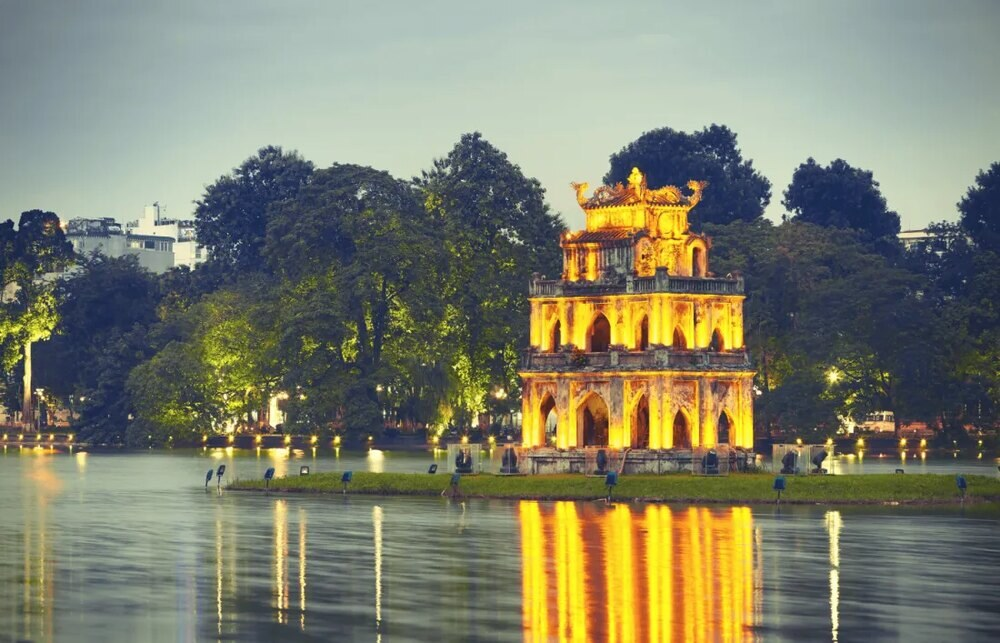
Image for illustrative purposes only. Source: Collected online.
Highlights to capture while crossing the bridge:
- Morning light reflecting on the lake’s surface.
- Locals offering incense or small prayers before entering.
- The elegant curve of the bridge from the lakeside.
- The calmness that contrasts with Hanoi’s lively streets nearby.
This symbolic crossing prepares visitors to enter a sacred space — Ngoc Son Temple, where spirituality and heritage meet.
The Architecture and Layout of Ngoc Son Temple
Once across the bridge, you arrive on Jade Island, where Ngoc Son Temple stands surrounded by water and shaded by ancient trees. The temple’s design combines simplicity with symbolism. The entrance gate features intricate calligraphy and stone guardians that welcome visitors with a sense of reverence. Inside, courtyards connect small halls adorned with red lacquered wood, gold lettering, and soft lantern light.
The temple’s main structures include the Pen Tower (Thap But) on the nearby shore, the Ink Slab (Dai Nghien), and the preserved giant turtle — a symbol of wisdom and longevity. Together, they embody the harmony of intellect and spirituality.
Visitors often notice the temple’s quiet rhythm — the slow burn of incense, the low murmur of prayers, and the cool air drifting through open corridors. This setting encourages introspection and calm, inviting travelers to linger, breathe, and listen to the heartbeat of Hanoi’s spirit.
Main highlights inside Ngoc Son Temple:
- The Pen Tower: Representing the power of learning and enlightenment.
- The Ink Slab: Symbolizing the scholar’s path and the pursuit of wisdom.
- The Sacred Turtle Display: A preserved relic linked to the legend of the Returned Sword.
- Main Altar Hall: Dedicated to national hero Tran Hung Dao, surrounded by offerings of incense and flowers.
Each element within the temple carries layers of meaning — a reminder that faith, intellect, and national pride are inseparable in Vietnamese culture.
A Space of Spiritual Reflection
Unlike grand cathedrals or towering pagodas, Ngoc Son Temple’s power lies in its intimacy. Its wooden floors creak softly underfoot, the air smells faintly of sandalwood, and sunlight filters through carved windows, casting shifting patterns on the floor. You’ll see locals kneeling quietly, their hands clasped in prayer, while young visitors light incense and bow in respect.

Image for illustrative purposes only. Source: Collected online.
The temple welcomes all — the devout, the curious, the weary traveler — offering each a moment of stillness. Standing here, surrounded by history and the steady ripples of Hoan Kiem Lake, you understand why this place has endured for centuries. It is not merely a monument; it is a living sanctuary where belief and beauty coexist.
Tips for visiting respectfully:
- Speak softly and move slowly inside the temple.
- Dress modestly, covering shoulders and knees.
- Avoid using flash when photographing sacred spaces.
- Offer incense only at designated spots.
Crossing the red Huc Bridge and entering Ngoc Son Temple feels like stepping through time — a journey from the modern pulse of Hanoi into its spiritual soul. The bridge’s sunlight, the temple’s quiet air, and the shimmering lake below create a harmony that defines the essence of Hoan Kiem Lake & Ngoc Son Temple. It’s not just a visit; it’s an experience of peace, faith, and cultural memory that stays with you long after you leave.
4. Around Hoan Kiem Lake: Where Culture Meets Calm
Beyond the red bridge and temple gates, the walkway around Hoan Kiem Lake is where Hanoi truly comes to life. This section reveals how the lake serves as a daily gathering space — connecting culture, community, and calm — making Hoan Kiem Lake & Ngoc Son Temple inseparable symbols of the city.
Morning Life by the Water
Every sunrise brings a quiet performance to the lake’s edge. Locals of all ages arrive before dawn to breathe, stretch, and move together. Tai chi groups glide in slow harmony, their silhouettes mirrored in the still water. Elderly men play chess beneath banyan trees while young couples walk hand in hand, sipping hot tea sold by nearby vendors.
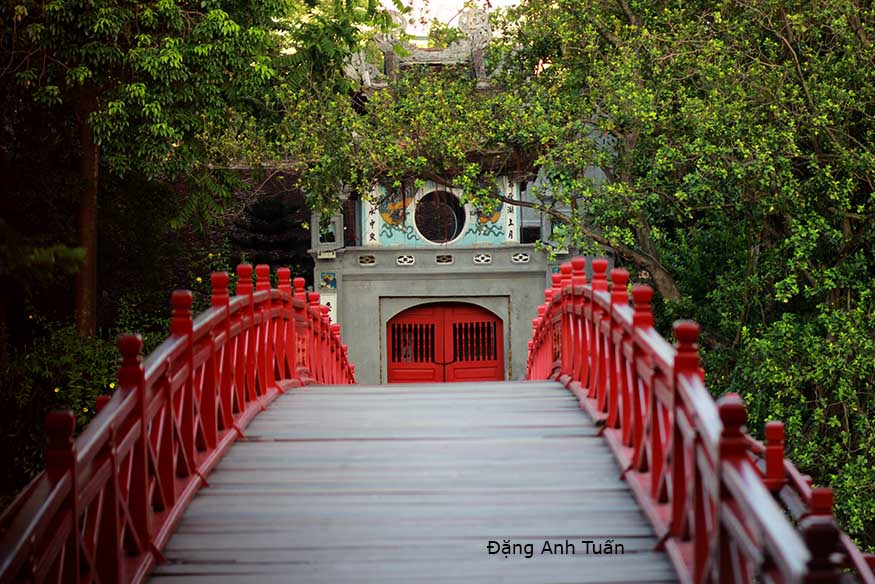
Image for illustrative purposes only. Source: Collected online.
The rhythm of the lake is peaceful yet full of life. Cyclists pass gently, monks stroll with prayer beads in hand, and the distant hum of traffic fades behind birdsong. This tranquil scene contrasts sharply with Hanoi’s bustling streets just a few steps away, proving that the city can hold both serenity and energy within the same breath.
Things to experience during a morning stroll:
- Join locals in light exercise or meditation at dawn.
- Listen to traditional folk music from street performers.
- Observe the lake’s surface changing colors as sunlight shifts.
- Watch photographers capturing reflections of Turtle Tower and the Huc Bridge.
Here, culture isn’t confined to museums — it lives in motion, laughter, and shared silence.
The Symbol of Turtle Tower
At the lake’s center stands Turtle Tower (Tháp Rùa), resting on a small island and surrounded by calm water. Though unreachable by foot, it draws every eye. Built in the 19th century, the tower honors the legendary turtle that appeared to reclaim King Le Loi’s sword, the story that gave the lake its name.
Its gray stone contrasts beautifully with the green water, especially at sunrise when the structure glows in soft light. Locals view it as a symbol of wisdom, longevity, and independence — qualities deeply admired in Vietnamese culture.
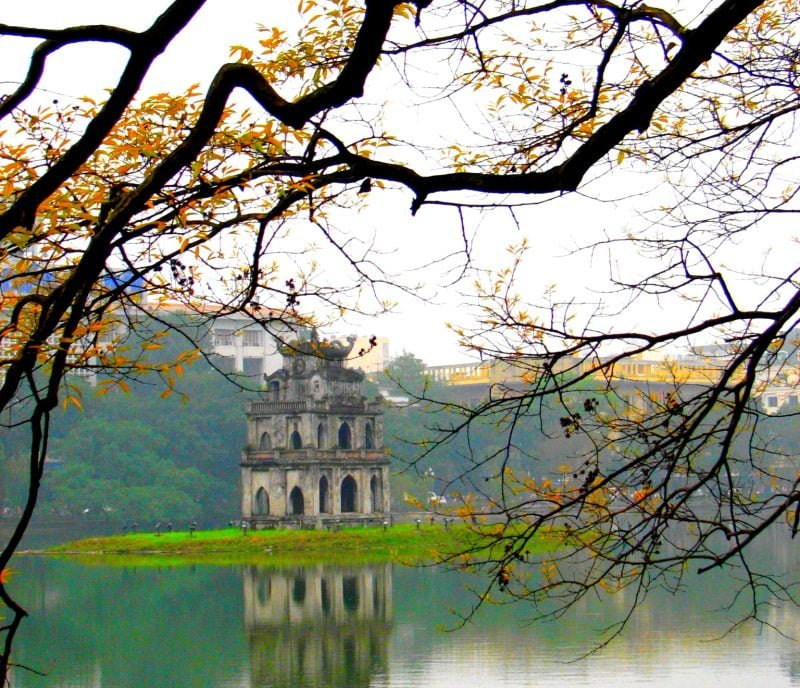
Turtle Tower represents:
- Wisdom and endurance – The turtle as a sacred creature in Vietnamese legend.
- Peace and protection – The tower’s isolated position reflecting calm and security.
- National pride – A reminder of Vietnam’s triumphs and resilience through centuries.
For travelers, Turtle Tower offers a perfect photographic focus — a serene monument surrounded by the movement of daily life.
Lakeside Cafés and Perfect Viewing Spots
After exploring the paths around the lake, take time to sit, watch, and simply breathe. Several cafés line the promenade, offering excellent views and a taste of Hanoi’s café culture. The aroma of strong Vietnamese coffee mingles with the morning breeze, creating the perfect pause before diving into the city’s adventures.
Popular cafés near the lake include Highlands Coffee Hoan Kiem, Cong Caphe Dinh Tien Hoang, and Loading T Café, each offering panoramic views of the water and temple. From these spots, you can observe both the calm surface of the lake and the lively streets behind it — an ideal balance of nature and urban charm.
Best things to enjoy lakeside:
- A cup of cà phê sữa đá (Vietnamese iced coffee) with sunrise reflections.
- Fresh morning pastries or traditional xôi (sticky rice).
- Friendly chats with locals who frequent the same table every morning.
- Quiet journaling or photography from a shaded balcony.
These small rituals — sipping coffee, watching the sun rise, and greeting the day with a smile — are part of what makes mornings at Hoan Kiem Lake & Ngoc Son Temple unforgettable.
Walking around Hoan Kiem Lake offers more than scenery — it’s an immersion in Hanoi’s daily rhythm. Every sight, sound, and scent tells a story of connection: the laughter of elders, the rustle of leaves, and the hum of life around calm water. Together with Ngoc Son Temple, the lake becomes not just a landmark but a living heart of culture, where peace and community pulse side by side.
Read for more information:
- Long Bien Bridge: Exploring Hanoi’s Historic Lifeline Through Time
- Hanoi Coffee Culture: A Unique Brew of History, Flavor, and Local Life
At Abite.asia, we specialize in curated Vietnam tours for international travelers, ensuring an authentic and hassle-free experience. Let us take care of your journey so you can fully embrace the beauty of Vietnam. Contact us today at +84363770835 to start planning your adventure!


Leave a Reply