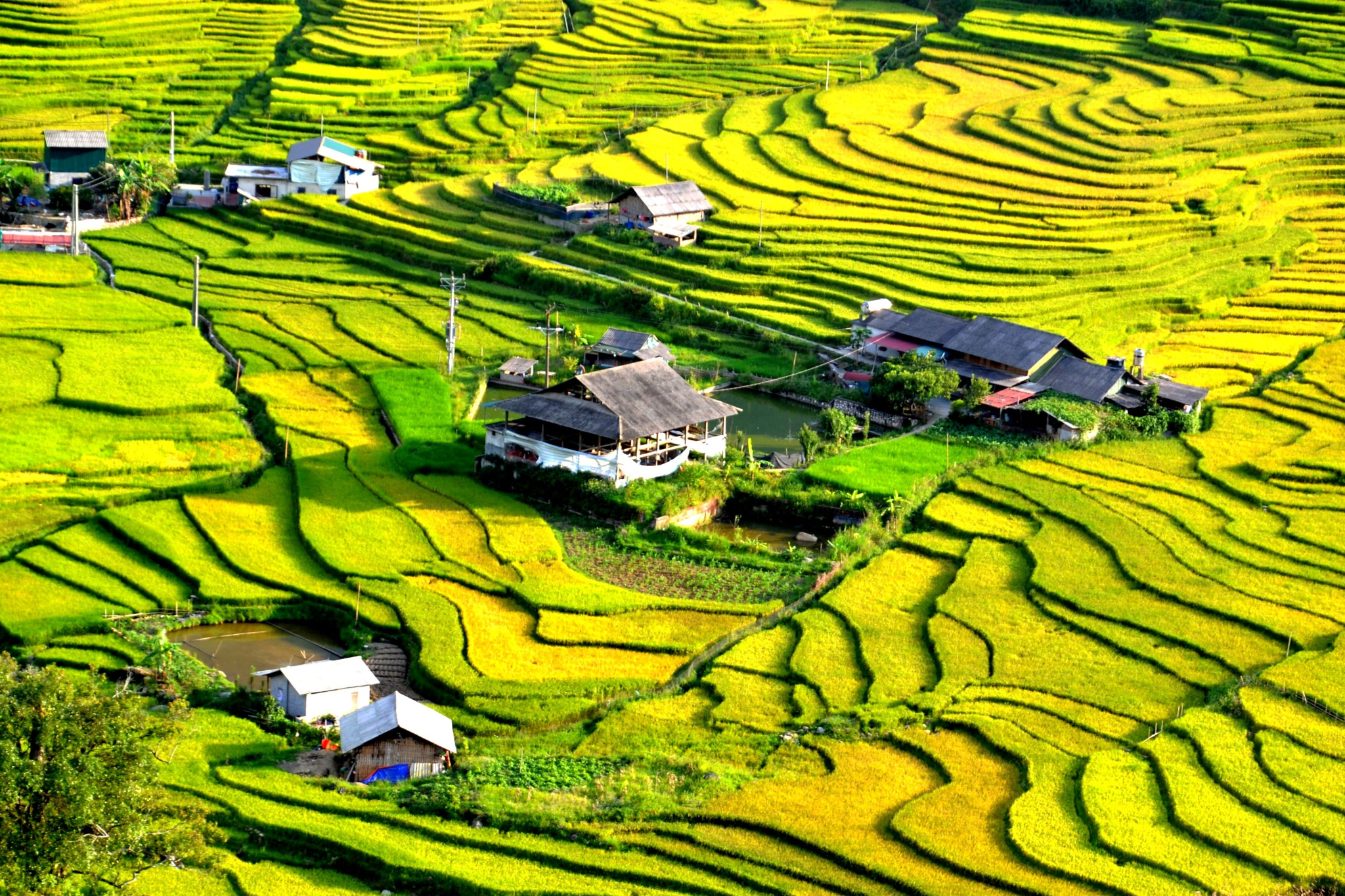
Sapa is a beautiful mountain destination in northern Vietnam, famous for its terraced rice fields, misty valleys, and breathtaking landscapes. However, its changing weather can significantly affect your travel experience, especially when planning trekking adventures and outdoor activities.
Choosing the best time to visit Sapa depends on whether you prefer golden rice terraces, lush green mountains, or cool mountain weather. This guide explores Sapa’s weather by season, the best months for sightseeing and trekking, and practical travel tips. Whether you enjoy nature, photography, or local cultural experiences, you can find the ideal time for your trip.
1. Understanding Sapa’s Weather and Seasons
Sapa has a cool mountain climate, with changing temperatures, rainfall, and landscapes throughout the year. Located in northern Vietnam, this beautiful destination experiences four distinct seasons, each offering different travel experiences.
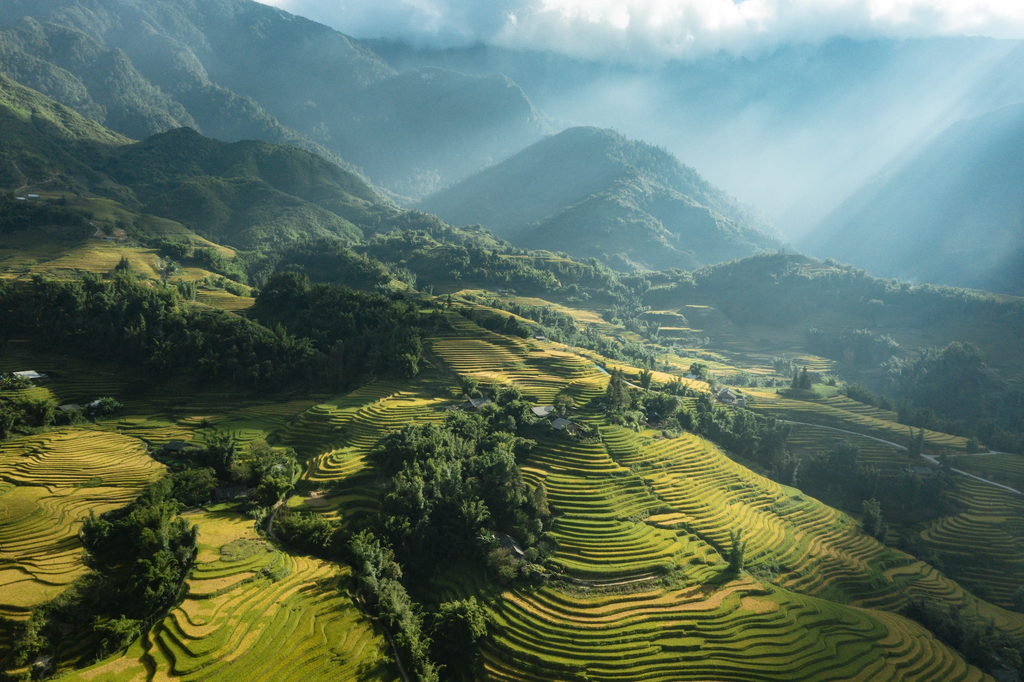
Sapa’s breathtaking mountain landscapes, famous for terraced rice fields and misty valleys. Picture: Internet.
Understanding seasonal weather helps travelers choose the best time to visit Sapa for trekking, sightseeing, and photography. While spring and autumn offer pleasant conditions, summer brings lush scenery, and winter creates a misty mountain atmosphere.
Spring in Sapa: March to May
Spring is one of the most pleasant seasons to explore Sapa. Temperatures gradually become warmer, while blooming flowers and green valleys create beautiful natural landscapes.
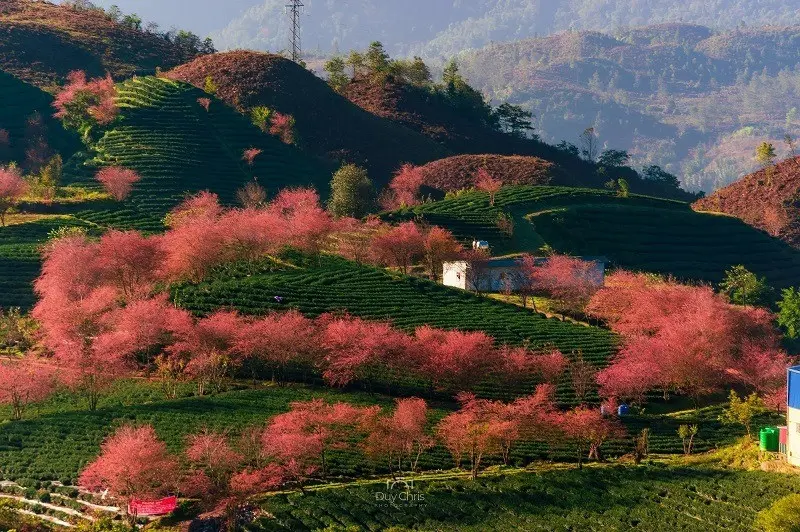
Sapa in spring, featuring blooming flowers and lush mountain scenery. Picture: Internet.
March and April generally offer comfortable conditions for trekking and outdoor sightseeing. However, rainfall begins increasing toward May as the summer rainy season approaches.
Popular spring experiences include:
- Trekking through local villages: Explore Lao Chai and Ta Van while enjoying comfortable mountain weather.
- Admiring spring flowers: Discover colorful blossoms around Sapa’s gardens and surrounding hills.
- Visiting Fansipan Mountain: Enjoy mountain scenery and panoramic views when skies are clear.
- Exploring rice terraces: See farmers preparing fields and beginning seasonal planting activities.
Late April and May also bring the beginning of the rice planting season in some valleys. During this period, water-filled terraces reflect the sky and surrounding mountains.
Summer in Sapa: June to August
Summer brings warmer temperatures, frequent rainfall, and vibrant green landscapes. Although Sapa is cooler than Hanoi, humidity and afternoon showers can affect outdoor activities.
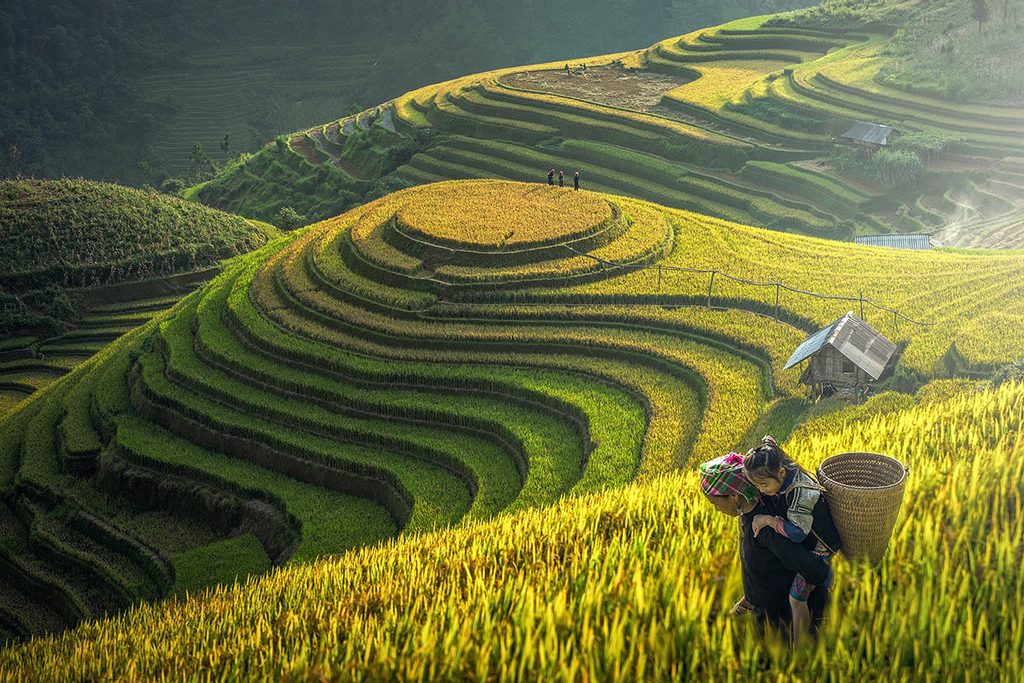
Green rice terraces and misty mountain valleys in Sapa during summer. Picture: Internet.
This is also the growing season for rice terraces. As the rice plants develop, the surrounding valleys become covered in beautiful shades of green.
Travelers visiting during summer can enjoy several experiences:
- Green rice terraces: Admire lush fields across Muong Hoa Valley and nearby villages.
- Waterfall visits: Discover seasonal waterfalls surrounded by dense mountain vegetation.
- Village homestays: Experience local culture and traditional activities in rural communities.
- Mountain photography: Capture dramatic clouds, misty valleys, and green landscapes.
However, July and August are among the wettest months in Sapa. Heavy rainfall can cause slippery trekking trails, landslides, and transportation delays.
Therefore, travelers should check weather forecasts and avoid mountain routes during severe rainfall warnings.
Autumn in Sapa: September to November
Autumn is widely considered the best time to visit Sapa, especially for travelers interested in rice terraces. During this season, the weather gradually becomes cooler, and rainfall generally decreases.
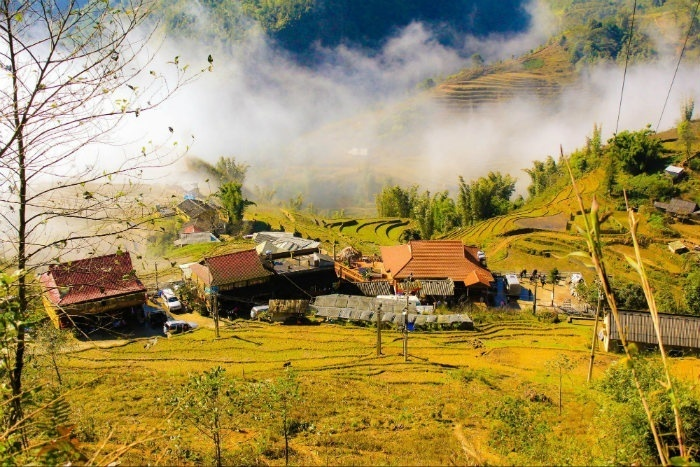
Golden rice terraces in Sapa during the autumn harvest season. Picture: Internet.
September is particularly famous for its golden rice fields. As harvest approaches, terraced landscapes transform from bright green to beautiful shades of yellow.
The exact harvest period varies between villages and weather conditions. Therefore, visitors should confirm local rice conditions before planning photography trips.
October and November generally bring cooler temperatures and more opportunities for clear mountain views. These months are also suitable for trekking and exploring remote villages.
Why travelers love autumn in Sapa:
- Beautiful golden rice terraces during the harvest period.
- Cooler temperatures for hiking and sightseeing.
- Generally improving weather conditions after summer.
- Attractive mountain landscapes and photography opportunities.
For travelers hoping to photograph golden rice terraces, September is usually the strongest choice. However, some fields may already be harvested by October.
Winter in Sapa: December to February
Winter transforms Sapa into a cold and misty mountain destination. Temperatures drop significantly, especially during early mornings and nighttime.
Fog frequently covers the valleys, creating a peaceful atmosphere around mountain villages. On particularly cold days, frost may appear in higher areas, including Fansipan.
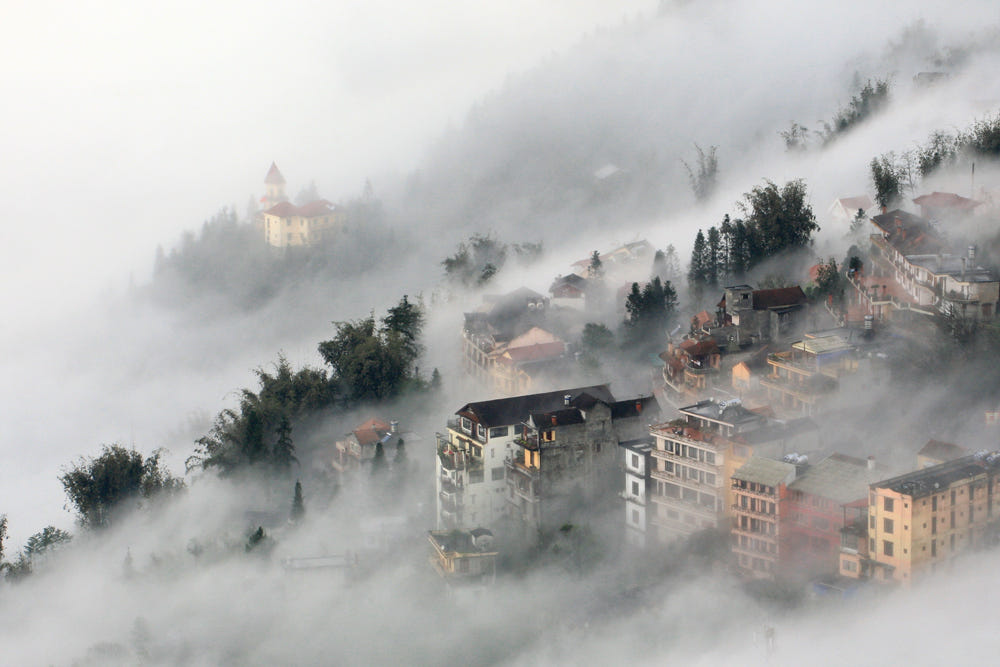
Misty mountain landscapes in Sapa during the cold winter months. Picture: Internet.
Snowfall is possible during exceptional cold spells, but it remains uncommon and unpredictable. Therefore, travelers should not expect guaranteed snow during winter visits.
Despite the cold weather, winter offers several interesting experiences:
- Misty mountain scenery: Enjoy atmospheric landscapes surrounded by clouds and fog.
- Traditional herbal baths: Relax in warm herbal baths associated with Red Dao culture.
- Local cultural experiences: Visit traditional markets and explore mountain communities.
- Winter photography: Capture fog-covered valleys and quiet mountain streets.
However, thick fog can reduce visibility at popular viewpoints. Travelers should also prepare warm clothing and check mountain conditions before outdoor excursions.
Sapa Weather by Season: Quick Comparison
The following table summarizes the main weather characteristics and travel experiences throughout the year.
| Season | Months | Typical Weather | Best Experiences |
| Spring | March–May | Mild, increasingly warm, occasional rain | Trekking, flowers, rice planting |
| Summer | June–August | Warm, humid, frequent heavy rain | Green terraces, waterfalls |
| Autumn | September–November | Cooling temperatures, decreasing rainfall | Golden rice fields, trekking, photography |
| Winter | December–February | Cold, misty, occasional frost | Mountain scenery, cultural experiences |
Which Season Is Best for Visiting Sapa?
For most travelers, March to April and September to November offer favorable conditions for sightseeing. These periods provide pleasant temperatures and beautiful mountain scenery.
However, the ideal season depends on your travel preferences:
- Best for comfortable trekking: March–April and October–November.
- Best for golden rice terraces: September, depending on the harvest schedule.
- Best for lush green landscapes: June–August.
- Best for cold mountain atmosphere: December–February.
Overall, autumn offers some of Sapa’s most iconic landscapes, while spring provides comfortable conditions for outdoor exploration. Choosing your travel dates based on seasonal activities will help you enjoy the region more fully.
2. Best Time to Visit Sapa for Beautiful Rice Terraces
Sapa’s terraced rice fields are among the most breathtaking landscapes in northern Vietnam. These magnificent fields stretch across mountain slopes, changing colors throughout the farming season.
For photography lovers, the best time to visit Sapa depends on the scenery you want to capture. From reflective water-filled terraces to golden harvest fields, each period offers a different experience.
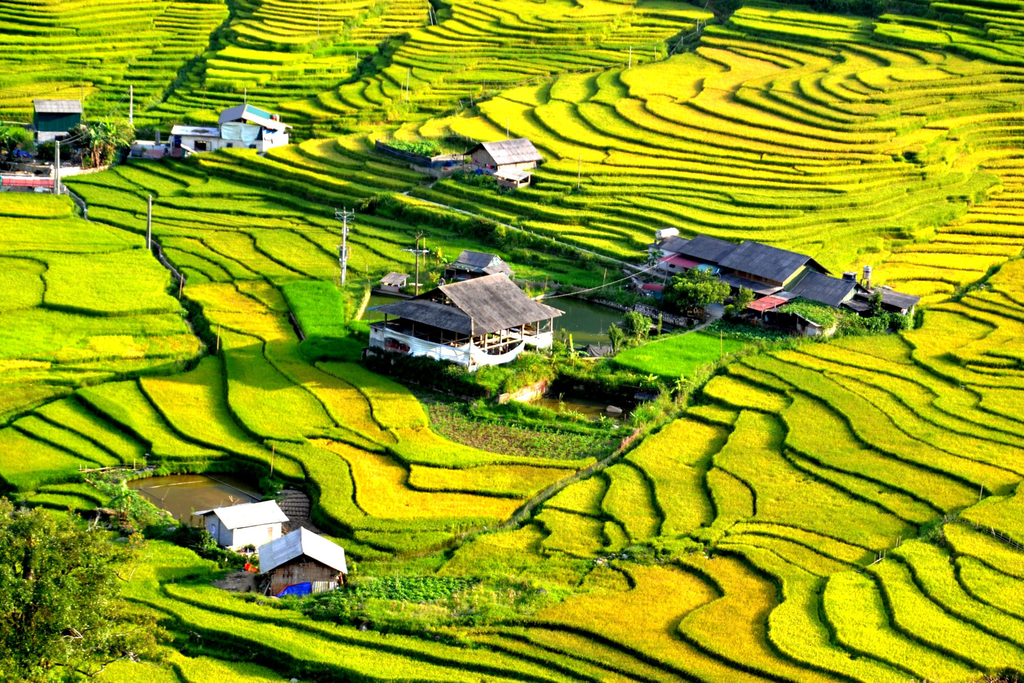
Beautiful terraced rice fields in Sapa, Northern Vietnam, during the rice-growing season. Picture: Internet.
May to June: Water-Pouring Season and Reflective Rice Terraces
May and June mark the beginning of the rice-growing season in many Sapa villages. During this period, farmers channel water from mountain streams into terraced fields before planting rice.
The flooded terraces reflect the sky, clouds, and surrounding mountains like natural mirrors. This creates beautiful landscapes, especially during sunrise and sunset.
Highlights of the water-pouring season:
- Reflective landscapes: Water-filled terraces create beautiful reflections of mountains and clouds.
- Traditional farming activities: Watch local farmers preparing fields and planting young rice.
- Photography opportunities: Capture the contrast between flooded terraces, green hills, and mountain scenery.
- Local village experiences: Explore rural communities and learn about traditional agricultural practices.
Mid-May to early June often provides excellent opportunities to photograph flooded terraces. However, planting schedules vary depending on rainfall and local farming conditions.
June to August: Lush Green Rice Terraces
As rice plants grow, Sapa’s mountain valleys gradually transform into vibrant green landscapes. June to August is an attractive period for travelers who enjoy lush natural scenery.
During these months, the terraced fields become increasingly green, creating beautiful patterns across the hillsides. The surrounding forests and mountains also appear particularly vibrant after summer rainfall.
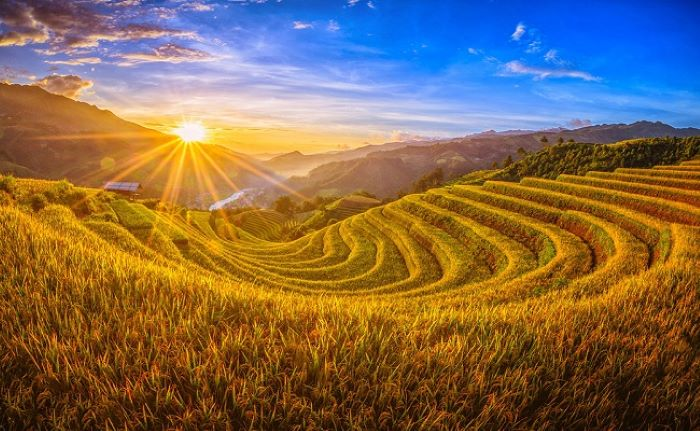
Lush green rice terraces covering the hillsides of Sapa in summer. Picture: Internet.
Popular experiences during the green rice season include:
- Trekking through Muong Hoa Valley: Walk along scenic trails surrounded by green rice terraces and mountain villages.
- Village photography: Capture traditional houses and daily activities against a backdrop of lush fields.
- Local homestays: Stay in rural communities and experience the peaceful atmosphere of the countryside.
However, summer also brings frequent rainfall, especially during July and August. Trails can become muddy and slippery, so waterproof footwear and flexible travel plans are recommended.
September to Early October: Golden Rice Harvest Season
For many travelers, September is the most beautiful month to visit Sapa’s rice terraces. During this period, the fields gradually turn golden as rice plants reach maturity.
The golden terraces stretch across the mountainsides, creating spectacular landscapes for photography and sightseeing. Meanwhile, cooler temperatures make outdoor exploration more comfortable than during the rainy summer months.
The harvest season also offers opportunities to observe traditional agricultural activities. Visitors may see local farmers harvesting rice and carrying crops along mountain paths.
Why September is ideal for rice terrace photography:
- Golden rice fields create striking contrasts with surrounding green mountains.
- Harvesting activities offer a glimpse into traditional rural life.
- Cooler weather makes trekking and village exploration more enjoyable.
- Early morning mist adds atmosphere to mountain landscapes.
However, the golden season is relatively short. Some fields may be harvested earlier than others, depending on altitude, weather, and local farming schedules.
For the best experience, check current rice conditions before booking your trip. Do not assume that every field will remain golden throughout October.
Best Places to See Rice Terraces in Sapa
Several locations around Sapa offer beautiful views of terraced fields and traditional mountain villages. The following destinations are particularly popular for trekking, sightseeing, and landscape photography.
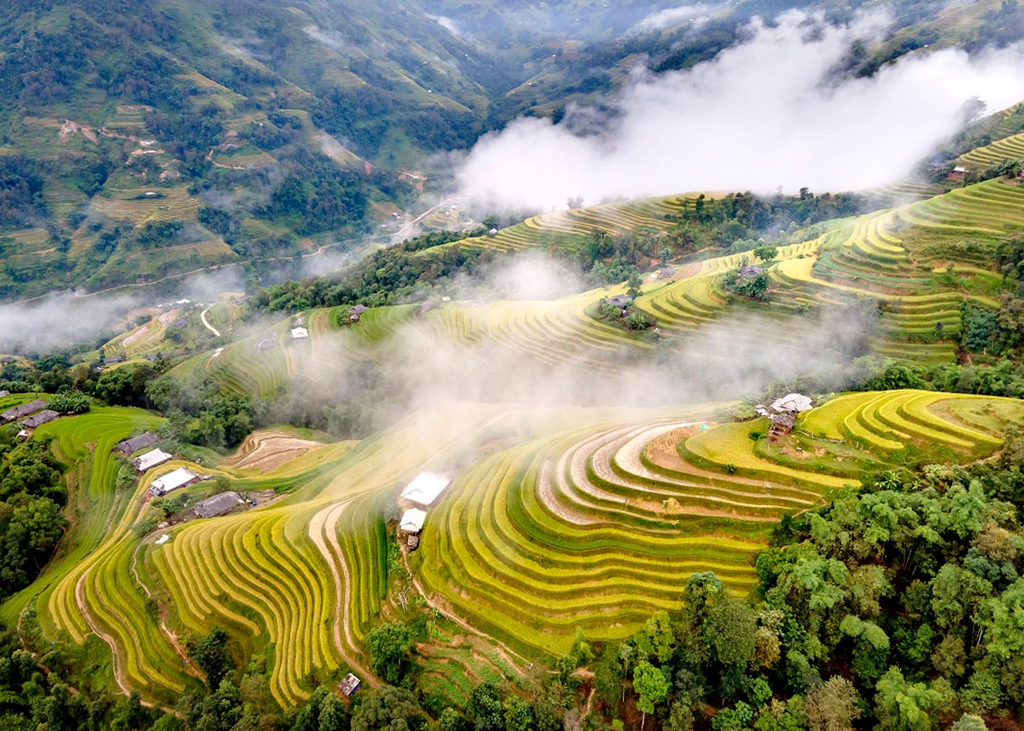
Scenic rice terraces and traditional villages in Muong Hoa Valley, Sapa. Picture: Internet.
- Muong Hoa Valley: Famous for sweeping rice terraces surrounded by mountains and traditional ethnic villages.
- Lao Chai Village: A scenic village known for traditional Hmong culture and beautiful terraced landscapes.
- Ta Van Village: A peaceful destination featuring rice fields, rural homestays, and traditional Giay communities.
Muong Hoa Valley is especially suitable for travelers seeking panoramic views. Meanwhile, Lao Chai and Ta Van offer opportunities to combine photography with cultural experiences.
Sapa Rice Terrace Seasons at a Glance
| Period | Rice Terrace Scenery | Best For |
| May–early June | Water-filled reflective terraces | Landscape photography |
| Late June–August | Vibrant green rice fields | Trekking and nature |
| September | Golden rice terraces | Harvest photography |
| Early October | Remaining golden fields or harvested terraces | Autumn sightseeing |
| November–April | Mostly harvested or unplanted fields | Mountain views and cultural trips |
These periods are approximate because rice cultivation depends on local weather conditions. Different villages may also follow slightly different planting and harvesting schedules.
Photography Tips for Sapa’s Rice Terraces
Capturing beautiful rice terrace photographs requires careful timing and suitable weather conditions. Morning and late afternoon generally offer softer lighting than the middle of the day.
Consider these tips before exploring the fields:
- Visit early: Morning light and occasional mist create atmospheric mountain photographs.
- Choose elevated viewpoints: Higher locations offer wider views of the terraced landscapes.
- Check the harvest schedule: Confirm local conditions before traveling specifically for golden rice fields.
- Respect farmland: Avoid walking through planted fields or damaging crops.
- Hire a local guide: Local guides can help identify suitable viewpoints and safer trekking routes.
Overall, September is usually the best choice for travelers hoping to see Sapa’s famous golden rice terraces. However, May and June offer equally memorable landscapes during the water-pouring season.
For visitors who prefer lush green scenery, July and August provide beautiful views despite the higher rainfall.
3. Best Time to Visit Sapa for Trekking and Outdoor Activities
Sapa is one of Vietnam’s most popular trekking destinations, offering scenic mountain trails, traditional villages, and breathtaking valleys. However, weather conditions can significantly affect hiking experiences, particularly during the rainy season.
For outdoor enthusiasts, the best time to visit Sapa is generally from March to May and September to November. These periods offer relatively comfortable temperatures and better conditions for exploring the mountains.
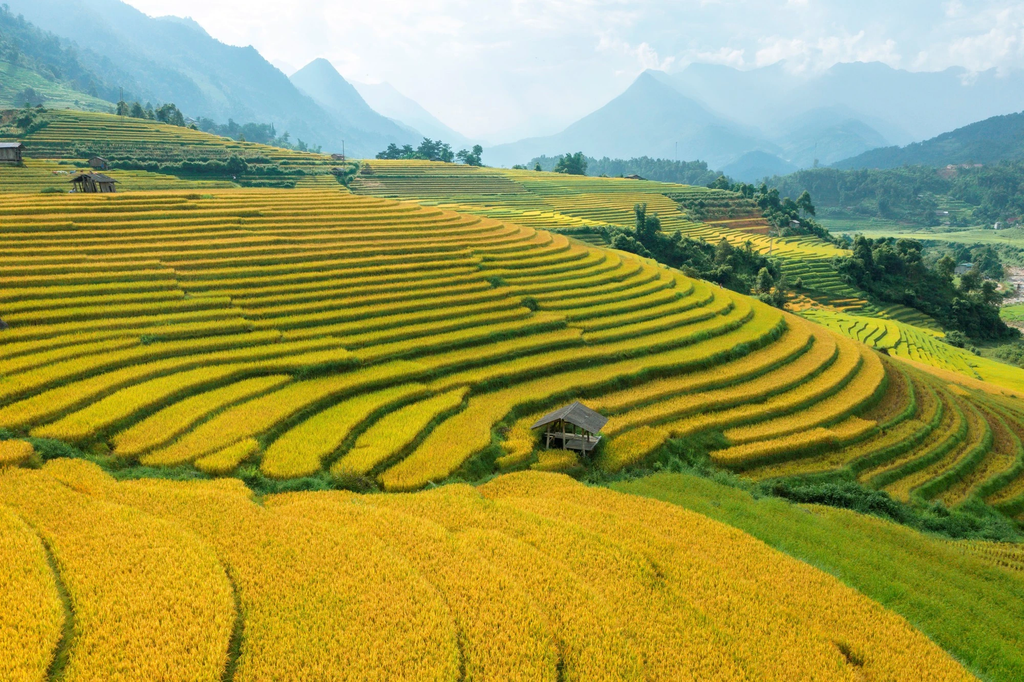
Trekking through Sapa’s mountain trails and traditional ethnic villages. Picture: Internet.
March to May: Pleasant Weather for Mountain Trekking
Spring is an excellent season for trekking in Sapa. During these months, temperatures become milder, and the surrounding mountains feature blooming flowers and green landscapes.
March and April are particularly suitable for long walks through traditional villages. However, rainfall gradually increases toward May, making some mountain trails more challenging.
Popular trekking experiences in spring include:
- Muong Hoa Valley: Walk through beautiful rice terraces, traditional villages, and scenic mountain landscapes.
- Lao Chai Village: Discover Hmong culture while exploring rural trails surrounded by terraced fields.
- Ta Van Village: Enjoy peaceful countryside views and experience traditional Giay village life.
- Cat Cat Village: Follow a shorter walking route featuring traditional houses, waterfalls, and cultural attractions.
Spring trekking is suitable for beginners and experienced hikers alike. Nevertheless, travelers should choose routes that match their fitness levels and available time.
September to November: Ideal Conditions for Scenic Hiking
Autumn is another excellent season for exploring Sapa’s mountain trails. Temperatures gradually become cooler, while rainfall generally decreases toward November.
September offers beautiful views of golden rice terraces across Muong Hoa Valley. Meanwhile, October and November are often more comfortable for longer hikes and outdoor adventures.
During autumn, travelers can enjoy clear mountain views when weather conditions are favorable. The cooler air also makes uphill walks less tiring than during warmer months.
For photography enthusiasts, September is particularly attractive because of the rice harvest. However, travelers prioritizing trekking conditions may prefer October or November.
Best Trekking Routes in Sapa for Different Travelers
Sapa offers hiking routes for different fitness levels and travel preferences. Some trails involve short village walks, while others require several hours of trekking through mountain terrain.
Read for more information:
- https://abite.asia/sapa-rice-harvest-season-when-the-mountains-turn-golden/
- https://abite.asia/traveling-northern-vietnam-during-the-rainy-season-essential-tips-for-travelers/
At Abite.asia, we specialize in curated Vietnam tours for international travelers, ensuring an authentic and hassle-free experience. Let us take care of your journey so you can fully embrace the beauty of Vietnam. Contact us today at +84363770835 to start planning your adventure!



Leave a Reply