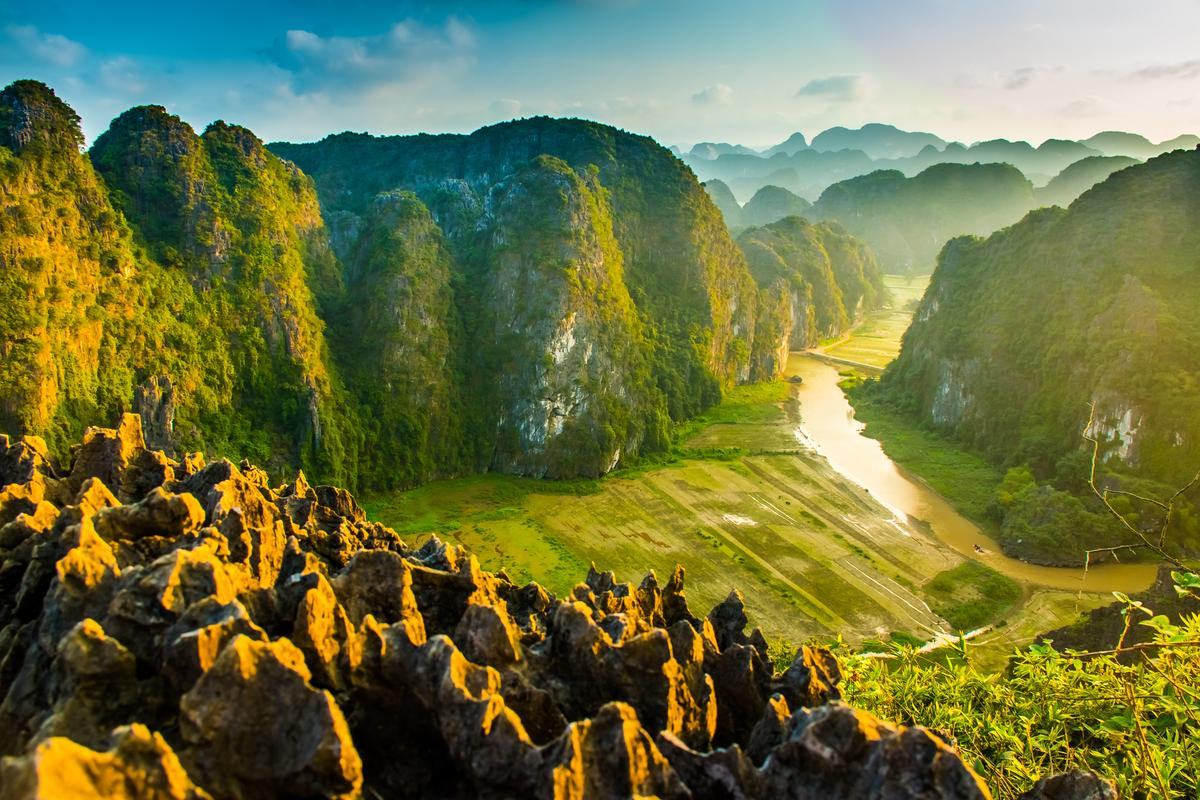
Rising above the quiet plains of Ninh Binh, Hang Mua Viewpoint offers one of the most expansive and memorable views in northern Vietnam. Unlike viewpoints reached by road or cable car, this destination requires physical effort. Each step upward becomes part of the experience, shaping how visitors perceive the landscape once they arrive. From below, the limestone mountain appears steep and imposing. However, as the climb begins, perspective changes gradually. Rice fields stretch outward. Rivers curve gently through the valley. Human presence fades into scale. As a result, the view from the top feels earned rather than presented.

1. The Landscape Revealed From Hang Mua Viewpoint
Hang Mua Viewpoint offers a landscape defined by openness, contrast, and balance. From the summit, the surrounding region unfolds in layers. This section focuses on how the view itself shapes understanding of Ninh Binh’s geography and atmosphere.
A Valley Seen From Above
From Hang Mua Viewpoint, the Tam Coc area appears wide and ordered. Rice paddies form geometric patterns below. Rivers move slowly between fields. Villages blend into greenery without sharp boundaries.
Because of the height, movement below seems calm. Boats glide along water. Farmers appear small against the land. This scale creates a sense of distance that encourages reflection rather than excitement.

Several elements define the panorama:
- Limestone karsts rising abruptly from flat land
- Winding rivers reflecting light
- Seasonal color shifts in rice fields
- Minimal urban development
Together, these features highlight harmony between land and livelihood.
Contrast Between Effort and Stillness
Reaching the viewpoint requires physical exertion. The climb involves steep stone steps and uneven surfaces. Breath quickens. Muscles work. However, once the summit is reached, stillness takes over.
This contrast intensifies perception. The body rests. The eyes expand outward. Sound fades. Wind becomes noticeable. The transition from effort to calm sharpens awareness.
Because of this shift, visitors often stay longer than expected. Observation replaces movement. The landscape holds attention quietly.
How Height Changes Perspective
Height alters not only what is seen, but how it is understood. From above, boundaries soften. Roads disappear. Fields connect. The region feels unified rather than divided.
This perspective encourages appreciation rather than judgment. The land appears functional yet beautiful. Human activity feels integrated rather than intrusive.
Ultimately, Hang Mua Viewpoint offers more than a wide view. It offers clarity. By lifting visitors above the valley, it reveals patterns, relationships, and balance that remain hidden from the ground.
2. The Climb to Hang Mua Viewpoint: Effort, Rhythm, and Experience
Reaching Hang Mua Viewpoint is not an effortless process, and that challenge defines much of its meaning. Unlike destinations designed for quick access, this viewpoint requires steady movement and physical engagement. This section explores how the climb itself shapes perception, emotion, and connection to the landscape.

Stone Steps and Physical Demand
The ascent to Hang Mua Viewpoint follows a long series of stone steps built directly into the limestone slope. The steps rise sharply in places, with uneven heights that require attention. Because of this, most visitors move slowly, adjusting pace naturally.
Breathing becomes deeper. Muscles engage continuously. The climb demands focus, especially under the sun or in humid weather. However, this effort does not feel rushed. Instead, it establishes a rhythm that aligns with the mountain’s natural incline.
Key characteristics of the climb include:
- Steep stone stairways with limited railings
- Narrow sections requiring careful footing
- Open exposure to sun and wind
- Few flat resting areas between rises
These elements encourage awareness rather than speed.
Pauses That Shape the Journey
Along the climb, pauses become necessary. Visitors stop to rest, drink water, or simply look outward. These pauses feel natural rather than forced. Each break offers a partial view, gradually revealing the valley below.
As a result, the landscape unfolds in stages. Early glimpses appear narrow. Higher points reveal wider patterns. This gradual exposure builds anticipation and appreciation.
During these pauses, visitors often notice:
- Changes in wind and temperature
- Expanding visibility with each step upward
- Sounds fading as elevation increases
- A growing sense of distance from the ground
These moments prepare the mind for the summit.
Shared Movement and Quiet Interaction

The climb creates shared experience among visitors. People move together but at individual pace. Brief exchanges happen. Encouragement feels mutual. Silence remains comfortable.
This shared movement builds subtle connection. Everyone faces the same challenge. Differences fade into effort and progress.
Importantly, the climb rarely feels competitive. Instead, it feels personal. Each person measures success by reaching the top, not by comparison.
Why the Climb Matters
The climb to Hang Mua Viewpoint transforms arrival into achievement. Effort heightens awareness. Fatigue sharpens reward. Stillness feels earned.
By the time visitors reach the summit, the body has slowed the mind. Observation deepens naturally. The view feels meaningful rather than decorative.
Ultimately, the climb becomes part of the memory. Without it, the view would impress. With it, the view resonates. Hang Mua Viewpoint teaches that movement can be as important as destination in shaping experience.
3. Symbolic Elements and Visual Landmarks at the Summit
Reaching the summit of Hang Mua Viewpoint reveals more than an open panorama. It introduces a space shaped by symbolism, visual markers, and quiet ritual. This section looks at how these elements influence the emotional tone of the summit and guide how visitors experience the view.
The Dragon Statue and Cultural Meaning
One of the most recognizable features at the top is the stone dragon statue that curves along the ridge. Its presence immediately draws attention, not through size alone, but through placement. Positioned against the sky, the dragon appears to guard the valley below.
In Vietnamese culture, dragons symbolize strength, protection, and harmony between heaven and earth. At Hang Mua Viewpoint, this symbolism feels fitting. The statue does not dominate the landscape. Instead, it follows the mountain’s natural line.

Visitors often approach the dragon slowly. Some stop nearby without touching it. Others sit at a distance and observe. This behavior suggests respect rather than curiosity.
Key impressions created by the dragon include:
- A sense of balance between nature and belief
- A focal point that anchors the wide view
- A reminder of cultural presence within the landscape
Through this symbol, the summit gains meaning beyond scenery.
Open Space and Directional Views
The summit does not offer a single viewing platform. Instead, it opens into several angles. Turning in different directions reveals different compositions. One side frames rice fields. Another highlights limestone peaks. A third looks toward distant waterways.
This openness encourages movement. Visitors walk carefully along ridges. They adjust position to find their preferred perspective. Because of this, the summit feels dynamic rather than fixed.
Importantly, no view feels staged. There are no signs directing attention. Observation remains personal.
Silence, Wind, and Stillness
Sound behaves differently at the summit. Wind becomes more noticeable. Voices carry briefly, then fade. Silence feels expansive rather than empty.
Many visitors instinctively lower their voices. Some sit quietly. Others stand without movement. This response suggests that the space encourages calm without instruction.
The combination of height, openness, and limited noise creates a reflective atmosphere. Thought slows. Attention settles.
Why the Summit Feels Complete
The summit of Hang Mua Viewpoint brings together effort, symbol, and perspective. Physical ascent leads into cultural presence. Movement gives way to stillness.
Rather than overwhelming visitors, the space invites them to pause. It allows meaning to surface naturally.
In the end, the summit feels complete because nothing competes for attention. Landscape, symbol, and silence align. This balance turns the view into an experience that lingers long after descent begins.
4. Best Time to Visit and Tips for a Meaningful Experience
Experiencing Hang Mua Viewpoint fully depends not only on effort, but also on timing and preparation. While the landscape remains impressive throughout the day, certain moments and choices can deepen the visit. This section offers guidance on when to go and how to approach the experience thoughtfully.
Choosing the Right Time of Day
Time of day significantly affects the atmosphere at Hang Mua Viewpoint. Early morning offers cooler temperatures and softer light. Fog may linger briefly, creating layered depth across the valley. Colors appear gentle and muted.
Late afternoon provides warmer tones. Sunlight stretches across rice fields. Shadows lengthen along limestone formations. However, heat and crowd levels may increase.

Many visitors prefer these windows:
- Early morning for calm and cooler air
- Late afternoon for golden light and contrast
- Midday for clear visibility, though with stronger sun
Choosing based on comfort and preference improves the experience.
Seasonal Considerations
Season also shapes what the view reveals. During rice-growing months, fields below shift from green to gold. These changes transform the panorama dramatically.
In the rainy season, vegetation becomes dense and vibrant. However, steps may become slippery. During dry months, climbing feels easier, but colors soften.
Understanding these seasonal shifts helps set expectations.
Preparing for the Climb
Preparation supports both safety and enjoyment. Comfortable shoes improve footing. Water helps manage exertion. Light clothing allows movement without strain.
Helpful preparation tips include:
- Wearing shoes with good grip
- Bringing sufficient water
- Using sun protection
- Taking breaks without rushing
These steps reduce distraction and support focus.
Approaching the View with Awareness
Beyond logistics, mindset matters. Rushing reduces impact. Observing patiently reveals detail. Allowing silence creates connection.
Visitors who slow down often experience more. They notice patterns,feel scale, and remember atmosphere.
Ultimately, Hang Mua Viewpoint rewards intention. By choosing the right time and approaching the visit with care, travelers transform a scenic stop into a lasting memory.
Read for more information:
- https://abite.asia/kim-son-coastal-wetlands-ninh-binhs-untouched-coastal-sanctuary/
- https://abite.asia/thach-bich-pagoda-and-cave-a-quiet-spiritual-refuge-in-ninh-binh/
- https://abite.asia/hang-mua-viewpoint-ninh-binhs-iconic-panorama-from-the-dragon-mountain/
At Abite.asia, we specialize in curated Vietnam tours for international travelers, ensuring an authentic and hassle-free experience. Let us take care of your journey so you can fully embrace the beauty of Vietnam. Contact us today at +84363770835 to start planning your adventure!

Leave a Reply