
Step into the sacred world of Quan Thanh Temple, one of Hanoi’s oldest and most revered Taoist sites. Built during the Ly Dynasty nearly a thousand years ago, this temple honors Tran Vu — the God of the North — who symbolizes wisdom, strength, and protection. Nestled beside tranquil West Lake, Quan Thanh Temple blends ancient architecture, intricate carvings, and spiritual calm into a setting that feels suspended in time. As incense drifts through the air and bronze statues glisten in candlelight, visitors experience a living link between Vietnam’s history and its enduring faith. For travelers seeking a glimpse into Hanoi’s spiritual identity, Quan Thanh Temple offers both serenity and storytelling in equal measure.
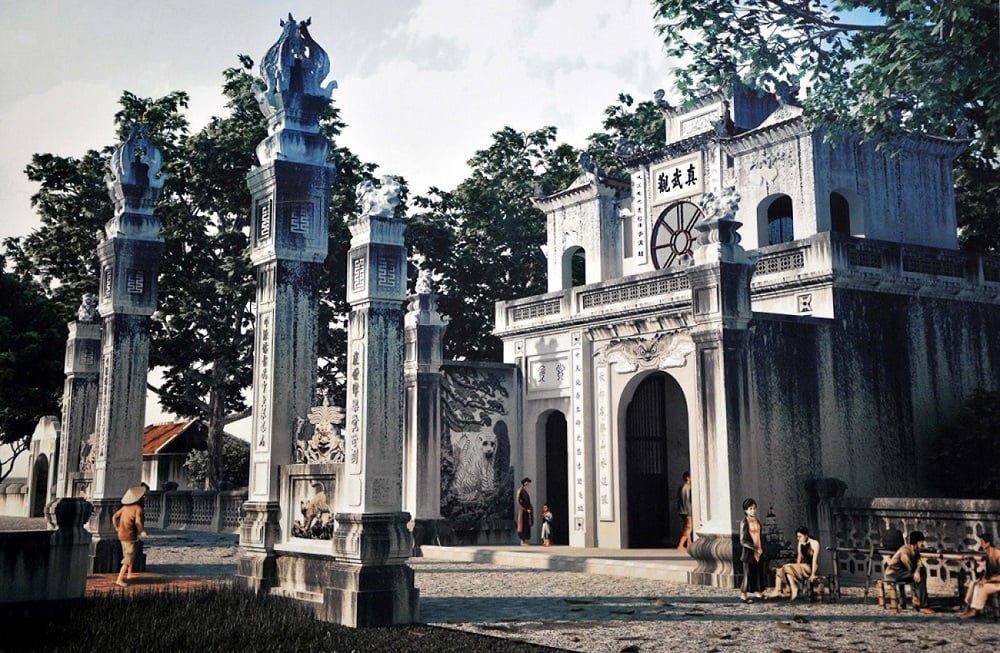
Image for illustrative purposes only. Source: Collected online.
- The Heart of Hanoi’s Spiritual Heritage
At the northern edge of Hanoi’s Old Quarter, near the shimmering waters of West Lake, stands Quan Thanh Temple — a sanctuary that has guarded the city for nearly a millennium. Locals call it the Temple of the Northern God, one of four sacred temples that once shielded ancient Thang Long (today’s Hanoi) from evil spirits and misfortune. Yet, beyond its spiritual protection, the temple represents a deeper harmony between architecture, mythology, and devotion that continues to define Vietnamese culture.
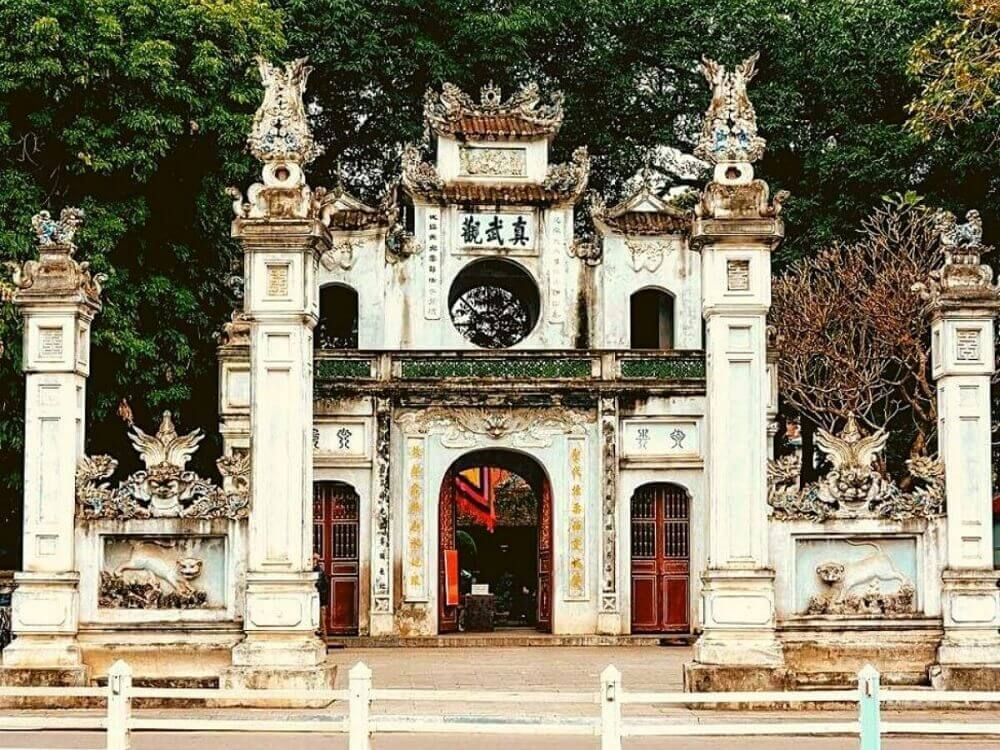
Image for illustrative purposes only. Source: Collected online.
As visitors step through its moss-covered gate, they enter a world where time slows. The sound of bells mingles with rustling banyan leaves. Incense smoke curls softly toward the sky, carrying silent prayers for peace, success, and health. Even amid Hanoi’s urban rhythm, this temple remains a tranquil pause — a place where past and present meet in graceful balance.
Why it’s special:
- One of the oldest Taoist temples in Hanoi.
- Dedicated to Tran Vu, guardian of the North.
- Represents harmony between faith, art, and nature.
These qualities make Quan Thanh Temple not just a monument but a living reflection of Vietnam’s inner strength.
A Meeting Point of Myth and Reality
What makes Quan Thanh Temple so captivating is how seamlessly legend and history intertwine. Local stories say Tran Vu once descended to earth to protect Thang Long from demons of chaos and storm. When citizens built the temple to honor him, it became more than a shrine — it became a symbol of divine guardianship over the city’s destiny. Over centuries, kings, monks, and poets all visited to offer prayers and to seek guidance during turbulent times.
Today, this same energy persists. Locals light incense sticks before the colossal bronze statue of Tran Vu, believing his calm gaze grants them wisdom and strength. For travelers, the site provides insight into how faith shaped Hanoi’s resilience. Standing under the shadow of the temple’s red-tiled roof, one can almost hear the whispers of history flowing with the evening breeze.
Highlights of the temple’s spiritual legacy:
- Symbol of protection and stability for Hanoi.
- Rooted in ancient Taoist philosophy and Vietnamese folklore.
- Continues to inspire devotion among residents and visitors alike.
Quan Thanh Temple is not only a historical structure but also a living spiritual landmark. Its quiet courtyards, weathered gates, and sacred bronze statue invite every visitor to pause and reflect. As one of the four guardian temples of Hanoi, it represents the enduring belief that cities, like people, need wisdom and protection to thrive. For those beginning their journey through Vietnam’s capital, this temple is the perfect introduction — a calm, reverent doorway into Hanoi’s timeless heart.
2. Origins and Legends of Quan Thanh Temple
Every great temple begins with a story, and Quan Thanh Temple is no exception. Born from the union of faith and folklore, it has stood for nearly a thousand years as both a place of protection and poetic legend. This section explores the mythical roots of the temple, its royal foundation, and the guardian spirit that continues to watch over Hanoi.

Image for illustrative purposes only. Source: Collected online.
The Guardian of the North
In ancient Vietnamese cosmology, the city of Thang Long — modern-day Hanoi — was believed to be protected by four sacred gods, each stationed at a cardinal direction. Quan Thanh Temple was dedicated to Tran Vu, the God of the North, who symbolized strength, intelligence, and stability. According to Taoist belief, Tran Vu holds dominion over the dark waters and guards against demons, ensuring balance between heaven and earth.
Legends tell that when storms threatened the capital, Tran Vu appeared in the northern sky, wielding a serpent and turtle — symbols of power and endurance. These creatures, often carved into temple altars, represent the eternal battle between chaos and order. Over time, his legend became a central part of Hanoi’s spiritual defense, and the temple stood as his earthly home.
Key symbolic meanings:
- North direction: Associated with wisdom and endurance.
- Turtle and serpent: Embody protection and transformation.
- Tran Vu’s presence: Guardian of Hanoi’s destiny through centuries.
Even today, locals pray to him for guidance in times of difficulty and change.
Royal Patronage and Construction
The temple’s origins trace back to the Ly Dynasty in the early 11th century, when Hanoi was first declared the capital. It was constructed under royal decree to honor the protective deities of the land. Built with traditional wood and later reinforced with stone, Quan Thanh Temple evolved through successive dynasties, each restoring and expanding it as a gesture of devotion.
During the Tran and Nguyen periods, the temple also served as a place for emperors to meditate and seek spiritual clarity before important decisions. Inscriptions carved into ancient steles detail these royal visits and record offerings made in gratitude for victories and peace.
Historic milestones:
- 11th century: Foundation under King Ly Thai To.
- 13th–15th centuries: Major restoration after wars and floods.
- 17th century: Installation of the great bronze statue of Tran Vu.
This long continuum of care ensured that the temple never lost its sacred place in Hanoi’s collective memory.
A Legacy Forged in Faith

Image for illustrative purposes only. Source: Collected online.
The combination of mythology and monarchy gave Quan Thanh Temple a dual identity: both divine and political. For ordinary citizens, it was a sanctuary where prayers for health and fortune were answered. For rulers, it was a symbol of cosmic legitimacy — proof that their reign was blessed by heavenly order. Through dynastic changes and colonial upheaval, the temple endured as a spiritual anchor, its weathered gates guarding the same faith that once shaped an empire.
Rooted in ancient Taoist cosmology and royal devotion, Quan Thanh Temple was born from legend and preserved through loyalty. The tale of Tran Vu, the vigilant protector of Hanoi, continues to define its essence — a blend of myth and history, stone and spirit. Each carving and column whispers stories of divine guardianship that still resonate with every visitor who steps beneath its archway.
3. Architecture and Artistic Details
The beauty of Quan Thanh Temple lies not only in its age but in the harmony between Taoist symbolism, Vietnamese craftsmanship, and ancient Chinese architectural influence. Every doorway, carving, and courtyard tells a story of balance between the earthly and the divine. This section explores the temple’s structure, the artistry within, and the spiritual meanings that shape its design.

Image for illustrative purposes only. Source: Collected online.
Layout and Spatial Harmony
Stepping through the three-arched gate of Quan Thanh Temple, visitors enter a realm where geometry and spirituality merge. The temple is oriented toward the North, aligning with the Taoist concept of cosmic balance — where each direction corresponds to an element and a guardian deity. The northern alignment, associated with water and wisdom, reflects the temple’s role as Hanoi’s northern protector.
Inside, the courtyard opens under ancient banyan trees, their roots symbolizing endurance. A serene pond mirrors the temple’s roof, enhancing the feeling of reflection and peace. The main shrine sits at the heart of the compound, a wooden sanctuary filled with the scent of incense and age-old lacquer.
Architectural highlights of the layout:
- Three-gate entrance (Tam Quan): Represents heaven, earth, and humanity.
- Central courtyard: A transition space between the mortal and divine worlds.
- Main sanctuary: Houses the bronze statue of Tran Vu, the guardian god.
This thoughtful layout ensures that visitors not only observe but experience the temple’s spiritual balance with every step.
The Bronze Statue of Tran Vu
At the center of Quan Thanh Temple stands its most awe-inspiring masterpiece — the four-ton bronze statue of Tran Vu. Cast in the 17th century by master craftsman Trương Quốc Công, the statue stands nearly four meters tall, embodying strength and composure. Tran Vu is depicted seated on a throne, holding a serpent and resting his foot on a tortoise — symbols of power over chaos and longevity.
The statue’s craftsmanship demonstrates an exceptional blend of realism and symbolism. Each fold of his robe, each curve of his face, radiates calm authority. Over centuries, devotees have come to bow before his image, seeking wisdom and courage to overcome life’s challenges.
Symbolic meaning of the statue:
- Tortoise: Stability and long life.
- Serpent: Control over transformation and hidden forces.
- Seated posture: Supreme wisdom and meditation.
The bronze’s dark patina, aged by incense smoke and time, only enhances the sculpture’s divine aura — a living witness to Hanoi’s faith through generations.
Carvings, Calligraphy, and Decorative Details
Beyond its grand statue, Quan Thanh Temple captivates with countless intricate details that reveal the devotion of its builders. Wooden beams are carved with dragons, phoenixes, and lotus flowers — each a sacred emblem in Vietnamese culture. The temple’s doors and altars are inscribed with calligraphic poems that praise virtue, harmony, and enlightenment.
Inside the courtyard, stone steles engraved with Chinese and Nom script record the temple’s restorations and royal visits. Hanging lanterns and bronze bells, each engraved with protective mantras, fill the air with a low, meditative hum whenever the wind stirs.
Distinctive artistic features:
- Dragon motifs: Represent imperial strength and divine energy.
- Lotus carvings: Symbolize purity amidst worldly chaos.
- Bronze bells and plaques: Reflect the temple’s Taoist ritual tradition.
These elements form a visual language that connects architecture, faith, and artistry into one seamless experience.
Every detail of Quan Thanh Temple reflects harmony — between Taoist cosmology and Vietnamese aesthetics, between durability and grace. The north-facing layout aligns with the stars, the statue embodies divine authority, and the carvings capture centuries of reverence. To walk through its halls is to witness a masterpiece where art becomes devotion, and stone becomes spirit.
4. The Role of Taoism and Daily Worship
The spiritual life of Quan Thanh Temple goes far beyond its architecture. It remains a living center of faith where Taoist philosophy, ancient rituals, and local traditions harmonize. This section explores the beliefs that shape daily worship, the annual ceremonies that bring the temple to life, and the enduring connection between spiritual practice and Vietnamese culture.

Image for illustrative purposes only. Source: Collected online.
Taoist Philosophy in Practice
At its heart, Quan Thanh Temple reflects the essence of Taoism — a belief system focused on harmony between heaven, earth, and humanity. Unlike temples devoted purely to meditation or prayer, this sacred site blends philosophy with action. Each incense offering, bell ring, and quiet bow is part of a greater rhythm that mirrors the natural order of the universe.
Visitors will often see monks and caretakers arranging offerings of fruit, flowers, and tea at dawn. These acts represent the Taoist idea of balance — giving to receive, acting without force. The temple’s architecture itself is a physical expression of the Tao (the Way), designed to align with the earth’s energy and cosmic flow.
Core Taoist values observed at the temple:
- Wu Wei (Non-action): Acting in harmony with nature rather than against it.
- Yin and Yang: Recognizing balance between opposite yet complementary forces.
- Qi (Life Energy): The invisible essence connecting all living things.
Through these principles, Quan Thanh Temple becomes more than a monument — it becomes a guide to living mindfully within one’s surroundings.
Festivals and Ceremonies
The temple’s peaceful atmosphere transforms during annual ceremonies, when locals gather to honor Tran Vu and express gratitude for his protection. The most important festival occurs on the 3rd day of the 3rd lunar month, marking the deity’s birthday. On this day, vibrant processions fill the temple grounds, drums echo through the courtyards, and prayers are chanted for prosperity and good health.
Throughout the year, the temple also hosts smaller rituals during Lunar New Year (Tet), the Mid-Autumn Festival, and local harvest celebrations. Devotees come with families, offering fruit, incense, and paper effigies to seek blessings for the year ahead.

Image for illustrative purposes only. Source: Collected online.
Highlights of annual events:
- Tran Vu Festival (3rd lunar month): Main celebration of the deity’s power and wisdom.
- Tet (Lunar New Year): Prayers for renewal, longevity, and peace.
- Full Moon Days: Offerings of light and flowers to balance energy and fortune.
These gatherings bring warmth and unity to the temple, turning centuries-old faith into shared cultural joy.
Modern Devotion and Community Connection
While the old rituals remain, Quan Thanh Temple continues to adapt to modern life. Local residents still visit on auspicious days to pray for health, success, or safe travels. Tourists are welcomed too — not merely as observers but as participants in quiet reverence. Morning visitors might witness elders teaching their grandchildren to bow respectfully, while students stop by before exams to seek clarity and confidence.
The temple also serves as a refuge for those seeking peace from Hanoi’s fast-paced energy. Its incense-scented halls and echoing bells create a rhythm that encourages reflection. This continuity of use — across generations and lifestyles — ensures that the temple’s soul remains as alive today as it was a thousand years ago.
Why modern visitors are drawn here:
- A tranquil escape from urban life.
- A cultural bridge connecting old beliefs with contemporary spirit.
- A reminder of Hanoi’s enduring reverence for wisdom and balance.
The daily worship at Quan Thanh Temple embodies living Taoism — not in doctrine, but in atmosphere and practice. Through timeless rituals, seasonal festivals, and personal devotion, it connects modern Hanoi with ancient truths about harmony and humility. Each prayer offered here continues a cycle begun long ago, proving that while empires may fade, faith quietly endures.
Read for more information:
- Long Bien Bridge: Exploring Hanoi’s Historic Lifeline Through Time
- A Taste of Vietnam: Discovering Ninh Binh’s Famous Goat Meat Dishes
At Abite.asia, we specialize in curated Vietnam tours for international travelers, ensuring an authentic and hassle-free experience. Let us take care of your journey so you can fully embrace the beauty of Vietnam. Contact us today at +84363770835 to start planning your adventure!


Leave a Reply