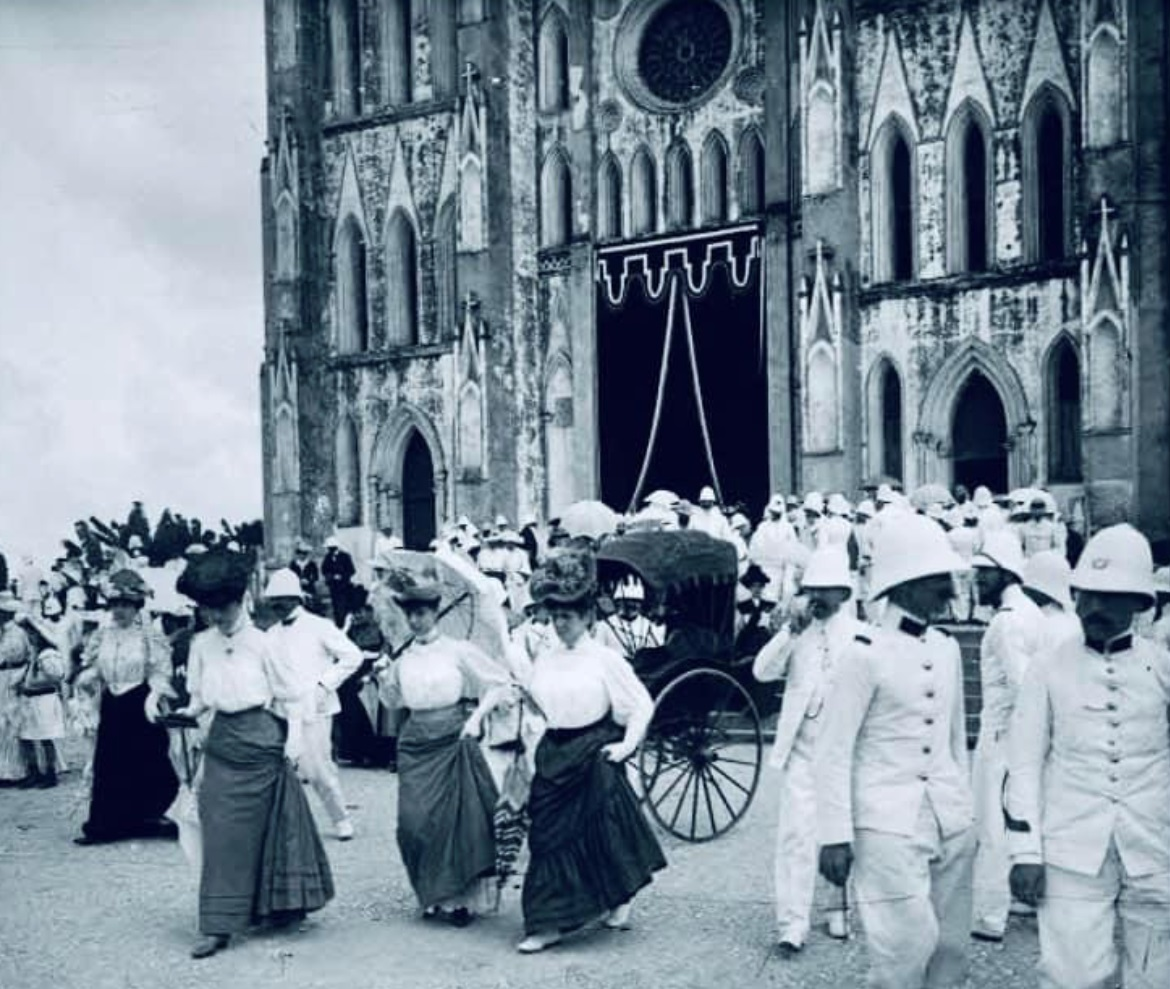
Hanoi French Colonial Architecture is one of the most distinctive features of the capital, giving the city a unique blend of Vietnamese heritage and European influence. Across Hanoi, travelers can still see yellow-painted villas, arched windows, iron balconies, wide boulevards, old government buildings, churches, theaters, and hotels that reflect an important period in the city’s history.
For foreign visitors, exploring these buildings is a meaningful way to understand Hanoi beyond street food and busy markets. Each architectural site tells a story about the city’s past, from colonial administration and urban planning to cultural exchange, adaptation, and the way Hanoi has preserved many traces of history within modern daily life.
This guide introduces the beauty, background, and best places to see Hanoi French Colonial Architecture. From the Hanoi Opera House and St. Joseph’s Cathedral to the French Quarter, old villas, museums, and historic hotels, these landmarks help travelers discover a quieter and more elegant side of the capital.
1. Hanoi Opera House
The Hanoi Opera House is one of the most important landmarks for anyone interested in Hanoi French Colonial Architecture. Located near Hoan Kiem Lake and Trang Tien Street, the building stands out with its grand façade, elegant proportions, and European-inspired design, creating a strong contrast with the narrow streets and traditional houses of the Old Quarter.
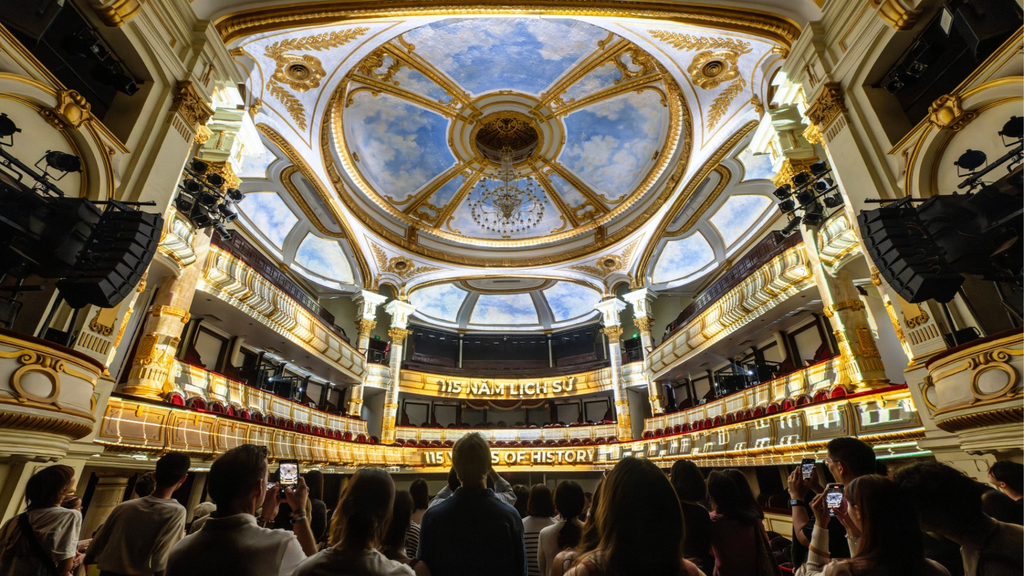
Hanoi Opera House and its French colonial architecture. Picutre: Internet.
A Landmark Built for Art and Power
The Hanoi Opera House was built during the French colonial period and was designed as a cultural venue for performances, ceremonies, and social events. Its location was not accidental, because the surrounding area was planned as part of the French Quarter, where wide boulevards, public buildings, hotels, and administrative spaces created a more European-style urban environment.
For travelers, the building is more than a beautiful theater. It reflects how architecture was used to express cultural influence, social status, and colonial power in Hanoi during that period.
Architectural Features to Notice
The most impressive part of the Hanoi Opera House is its symmetrical front façade. Visitors can see tall columns, arched windows, decorative balconies, and a central entrance that gives the building a formal and balanced appearance.
The building also uses details commonly associated with French and European theater architecture. Its high roof, sculptural decorations, large windows, and layered façade create a sense of grandeur, making it feel different from many traditional Vietnamese buildings nearby.
Travelers should pay attention to several details when standing outside the Opera House:
- The balanced layout of the front façade
- Tall columns and decorative window frames
- Arched entrances and elegant balconies
- Soft yellow walls that match many colonial buildings in Hanoi
- The open square in front of the theater
- The way the building connects with nearby boulevards and old hotels
These details help visitors understand why the Opera House remains one of the clearest examples of Hanoi French Colonial Architecture. It was designed not only as a performance space, but also as a visual symbol of the colonial city.
The Historical Atmosphere Around the Building
The area around the Hanoi Opera House still carries an elegant and historical atmosphere. Nearby streets are wider and calmer than the Old Quarter, with old villas, luxury hotels, government-style buildings, and tree-lined roads that show how the French Quarter was planned differently from older parts of Hanoi.
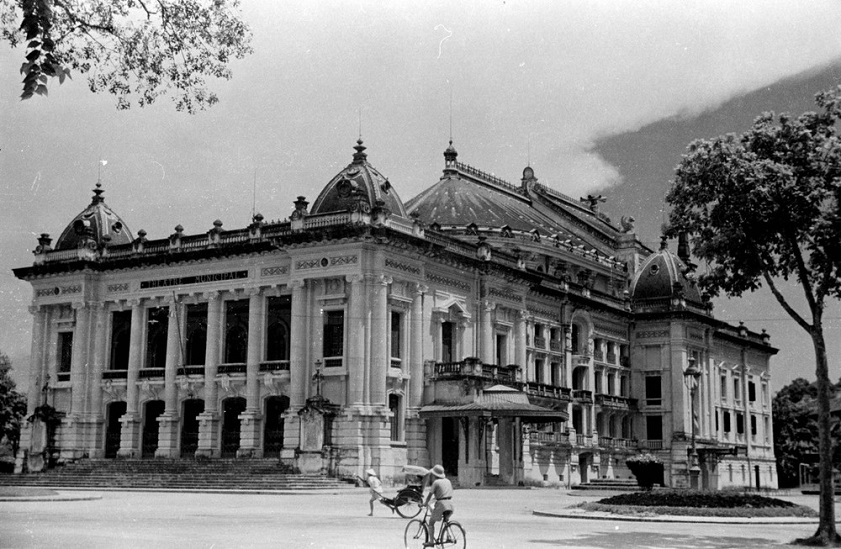
French Quarter streets around Hanoi Opera House. Picutre: Internet.
This contrast is important for travelers to notice. By walking from Hoan Kiem Lake or the Old Quarter to the Opera House, visitors can feel how Hanoi changes from a traditional trading neighborhood into a more formal colonial urban space.
2. St. Joseph’s Cathedral
St. Joseph’s Cathedral is another important landmark for travelers exploring Hanoi French Colonial Architecture. Located near Hoan Kiem Lake and the Old Quarter, the cathedral stands out with its tall twin bell towers, pointed arches, stained-glass windows, and solemn stone-like façade.
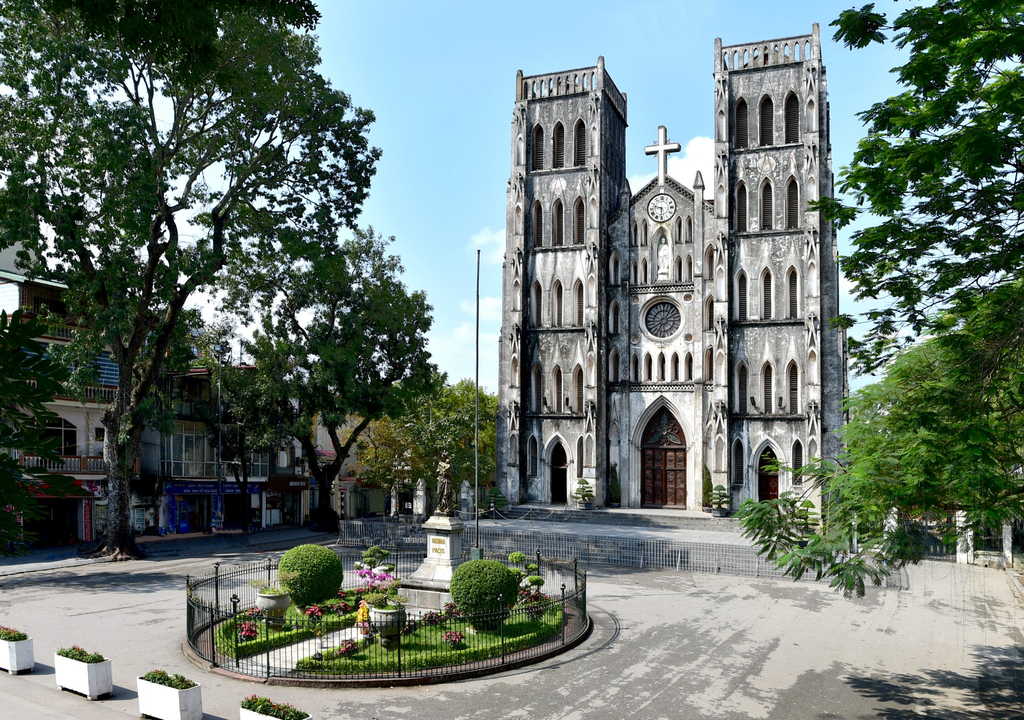
St. Joseph’s Cathedral and Gothic architecture in Hanoi. Picutre: Internet.
St. Joseph’s Cathedral brings a more religious and Gothic-inspired character to the city. Its strong vertical lines and dark exterior create a striking contrast with the small streets, cafés, shops, and everyday life around it.
A Cathedral Built in the Colonial Period
St. Joseph’s Cathedral was built during the French colonial period and became one of the most recognizable Catholic landmarks in Hanoi. Its presence reflects the religious and cultural influence introduced during that time, especially in the central area of the capital.
For travelers, the cathedral is meaningful because it shows how French colonial architecture appeared in different forms. It was not only used for theaters, hotels, or government buildings, but also for religious sites that changed the visual landscape of Hanoi.
Architectural Features to Notice
The most distinctive feature of St. Joseph’s Cathedral is its Gothic-inspired design. Travelers can easily notice the two tall towers at the front, the pointed arches, the large central entrance, and the rose window above the main doorway.
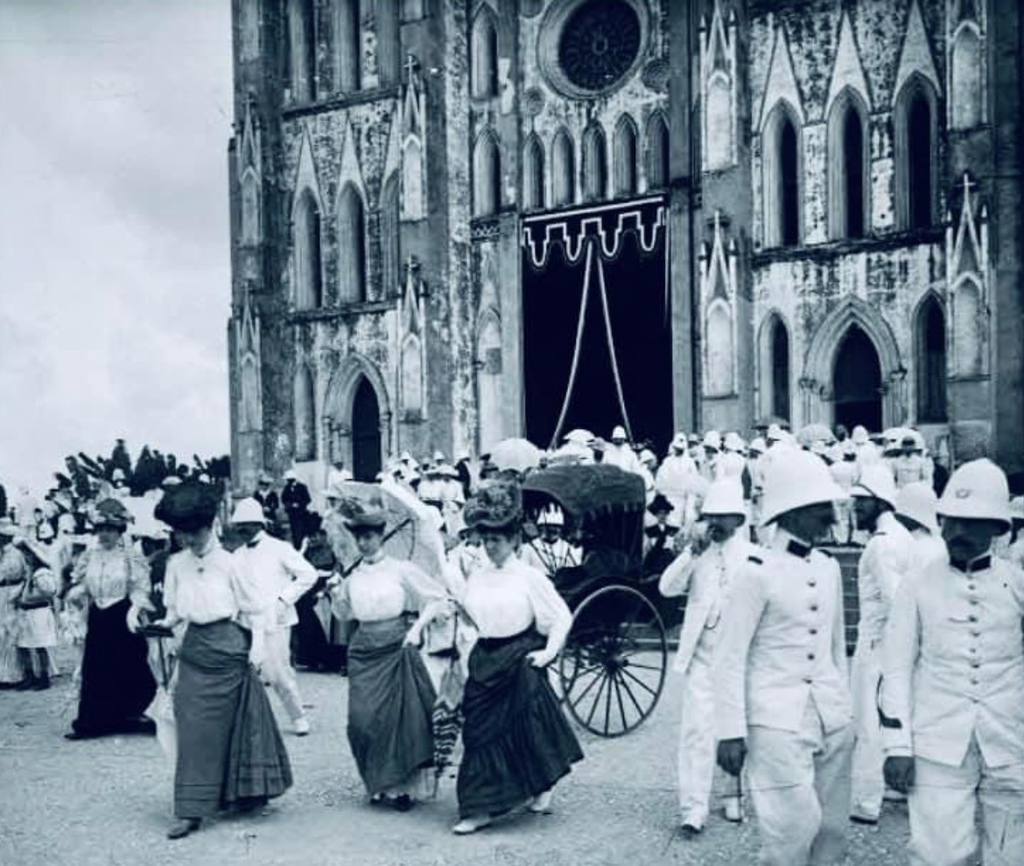
Gothic architectural details of St. Joseph’s Cathedral. Picutre: Internet.
The façade feels strong and solemn, especially because of its dark, weathered surface. This aged appearance gives the cathedral a historic atmosphere, contrasting sharply with yellow colonial buildings of Hanoi’s French Quarter nearby.
Travelers should pay attention to several architectural details when visiting the cathedral:
- The twin bell towers on the front façade
- Pointed arches around doors and windows
- The large rose window above the entrance
- Tall vertical lines that draw the eyes upward
- Stained-glass details inside the church
- The contrast between the cathedral and nearby small streets
These details help visitors understand why St. Joseph’s Cathedral is a major example of Hanoi French Colonial Architecture. It shows the religious side of colonial influence while also becoming part of Hanoi’s modern cultural and social life.
The Atmosphere Around the Cathedral
The area around St. Joseph’s Cathedral is one of the most interesting places to walk in central Hanoi. Around the church, travelers can find cafés, restaurants, shops, boutique hotels, and narrow streets that connect with the Old Quarter.
This surrounding atmosphere makes the cathedral feel less like an isolated monument and more like a living part of the city. Visitors may see local people drinking coffee, young people taking photos, churchgoers attending mass, and travelers resting around the square.
3. Hoa Lo Prison Relic
Hoa Lo Prison Relic is one of the most powerful places to understand Hanoi French Colonial Architecture from a different perspective. Unlike the Hanoi Opera House or St. Joseph’s Cathedral, this site is not admired mainly for elegance or beauty, but for the difficult history it represents.
Built during the French colonial period, Hoa Lo Prison was used to detain Vietnamese revolutionaries and political prisoners. Today, the remaining structure has become a historical site where travelers can learn about colonial rule, resistance, war memory, and the human stories behind Hanoi’s past.
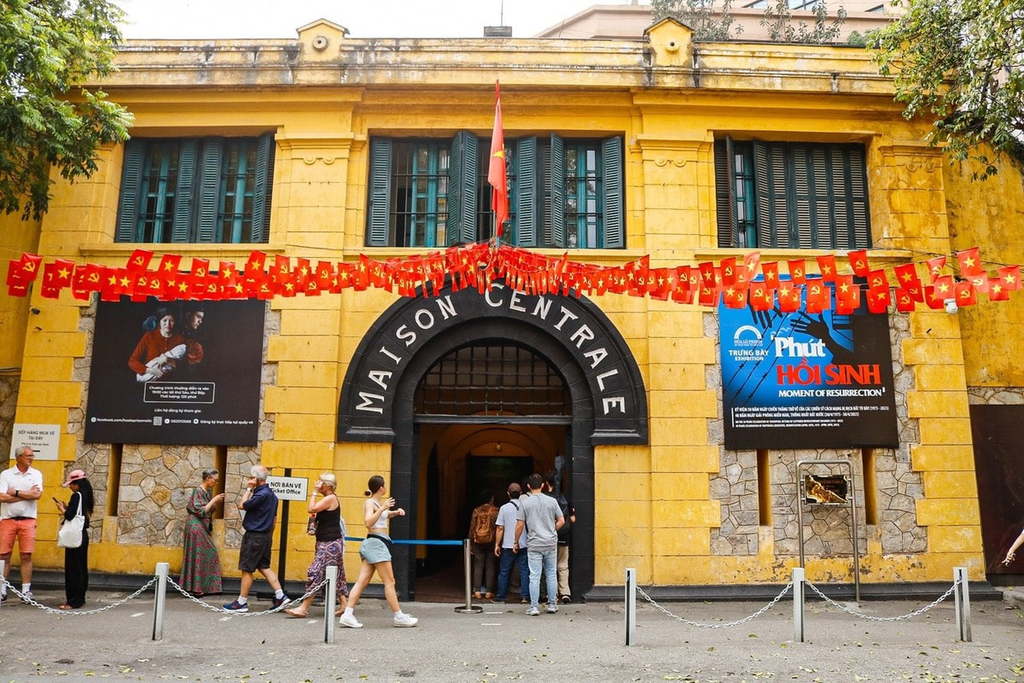
Hoa Lo Prison Relic and its French colonial history. Picutre: Internet.
A Building Designed for Control
The architecture of Hoa Lo Prison reflects its original function as a colonial prison. The site was designed with thick walls, narrow corridors, iron gates, enclosed rooms, and a strong sense of separation from the outside world.
These architectural details create a very different feeling from other French colonial buildings in Hanoi. Instead of open squares, decorative façades, or elegant balconies, Hoa Lo uses heavy forms and restrictive spaces to show power, control, and confinement.
Architectural Details to Notice
When visiting Hoa Lo Prison Relic, travelers should pay attention to how the building creates a sense of pressure and isolation. The remaining walls, cell blocks, doorways, and prison rooms help visitors imagine how harsh the conditions once were.
Several details are especially important to observe:
- Thick stone and brick walls
- Narrow cells and dark interior spaces
- Heavy iron doors and window bars
- Long corridors connecting prison rooms
- Courtyard areas surrounded by high walls
- Exhibition rooms showing prison life and historical documents
These features make Hoa Lo an important example of Hanoi French Colonial Architecture, but in a more serious and emotional way. The site shows that colonial architecture was not only used for culture, religion, or administration, but also for punishment and political control.
The Historical Story Behind the Site
Hoa Lo Prison is closely connected to Vietnam’s modern history. Many Vietnamese revolutionaries were imprisoned here during the colonial period, and the site later became known internationally because of its connection to prisoners of war during the Vietnam War.
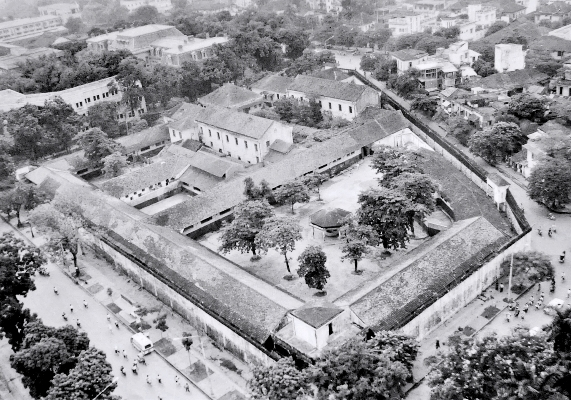
Historic remains of Hoa Lo Prison in Hanoi. Picutre: Internet.
For travelers, this layered history makes Hoa Lo more than a simple museum stop. It helps explain the struggles, sacrifices, and political tensions that shaped Vietnam’s path toward independence and national identity.
At Abite.asia, we specialize in curated Vietnam tours for international travelers, ensuring an authentic and hassle-free experience. Let us take care of your journey so you can fully embrace the beauty of Vietnam. Contact us today at +84363770835 to start planning your adventure!





Leave a Reply