
Few places capture the energy of Hanoi like Train Street Hanoi, where life unfolds just inches from the railway tracks. Nestled between narrow houses and vibrant cafés, this spot has become one of the most thrilling and photogenic corners of the city. As trains rumble past just centimeters away, locals calmly sip coffee, chat with neighbors, and pull in their stools moments before the whistle blows. It’s an extraordinary blend of chaos and charm that perfectly defines Hanoi’s spirit—intense yet friendly, traditional yet ever-changing. Visitors can enjoy a “train coffee” experience, learn how residents adapt their lives to this unique rhythm, and snap unforgettable photos. Beyond the adrenaline, Train Street Hanoi is a story of community, resilience, and how urban life thrives in the most unexpected spaces—a symbol of the city’s heart and hustle.

Image for illustrative purposes only. Source: Collected online.
- An Icon of Hanoi’s Everyday Resilience
Tucked between two rows of old houses, Train Street is both a residential neighborhood and an active railway track. Here, the train passes just centimeters away from doorsteps — a spectacle that perfectly symbolizes Hanoi’s adaptability. Locals sip coffee, hang laundry, and play cards as the whistle echoes down the track, a daily routine that feels both surreal and ordinary.
What makes it unique:
- One of the narrowest active train routes in the world.
- Lined with local cafés serving famous “train coffee.”
- A true glimpse into daily Hanoi life.
From Hidden Lane to Global Phenomenon
Originally unknown to tourists, Train Street became a sensation on social media, attracting visitors eager to capture its thrilling moments. Authorities temporarily restricted access for safety, but many sections have reopened under guided supervision. Today, visiting here is not just about taking photos — it’s about witnessing the harmony between urban chaos and human adaptability.
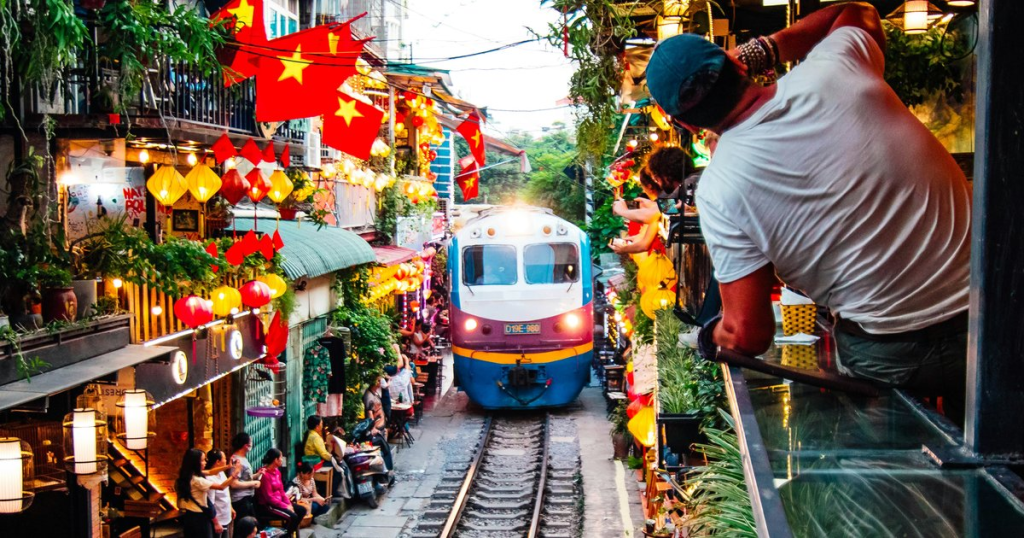
Image for illustrative purposes only. Source: Collected online.
A Living Portrait of Hanoi’s Spirit
At its core, Train Street Hanoi represents what makes the city unforgettable — spontaneity, resilience, and human warmth. It’s a place where life and danger coexist gracefully, and where every rumbling train reminds you how beautifully alive this city truly is.
- The History and Uniqueness of Train Street Hanoi
Few places in the world capture the pulse of city life quite like Train Street Hanoi. This narrow stretch of railway, where trains rush past homes just inches away, tells a story of adaptation, resilience, and community. Its history reveals how a simple railway became one of the most photographed streets in Asia.

Image for illustrative purposes only. Source: Collected online.
From Colonial Rails to City Landmark
The origins of Train Street Hanoi date back to the French colonial period in the early 1900s. The railway line was constructed to connect Hanoi with other parts of northern Vietnam, eventually extending to Ho Chi Minh City. Back then, it was purely functional — a way to move goods and passengers across the growing capital.
Over time, urban expansion brought homes, shops, and families closer to the tracks. What started as a practical rail corridor slowly transformed into a neighborhood unlike any other. Today, the narrow lanes lined with laundry, bicycles, and cafés coexist just inches from passing locomotives — a living symbol of Hanoi’s balance between progress and tradition.
Historical notes:
- Built during the French Indochina era (early 1900s).
- Originally part of the North–South railway line.
- Became a famous cultural and tourism symbol after 2015.
The Life Between the Tracks
Daily life on Train Street Hanoi is both ordinary and extraordinary. Locals hang laundry, chat with neighbors, or sip coffee right by the rails — and when the horn sounds, everything changes. In seconds, tables are pulled in, stools are stacked, and residents press against the walls as the train glides through.
Moments later, life resumes as if nothing happened. This seamless choreography reflects not only adaptability but also a quiet pride in preserving a way of life that’s uniquely Hanoi. The mix of calm and chaos fascinates visitors and photographers who crowd the street to witness this fleeting yet magical scene.
What makes it so unique:
- Trains pass within inches of homes and cafés.
- Locals and tourists coexist in a surprisingly safe, synchronized routine.
- The atmosphere combines adrenaline with intimacy.
A Symbol of Modern Hanoi’s Soul
Beyond the spectacle, Train Street Hanoi represents the city’s soul — its ability to blend modern energy with old-world rhythm. Despite safety regulations limiting access in recent years, it remains an icon of Hanoi’s creative and communal spirit. Here, the sounds of steel and laughter merge, creating a heartbeat that captures the essence of urban Vietnam: close, loud, and full of life.
This combination of heritage, humanity, and raw beauty makes Train Street one of Hanoi’s most unforgettable experiences — a living reminder that sometimes the most extraordinary places exist in the narrowest spaces.
- Daily Experience and Café Culture Along Train Street Hanoi
The daily life around Train Street Hanoi is an extraordinary blend of routine and excitement. What makes this street so captivating is how ordinary moments unfold beside something as powerful as a passing train. This section explores how locals live, how cafés have shaped the area’s identity, and why visitors find themselves returning again and again.

Image for illustrative purposes only. Source: Collected online.
Life Flowing Beside the Tracks
From early morning until late afternoon, Train Street feels like a typical Hanoi neighborhood. Children play with chalk on the concrete rails. Elderly residents sweep leaves from the tracks as naturally as they would their front porches. Vendors carry baskets of fruit and fresh herbs, weaving through the narrow passageway with practiced ease.
This rhythm continues until the distant horn sounds. In a matter of seconds, everything shifts. Locals lift stools, move plants, push carts aside, and clear the path with a choreographed precision that comes only from generations of living with trains. The transition is so smooth, so instinctive, that visitors often watch in awe as the space transforms from a quiet lane into a spectacle of adrenaline.
Moments after the train disappears, the neighborhood returns to calm. Conversations resume, children reappear, and the tracks become, once again, part of everyday living. This balance between danger and normalcy creates a unique environment — one where resilience becomes a lifestyle, not a choice.
The Rise of Train Coffee Culture
Cafés are now a defining feature of Train Street. Small, family-run shops line the tracks, each offering a front-row seat to the passing train. Wooden stools, bright murals, hanging lanterns, and vintage props create a cozy, urban aesthetic that attracts travelers seeking both thrill and charm.

Image for illustrative purposes only. Source: Collected online.
Ordering a drink here is more than a refreshment — it’s part of the ritual. Baristas chat with guests, explain the train schedule, and guide visitors to safe viewing spots. Many cafés display signs reading “Please sit close,” “Move back when horn sounds,” or “Be careful with your belongings,” showing how locals actively protect the space’s safety and authenticity.
Popular drinks include:
- Egg coffee with creamy foam
- Coconut coffee served iced
- Vietnamese drip coffee (cà phê phin)
- Fresh lime tea for hot afternoons
Café culture here is not about luxury; it’s about intimacy. Visitors feel like part of the neighborhood, welcomed into a space where life unfolds openly and generously.
A Shared Experience Between Locals and Visitors
Visitors often describe their time on Train Street Hanoi as unexpectedly emotional. There’s something profoundly human about sharing such a small space with strangers while waiting for a train that might brush past just an arm’s length away. People talk, laugh, exchange stories, and momentarily become a community — even if they’ve only just met.
Locals, too, enjoy this connection. Many residents see tourism not as intrusion but as opportunity: a chance to share their lifestyle, culture, and pride in maintaining a neighborhood unlike any other in the world. Their friendliness softens the thrill, grounding the adrenaline in warmth and hospitality.
The approaching train brings a moment of collective breath-holding. Tourists brace themselves, cameras ready; residents stand steady with familiarity. The rush of steel, wind, and sound lasts only seconds, but the memory lasts much longer. When it’s over, smiles break out across the street — a shared acknowledgment of something rare and exhilarating.
In these fleeting yet powerful moments, Train Street becomes more than a location. It becomes a shared human experience, where curiosity, courage, and connection fill the narrow space between the tracks.
- Safety, Train Schedules, and How to Visit Responsibly
Visiting Train Street Hanoi can be thrilling, but safety and respect must come first. This section helps travelers understand train schedules, navigation rules, and the right way to enjoy the street without disturbing daily life. With the right awareness, the experience becomes memorable, exciting, and safe for everyone involved.
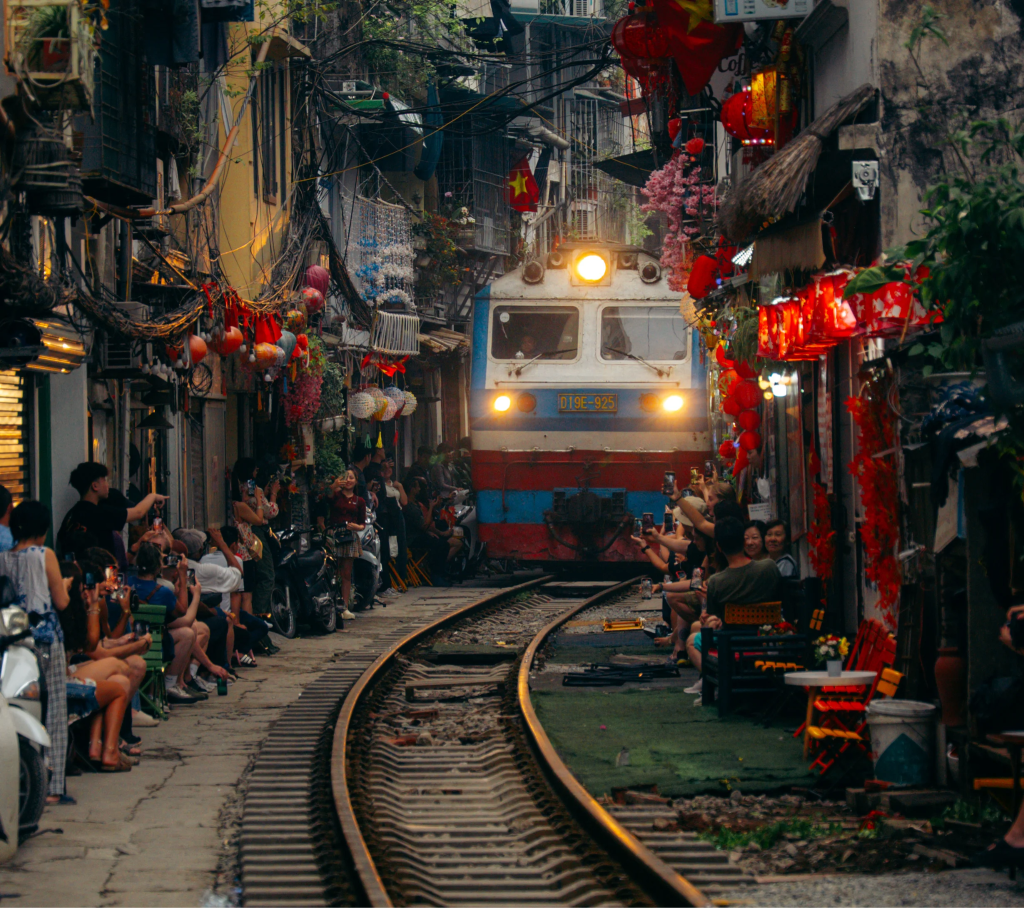
Image for illustrative purposes only. Source: Collected online.
Understanding Train Schedules
Although the train schedule can vary, there are predictable time windows when visitors are most likely to see a passing train. Trains typically move through the residential area several times a day, and the timing may shift depending on holidays, maintenance, or railway operations. Locals remain the most reliable source of updated information because they track the daily changes closely.
Typical time slots include:
- Morning: Around 6:00–8:00 a.m.
- Afternoon: From 3:00–5:00 p.m.
- Evening: Approximately 7:00–9:00 p.m.
These windows are not guaranteed, but they help visitors plan comfortably. Most cafés post updated schedules at their entrances, and staff usually give reminders when a train is approaching.
Key Safety Guidelines for Visitors
Because the tracks remain fully active, safety is essential. Visitors must follow local instructions and avoid risky behavior for videos or photos. The narrow space leaves very little margin, and the passing train creates strong wind pressure.
To ensure a safe visit, travelers should:
- Stay behind the café boundary lines during train hours.
- Avoid stepping directly on the tracks, especially while taking photos.
- Keep bags and loose items away from the edge of the rail.
- Follow all verbal instructions given by café owners and residents.
- Never lean out to record the train as it passes.
These guidelines protect not only visitors but also the community, which faces strict regulations if safety issues occur.
How to Respect the Local Community
Respectful behavior helps Train Street Hanoi remain open for tourism. The neighborhood is a real residential area, not a staged attraction. People live, work, cook, and relax here every day, so visitors should enter with empathy and understanding.
A responsible visit includes:
- Lowering your voice during early mornings and late evenings.
- Supporting local cafés instead of blocking doorways or private homes.
- Cleaning up litter and leaving the street as you found it.
- Understanding that access may be restricted during safety inspections.
By treating the space with care, travelers help preserve a uniquely Vietnamese experience that blends culture, community, and excitement.
- How to Get There & Helpful Tips for First-Time Visitors
Reaching Train Street Hanoi is simple, but navigating it comfortably requires a bit of preparation. This final section provides clear directions, transportation options, and practical advice that helps visitors avoid confusion and enjoy the full experience. Whether you arrive alone or with friends, these tips ensure a smooth and memorable visit from start to finish.

Image for illustrative purposes only. Source: Collected online.
How to Get to Train Street
Train Street Hanoi is located near the Old Quarter, making it easily accessible from most tourist areas. Travelers can reach the street on foot, by motorbike, or by taxi. The entrances are usually monitored by security, so visitors may need to enter through a café invitation, especially during busy hours.
Most convenient access points include:
- Ngõ 224 Lê Duẩn: The quieter, local-friendly entrance.
- Ngõ 5 Trần Phú: Popular with tourists and lined with cafés offering trackside seating.
- Walking from Hoan Kiem Lake: Only 10–15 minutes through the Old Quarter.
Taxis and ride-hailing apps like Grab and Xanh SM also drop passengers nearby, making the journey quick and straightforward.
Best Time to Visit
The beauty of Train Street Hanoi changes throughout the day. Early mornings feel peaceful, with residents cooking breakfast or hanging laundry, while late afternoons bring more visitors and the growing anticipation of incoming trains.
Recommended time slots:
- Morning (8:00–10:00): Quiet, ideal for relaxed photography.
- Late Afternoon (3:00–5:00): Lively atmosphere, good lighting.
- Evening (after 7:00): Most dramatic train passes, though more crowded.
These periods balance lighting, comfort, and the likelihood of encountering a passing train.
Helpful Tips for First-Time Travelers
A thoughtful approach helps visitors enjoy the street safely and respectfully. Simple habits can enhance the experience while supporting the community that lives alongside the tracks.
Helpful tips include:
- Follow café guidelines: They offer safe viewpoints and updated train times.
- Dress comfortably: The street is narrow, and you may stand for a while before a train arrives.
- Stay alert: Trains can arrive earlier or later than expected.
- Support local businesses: Buying a drink grants access and helps residents maintain their livelihood.
- Be patient: Crowds may gather quickly, especially before a scheduled train.
These small preparations make each moment smoother, safer, and more enjoyable.
Final Thoughts
Experiencing Train Street Hanoi offers more than a thrill—it provides insight into daily life, community spirit, and the city’s resilient charm. With the right planning and respectful behavior, your visit becomes not just a tourist stop but a real connection with Hanoi’s unique culture.
At Abite.asia, we specialize in curated Vietnam tours for international travelers, ensuring an authentic and hassle-free experience. Let us take care of your journey so you can fully embrace the beauty of Vietnam. Contact us today at +84363770835 to start planning your adventure!



Leave a Reply